
$100 Fitbit Air works, but Google’s AI Health Coach feels like wearable bloat
A minimalist tracker succeeds on basics, yet its chatty AI coach raises the question: why is it here at all?
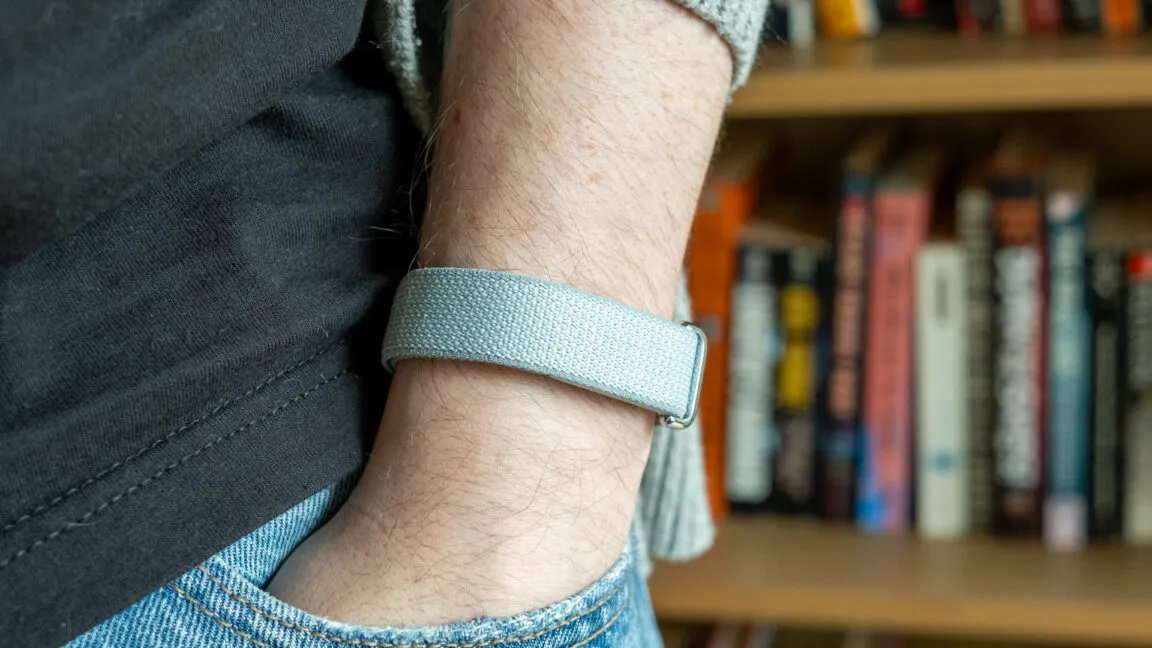
Google’s AI Health Coach is built into the new $100 Fitbit Air wearable, which ditches a screen and buttons for a minimalist health puck. For decision-makers, the Air shows how AI features can either earn their keep or feel like unnecessary friction in consumer wearables.
The $100 Fitbit Air does something most wearables struggle to do: it keeps the hardware simple enough that you can forget it’s even there. No display, no buttons, and only one LED on the side to indicate battery level. You can double-tap the tracker to check the level, and that’s about it for what you interact with on-device.
What you cannot miss is what makes this device different from a purely traditional tracker: it is part of Google’s new health platform, built around AI. The Air has no speaker, and the vibration motor is only for alarms, not for syncing with notifications on your phone. In other words, the “coach” exists in the background without the kind of direct, on-wrist feedback that would normally justify extra complexity. The result, as Ars puts it, is a wearable that nails reliability and minimalism, but feels weighed down by a chatty AI Health Coach.
To understand why this matters, zoom out to the bigger wearable pattern. Smartwatches can track health stats, but they also do a lot of other things. That’s exactly why a device like the Fitbit Air stands out. It ditches the screens that have become common on people's wrists, leaving a small puck of sensors that you can often forget you're wearing. In a market where features can multiply faster than battery life, a “just track me” approach is a real product philosophy, not a styling choice. The Air’s physical simplicity is backed by the interaction design too: one LED, double-tap battery check, vibration reserved for alarms only.
But AI health features create their own expectations. Once you position a wearable as a coach, users implicitly expect guidance to arrive at the right time, in the right format, and with the right level of explainability. Here, the limitation is structural: the Air has no speaker, no screen, and it cannot sync its vibration with phone notifications. That means it can’t easily translate “your coach says…” into “here’s what you should do next” in a way users can immediately interpret. You can hear the buzz or feel it, but there is no on-device context telling you what that buzz was all about.
That is why the Air’s success as a fitness tracker and its questionable value as an AI coaching vehicle can coexist. The Air’s core job is monitoring, and that’s where minimalist hardware often wins. The source describes the Performance Band as simple and understated: smooth polyester yarn with small velcro pads and a metal loop. It is durable but does seem to absorb a bit of moisture, so for swimming or heavy workouts, you’ll likely prefer the silicone active band. That silicone band is positioned as the more workout-ready option, hiding the Air puck more effectively and looking sporty.
In practical terms, the “band choice” is the kind of detail executives should care about because it signals how a product is expected to be used. A wearable that is meant for everyday wear and quick health tracking needs comfort and moisture tolerance. The Air’s design splits the difference: one band for general use and another for situations where sweat, water exposure, or intense movement would normally ruin lesser wearability. Those are the decisions that affect retention because they determine whether the device gets worn consistently.
Now bring the AI coach back into the picture. When you attach AI coaching to a device that lacks the typical communication surfaces, you risk turning a feature into noise. The Air doesn’t have a screen to show the user what the AI is doing, and without notification syncing, the vibration can’t function as a meaningful “message transport.” In other words, the AI is present, but its ability to feel helpful is constrained. That can turn a “coach” into an extra step users never asked for, especially if they expected that minimalism would extend to the software experience.
Second-order implications: if Google wants AI Health Coach to become a pillar of its health platform, wearables like the Air are both an opportunity and a test. The opportunity is distribution and trust. The test is whether AI guidance can be delivered effectively on devices that are intentionally underpowered in terms of interaction. If consumers decide they like the data but do not like the coaching wrapper, then the product could end up reinforcing a split user behavior: track passively, ignore coaching actively.
For peers and boards in adjacent categories, the lesson is blunt. Minimal hardware can improve adoption and everyday wear, but AI features still need a delivery channel that matches the product’s interface. When your device has no speaker and no screen, your “coach” should either be dramatically more legible or dramatically more selective. The Fitbit Air shows the downside of mismatched expectations, and it does so while still being, on its own terms, a minimalist and reliable fitness tracker.
This story's Key Insights and Take-aways are locked.
Create a free account to unlock Executive Actions for one credit.
Register to UnlockAlways free for Executives Club members. Join the Club
More in Technology

OpenAI says 10,000 agents cracked a 90-year math problem in 88 hours
The company's claim is audacious, but one mathematician is pushing back. Here's what it means for AI-driven discovery.
Meta still serves child sexual abuse ads on Instagram in India - BBC report
A new report following the BBC Eye investigation says the ads are still there - what it signals for every platform with a self-serve ad engine.

White House yanks 'Build the Wall' game after Tetris Company copyright warning
The administration's arcade game vanished in hours - and the takedown playbook every brand can learn from.