
216 Capital drops six figures into RoboCare to scale AI precision agriculture across MENA
Tunisia's RoboCare uses satellite, drone, IoT, and AI alerts. This round is built to accelerate regional expansion.
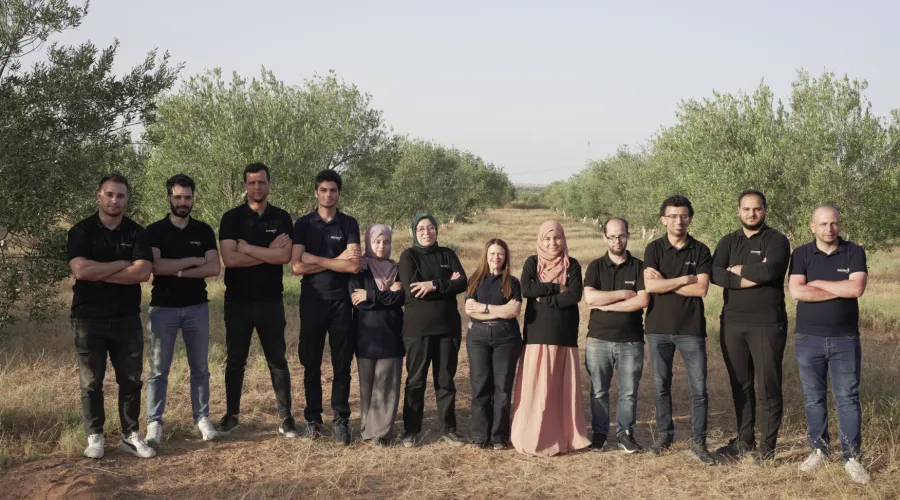
On 23 June, 2026, 216 Capital announced a six-figure investment into RoboCare, a Tunisian agritech startup specializing in precision agriculture and AI. The funding is meant to support RoboCare's next growth phase and expansion into African and Middle Eastern markets.
On 23 June, 2026, 216 Capital announced it is entering the capital of RoboCare, a Tunisian startup focused on precision agriculture and artificial intelligence, with a six-figure investment. The headline number is the point: this is not seed-stage “maybe someday” money. It is positioned as fuel for RoboCare's next growth phase, plus a push into African and Middle Eastern markets.
So what does RoboCare actually do that matters enough to get venture attention? RoboCare builds an agricultural management platform that helps farmers make better decisions by combining multiple data sources, then applying AI models on top. The inputs are specific and practical: satellite imagery, drone data, IoT sensors, weather data, and field expertise. The outputs are also tangible: early detection of crop diseases and stress, optimization of resource usage, and improved farm performance.
The investment thesis lands right where agriculture is getting squeezed. The press release frames the backdrop as climate change challenges, water stress, and rising agricultural production costs. Those pressures are exactly why precision tech keeps moving from “cool demo” to strategic lever. In plain terms, if water, inputs, and labor get more expensive while yields get less predictable, then better decisions become a profit line, not a science project.
RoboCare is built around that decision loop. By combining artificial intelligence, agronomy, and data analysis, the solution aims to help farmers improve productivity while reducing environmental impact. The company also emphasizes field results and operational activity, saying it already monitors several thousand hectares under intelligent surveillance and has generated thousands of agronomic alerts. That last detail is important for execs and boards because alerts are only valuable if someone can act on them fast. The startup positions itself as reducing the time between what the model detects and what operators can do in the field.
One reason RoboCare stands out in a crowded “agtech + AI” category is its regional crop focus. The press release calls out crops strategic for the region, especially olive trees, cereals, and processing tomatoes. It also stresses that RoboCare is not a generalist platform. Instead, it builds models from local data to address soil and climate conditions in North Africa and the Middle East. That is a subtle but real second-order advantage: agronomic recommendations tend to fail when they are transplanted without calibration to local realities.
RoboCare’s path is also shaped by where agriculture sits in development policy and economic strategy. The press release notes that agriculture is a key sector for food security and economic growth across many African and MENA countries. That framing matters for investors because it affects how solutions are perceived by institutional partners and ecosystem builders. The company says it has established partnerships with several institutional players and is gaining growing visibility within international AgriTech ecosystems. In other words, the bet is not just on a model, it is on getting deployed and recognized in the places where the data and partnerships are hardest to build.
216 Capital, for its part, is explicitly tying the investment to its own strategy: supporting high-potential tech startups capable of delivering concrete answers to major economic, social, and environmental challenges on the continent. The startup’s stated goal with this funding is to accelerate development along three priority axes. While the press release does not enumerate those axes, it is clear on the destination: expansion into African and Middle Eastern markets, alongside continued support for RoboCare’s next growth phase.
For decision-makers at similar funds, corporates, or portfolio companies, the strategic stakes are simple. Precision agriculture is shifting from experimental to operational, but only for teams that can translate models into on-the-ground recommendations. If RoboCare’s local-data approach and alert-driven surveillance model works at scale, then six-figure checks become the start of a broader reallocation of capital toward “AI that farms can actually use” in MENA and beyond. If it does not, this kind of regional expansion story will stall quickly. In a world where water stress and production costs are not waiting for pilot projects, speed and fit to local conditions are the difference between traction and noise.
This story's Key Insights and Take-aways are locked.
Create a free account to unlock Executive Actions for one credit.
Register to UnlockAlways free for Executives Club members. Join the Club
More in Technology

Liquid AI’s 230M-parameter LFM2.5-230M beats 4x larger models at data extraction
A small LLM built for on-device agent workflows targets AI ETL and edge deployment without massive memory overhead.

OpenAI will gate ChatGPT 5.6, releasing it only to government-approved customers
Voluntary review goes dark. The rollout plan shifts control to government approval, changing risk, contracts, and procurement timelines.

Android 17’s foldable gaming mode adds a virtual gamepad built for physical-controller games
Google’s new foldable feature aims to make flippy-phone gaming easier, by mapping touch controls to system-level button presses.