

25 tech firms urge Washington to stop cracking down on open-weight AI models
Nvidia, Microsoft, Meta, and Palantir sign a letter warning US policy could slow safety, innovation, and sovereignty.
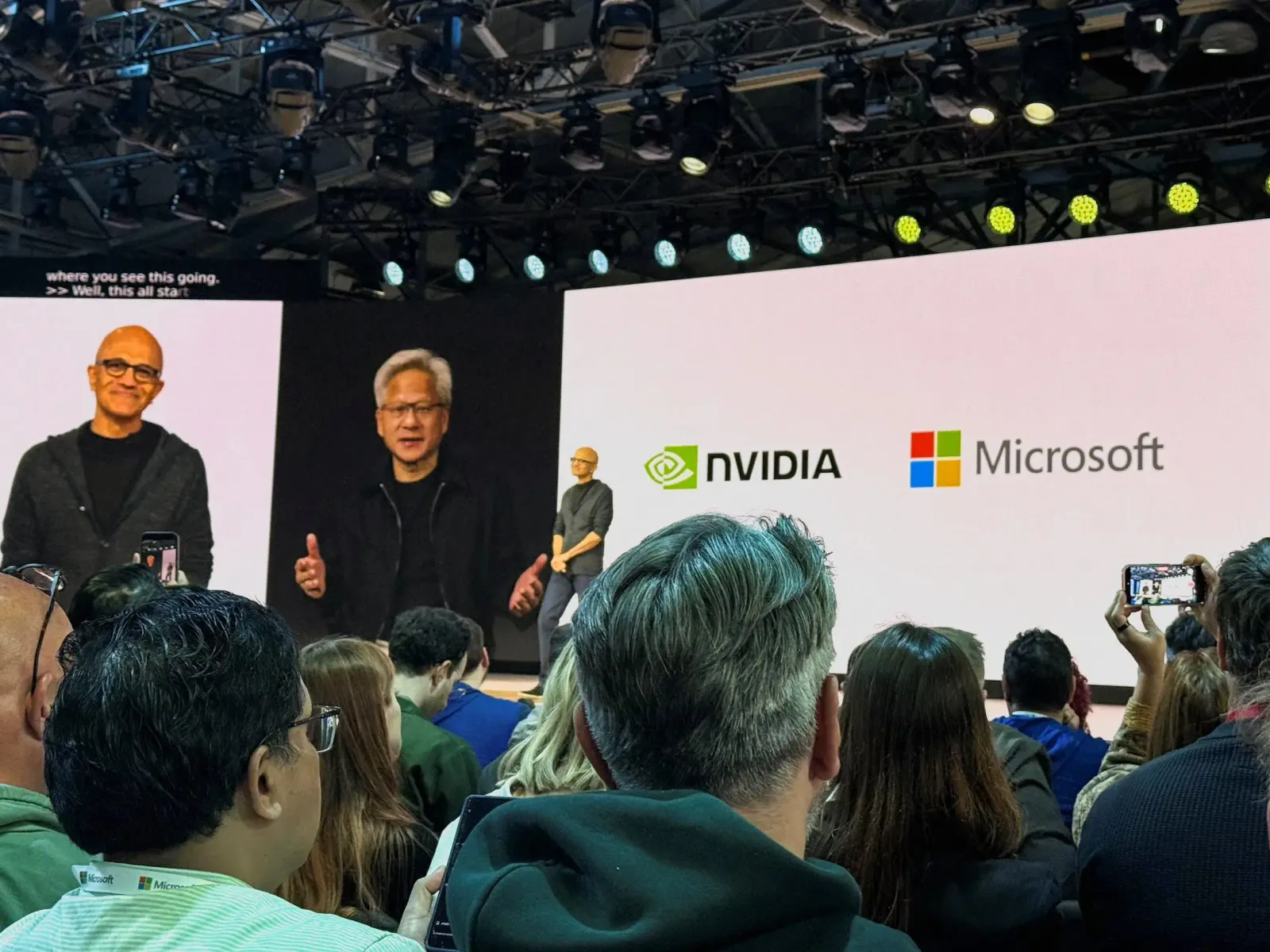
Nvidia CEO Jensen Huang, alongside Microsoft, Meta, Mistral, and Palantir, supported an open letter signed by 25 companies, organizations, and platforms urging US policymakers not to crack down on open-weight AI models. The move arrives as Trump administration officials have floated actions that could target open-model makers like Moonshot AI.
On Friday, 25 companies, organizations, and platforms released an open letter to US policymakers. The signatories include Nvidia, Microsoft, Meta, Mistral, and Palantir, and their shared ask is blunt: do not crack down on open-weight AI models.
The public push hits at a tense moment for open models in Washington. Nvidia CEO Jensen Huang used his first-ever post on X on July 24, 2026 to frame the stakes, arguing that “AI will transform every industry, power every company, and be built by every country.” He added that open models “strengthen safety and cybersecurity, accelerate innovation and diffusion, and enable sovereignty.” In other words, this is not a vague pro-innovation statement. It is a lobbying effort that tries to preempt regulation by claiming open-weight models are safer and more strategically important.
So what exactly are these companies defending? The letter positions open-weight AI models as the next step in the same arc that open software kicked off for computing in the 1980s. The signatories write that “Open source did more than lower the cost of software; it created a shared foundation of knowledge on which generations of American engineers and entrepreneurs built their institutional sovereignty.” That analogy matters because it turns “open model” from a technical preference into a national competitiveness argument. For executives and boards, it is also a political bet: if Washington views openness as a security and sovereignty tool, then rules that broadly constrain open models may face more resistance.
The timing is doing real work, too. The letter comes as top Trump administration officials have suggested they might take action against Moonshot AI, the creator of the Kimi K3, described in the source as “the world’s most powerful open-weight AI model.” The letter does not mention Moonshot specifically, but it defends open-weight model development in a way that is hard to separate from what is happening to Chinese-based open model makers. The world leaders in frontier model competition, OpenAI and Anthropic, are also not among the signatories, which is an important subtext: the biggest “closed” frontier players are not publicly joining this specific political fight.
One reason the letter’s defense is sharper than it sounds is the distillation controversy swirling around Kimi K3. The source says that on Wednesday, Michael Kratsios, director of the White House Office of Science and Technology Policy, publicly accused Moonshot of developing Kimi K3 by distilling the model from Anthropic’s Fable 5. Distillation is described as training a less powerful model on the outputs of a more powerful one, and the process is widely used but controversial. The source also notes that Anthropic has accused Chinese counterparts of abusing distillation to the point of essentially ripping off its intellectual property.
Meanwhile, US enforcement signals have been getting more specific. Earlier this week, Treasury Secretary Scott Bessent suggested that the US could sanction companies that engage in such distillation, comparing it to theft. The letter responds with a distinction. It defends distillation more broadly, but it also opens the door to targeted action: the signatories write that “Unlawful efforts to extract value from closed models raise legitimate concerns.” Their argument is that those concerns should be handled via “targeted legal and commercial frameworks rather than sweeping restrictions on techniques that play an important role in AI innovation.” Translation for executives: they are trying to limit the scope of any crackdown so it does not accidentally choke off legitimate open-model innovation.
The incentives behind the letter are not hard to map. If the US were to directly block or significantly impede China-based open model makers like Moonshot AI, companies with open-weight momentum could benefit. The source points out that unlike Anthropic’s Fable 5 and OpenAI’s GPT-5.6-Sol, Kimi K3 as an open-source model will soon be available for download and customization. It also flags that two modern open software names, Mozilla and the Linux Foundation, are among the signatories, reinforcing the coalition’s intent to connect open models to open computing governance.
There is also a competitive landscape under the surface of the policy fight. The letter’s authors portray open-weight development as a path to diffusion across sectors, while the source notes that China has thus far dominated development of open-weight AI models despite the US’ “legendary reputation” in open-source software. Nvidia’s Nemotron model is mentioned as one of the largest open-weight models, but the source says its performance pales in comparison to rivals like Kimi K3. Meta’s Alexandr Wang, chief AI officer, is described as saying Meta Superintelligence Labs remains committed to open models and is developing an open variant of its Muse Spark model. Other efforts referenced include Reflection AI, a startup founded by former Google DeepMind researchers, preparing its own open model.
For leaders inside the industry, this letter is a coordination signal. It tells you which side of the Washington story a large coalition wants to be on. If regulators frame open-weight models as a sovereignty and safety tool, boards may need to revisit risk models that assume openness is inherently easier to regulate. And if regulators move toward sweeping restrictions, executives will face a faster-than-expected decision cycle on model strategy, partnerships, and compliance. In either scenario, the message from Nvidia, Microsoft, Meta, Palantir, and the rest is clear: open-weight models are not just a product category. They are being defended as infrastructure.
This story's Key Insights and Take-aways are locked.
Create a free account to unlock Executive Actions for one credit.
Register to UnlockAlways free for Executives Club members. Join the Club
More in Technology

doubleAI's Maxwell rewrites code while it runs, claims 38x speedups
The Tel Aviv startup's code execution model formally verifies optimizations, turning AI into an agent for the hardware itself.
Saudi military official paid to fly OpenAI bugging suspect's family out, prosecutors say
A court filing says a Saudi military official funded the family's exit and Riyadh offered bail, putting foreign-influence risk squarely on AI boards.
AI researcher's 26,000-word claim: Neural nets aren't tangled after all
Nick Cammarata's Goodfire post has the AI world split - if he's right, monitoring frontier models just got a lot easier.