
500-plus students. 120 teams. NESSP’s ROADS challenge turns Venus curiosity into real mission work
NASA’s Science Activation program put kids on Rover Observation And Discoveries in Space teams across eight states.
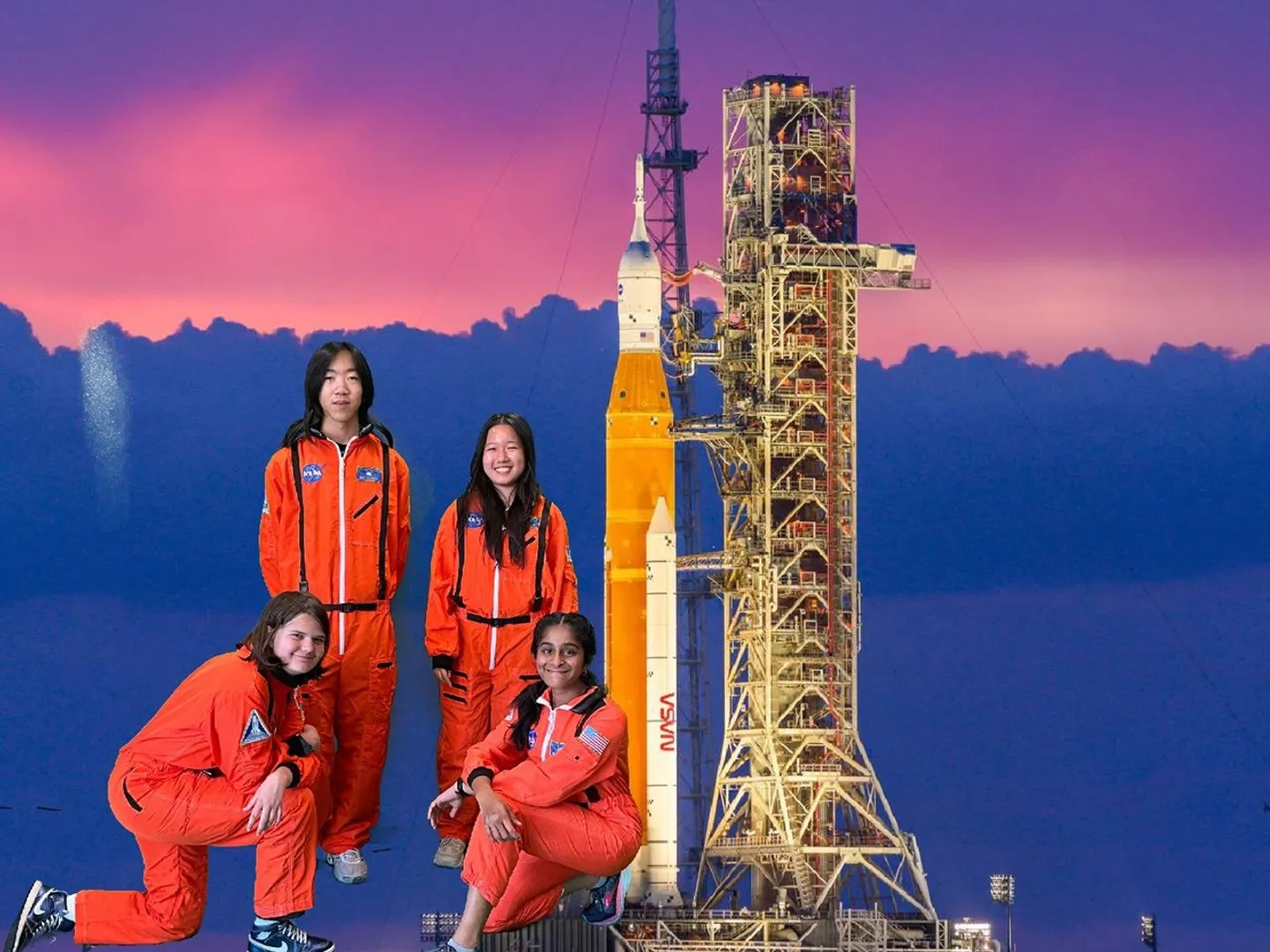
Central Washington University in Ellensburg, Washington leads the Northwest Earth and Space Science Pathways (NESSP) project, which just concluded the 2025-2026 ROADS (Rover Observation And Discoveries in Space) from Earth to Venus National Challenge. The program engaged more than 500 students on 120 teams from eight states through teacher training, mission checkpoints, and hub events.
The Northwest Earth and Space Science Pathways (NESSP) project wrapped up its 2025-2026 ROADS from Earth to Venus National Challenge, and the scale tells the story: more than 500 students on 120 teams from eight states. This was not a “watch a video about Venus” exercise. It was a NASA Science Activation program student challenge that asked teams to build, test, document, and present mission-style work inspired by Venus exploration.
ROADS from Earth to Venus also had a clear execution timeline, starting with educator professional development in August 2025 to prepare teachers and mentors to guide students. Then the registered teams moved through challenge checkpoints from January through May 2026, with in-person Hub events in April and May 2026 where students could showcase their work, connect with peers, and engage with NASA-inspired STEM (Science, Technology, Engineering, and Mathematics) activities. For decision-makers who care about outcomes, that design matters: training is built in, milestones are paced, and the final accountability is public and community-based.
NESSP, led by Central Washington University in Ellensburg, creates opportunities for students and educators to connect with NASA science through hands-on STEM learning. The ROADS framework targets upper elementary, middle, and high school students, using mission-inspired activities that mirror how NASA scientists and engineers investigate planetary environments and prepare for future exploration. In other words, the program leans into “authentic science and engineering experiences,” not just classroom learning.
Across the academic year, ROADS from Earth to Venus teams completed eight Mission Objectives focused on science, engineering, teamwork, and communication. Students documented their work in Mission Development Logs, designed mission patches, and tackled topics that are both accessible and mission-relevant. The challenge included modeling carbon movement on Earth and Venus, investigating the greenhouse effect, collecting remote sensing data using kite-mounted cameras, and programming robotic rovers to navigate Venus-inspired terrain. It also included career exploration tied to NASA-related paths and culminated in final mission story submissions through virtual channels and regional Hub events.
The content also reveals something important about how NASA’s Science Activation Portfolio typically thinks about pipeline-building: it’s not only about getting students interested in space, it is about getting them to practice the habits of doing science. Recording data, iterating on models, coordinating as a team, and communicating results are the scaffolding underneath future technical readiness. When students complete Mission Development Logs, design mission patches, and present final mission stories, they are rehearsing the full arc of a mission cycle, even if it is scaled for school.
In-person participation extended beyond the main challenge, too. NESSP and its partner institutions hosted Hub events where many students showcased work and interacted with mentors on college campuses as part of a broader STEM learning community. The partners listed include Central Washington University, Montana State University, and Northern Arizona University. That matters for executives and boards because it adds another layer of reinforcement: the program does not just end at the classroom. It connects families and community organizations to the work and creates repeatable touchpoints that can strengthen regional STEM networks.
NESSP also recognized top teams across elementary, middle, and high school divisions. In the Elementary School Division, NESSP recognized The Evil Twins, The Acid Clouds, Flaming Asteroid Nebulas, and The NASA Intelligence, all from Silverdale, Washington. In the Middle School Division, the recognized teams were Venus Ascenders from Mukilteo, Washington; Project Fuego Venus from Safford, Arizona; Galaxy Dragons from Sequim, Washington; The Four Folds from Hardin, Montana; and Crater Lake Crusaders from Medford, Oregon. In the High School Division, it recognized Laborantem from Columbus, Montana; Velocity to Venus from Sequim, Washington; Puget Sound Propulsion from Mukilteo, Washington; and Evergreen Explorers from Mukilteo, Washington.
Highlights from this year’s challenge, including student presentations and special recognitions, are available through the ROADS from Earth to Venus Virtual Recognition Ceremony on the NESSP YouTube channel, @nwessp. Educators, families, and community organizations can continue to access ROADS from Earth to Venus activities and educational resources, along with materials from previous ROADS challenges, through the NESSP website at www.nwessp.org. Behind the scenes, NASA’s Northwest Earth and Space Science Pathways project is supported by NASA cooperative agreement award number 80NSSC22M0006 and is part of NASA’s Science Activation Portfolio. For leaders in education, workforce, and tech ecosystems, the second-order implication is straightforward: when programs operationalize “authentic NASA science experiences” at scale, they can make STEM participation feel like real participation in missions, not just preparation for them. That is how pipelines get stronger, and how communities start to see future scientists, engineers, educators, and explorers as people they know.
This story's Key Insights and Take-aways are locked.
Create a free account to unlock Executive Actions for one credit.
Register to UnlockAlways free for Executives Club members. Join the Club
More in Science

Alaska's 1,580-foot tsunami had warning signs. Scientists just found them.
Rapid glacier retreat, heavy rainfall, and thousands of tiny tremors preceded Alaska's 1,580-foot tsunami, a warning for every coastal community in a warming world.

The rare mutation that lets high-risk brains dodge Alzheimer's
Scientists found a natural defense against protein buildup, opening a new path to preventive treatments.

3,000 steps a day may halve Alzheimer's decline, study finds
New research links a modest daily walk to less tau buildup and nearly half the cognitive and functional decline, even for those with early signs.