

8.7M airport customers' data stolen in ransom attack
A breach of 8.7 million records exposes the travel industry's cybersecurity blind spot - and the cost of ignoring it.
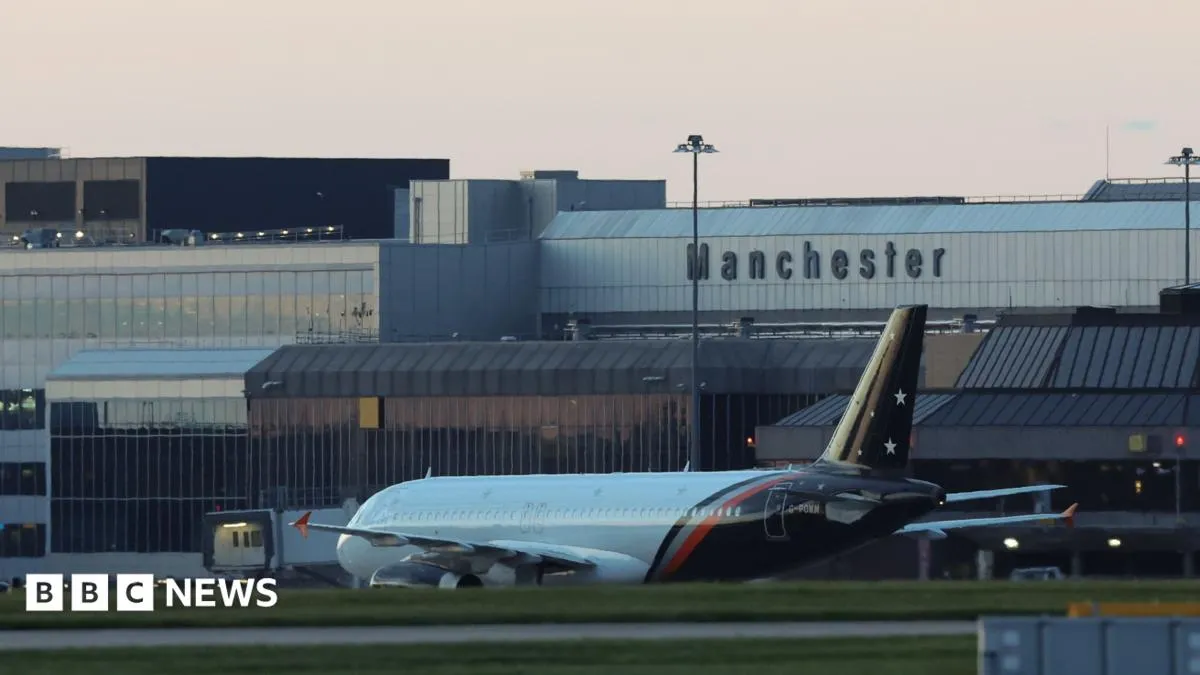
An airport operator disclosed that hackers accessed personal data of 8.7 million customers and demanded a ransom. The breach signals a systemic risk for travel companies, which now face regulatory fines, lawsuits, and a crisis of customer trust.
The number is staggering: 8.7 million customers. That is the scale of the data breach disclosed by an airport operator, where hackers accessed personal records and then demanded a ransom. For executives across the travel and hospitality sectors, this is not a distant headline - it is a blueprint of the threat that every company holding customer data now faces. The ransom demand itself is a secondary concern; the real damage lies in what the attackers could do with the data if they choose to sell it or leak it publicly.
For context, 8.7 million records is roughly the population of a major city. It dwarfs most retail breaches and puts the airport operator in the same league as some of the largest healthcare and financial data incidents of the past decade. The data accessed likely includes names, contact details, travel itineraries, and possibly payment information - the kind of data that fuels identity theft, fraud, and targeted phishing campaigns. The ransom demand adds a layer of extortion: pay up, or risk the data being exposed or sold to the highest bidder.
The travel industry is uniquely vulnerable. Airports and airlines operate on thin margins, rely on complex third-party ecosystems, and process massive volumes of personal data across check-in, security, loyalty programs, and booking systems. Each of those touchpoints is a potential entry point for attackers. This breach likely exploited a vulnerability in a supplier or a legacy system - a common pattern in the sector. The result is that a single weak link can compromise millions of customers, as this incident demonstrates.
Regulatory fallout is inevitable. Under the European Union's General Data Protection Regulation (GDPR), companies can be fined up to 4% of global annual turnover for serious violations. For a large airport operator, that could amount to hundreds of millions of dollars. In the United States, state-level laws like the California Consumer Privacy Act (CCPA) and a patchwork of other regulations add further exposure. Regulators are also increasingly willing to pursue enforcement actions, and class-action lawsuits from affected customers are almost certain. The legal and compliance costs alone could exceed the ransom demand by orders of magnitude.
Beyond the immediate financial hit, the reputational damage is severe. Customers trust airports with their personal information - often including passport numbers and biometric data - and a breach of this scale erodes that trust. Travelers may think twice before using loyalty programs or online check-in, and corporate clients may reconsider contracts. The breach also invites scrutiny from investors, who will question the company's cybersecurity governance and risk management. In a sector already struggling with operational disruptions and labor shortages, this is a self-inflicted wound that will take years to heal.
For executives in similar roles - chief information security officers, chief risk officers, and boards - the lesson is stark. Cybersecurity is no longer an IT issue; it is a board-level strategic priority. The airport operator's failure to protect 8.7 million records is a case study in what happens when security investments lag behind the threat landscape. The ransom demand is a symptom, not the disease. The disease is a culture that treats data protection as a cost center rather than a core business function.
The second-order implications extend beyond the travel industry. This breach will likely trigger a wave of scrutiny across all companies that handle sensitive customer data. Regulators will use it as a benchmark for enforcement, and cyber insurers will adjust premiums and coverage terms. For peers, the message is clear: assume you are a target, and act accordingly. That means conducting regular penetration tests, segmenting networks, encrypting data at rest and in transit, and - critically - having a incident response plan that is tested, not just written.
In the end, the 8.7 million customers are the real victims. Their personal data is now in the hands of criminals, and the airport operator's response - including whether it pays the ransom - will determine how much damage is done. But for every other executive reading this, the strategic takeaway is the same: the cost of prevention is always lower than the cost of a breach. The question is not if your company will be targeted, but when - and whether you will be ready.
This story's Key Insights and Take-aways are locked.
Create a free account to unlock Executive Actions for one credit.
Register to UnlockAlways free for Executives Club members. Join the Club
More in Business

Tim Cook steps down as Apple CEO, stays on as chair with $45M equity
The 'Trump whisperer' keeps his White House and Beijing access as Apple navigates tariffs and a $4.6 trillion market cap.
Snowflake shares surge as AI data demand crushes estimates, lifting full-year forecast
Stocks jumped on stronger-than-expected guidance, signaling enterprise AI workloads are accelerating faster than Wall Street priced in.

Tim Cook's 15-year Apple CEO run ends: 3 lessons for any successor
After 15 years, Tim Cook hands Apple to John Ternus - here's how he turned a $350B company into a $4.6T juggernaut.