
93% of Brits call private chats a right as UK eyes encryption access
New polling shows overwhelming public opposition to government access to encrypted messages, even as the UK pursues secret orders against tech firms.

The Center for Democracy & Technology's polling of 2,000 British adults finds 93% believe in a right to private online conversations, and two-thirds distrust any government with encryption access. For tech executives, this signals that UK regulatory pressure on encryption faces a deeply skeptical public, raising the stakes for compliance decisions.
A new poll from the Center for Democracy & Technology (CDT) finds that 93% of British adults say they have a right to private conversations online. That's nearly universal support for encryption, and it comes as the UK government continues to push for access to encrypted messages through legal orders.
The survey, conducted by Public First among 2,000 adults in April, also found 89% believe no one should access personal messages without a court order. And two-thirds of respondents said they wouldn't trust either the current government or any future one with the power to access encrypted messages - a distrust that cuts across party lines, with 58% of Labour voters, 59% of Conservatives, 56% of Liberal Democrats, 69% of Greens, and 75% of Reform voters all saying no.
The polling lands amid an ongoing clash between Westminster and Silicon Valley. In February, Apple withdrew its Advanced Data Protection feature for UK users after receiving a secret Technical Capability Notice under the Investigatory Powers Act. The US government later said Britain had withdrawn that demand, but reports suggest another notice was issued targeting British users. The episode underscored how far the UK is willing to go to gain access to encrypted data.
Public opinion appears firmly on the side of encryption. When asked about the trade-off between security and law enforcement, 53% of respondents said the security risks of accessing encrypted messages outweigh the benefits, while only 28% thought the benefits outweigh the risks. The concern is specific: 84% worry that such access could introduce vulnerabilities for hackers and criminals, and 82% are concerned the powers could be abused.
The chilling effect is real. Sixty-five percent of British adults said they would become more cautious about what they like, share, or comment on if they knew the government could access their messages. Forty-one percent said they would self-censor criticism of public institutions or government officials. That's a direct threat to free expression, and it's a key reason why the public is so resistant.
For tech executives, the message is clear: the UK public is not buying the 'think of the children' argument that has historically been used to justify encryption backdoors. The polling shows that even after being presented with the government's rationale, support for access remains low. Companies that comply with secret orders risk a public backlash, while those that resist may face legal consequences. The strategic calculus is shifting.
The research was commissioned by CDT, a digital rights group that campaigns for strong encryption, but the polling itself was conducted independently by Public First. The margin of error is 2.2 percentage points, making the results statistically robust. For boards and CEOs, this is not just a UK issue - similar debates are playing out in the EU, the US, and elsewhere. The public's instinctive defense of privacy is a powerful force that regulators will have to reckon with.
The bottom line: encryption is not a niche technical issue; it's a fundamental rights issue that resonates with the vast majority of the public. As governments continue to push for access, they will face a skeptical and organized opposition. For tech companies, the path forward is to be transparent about government demands and to fight for user privacy - because the public is clearly on their side.
This story's Key Insights and Take-aways are locked.
Create a free account to unlock Executive Actions for one credit.
Register to UnlockAlways free for Executives Club members. Join the Club
More in Business
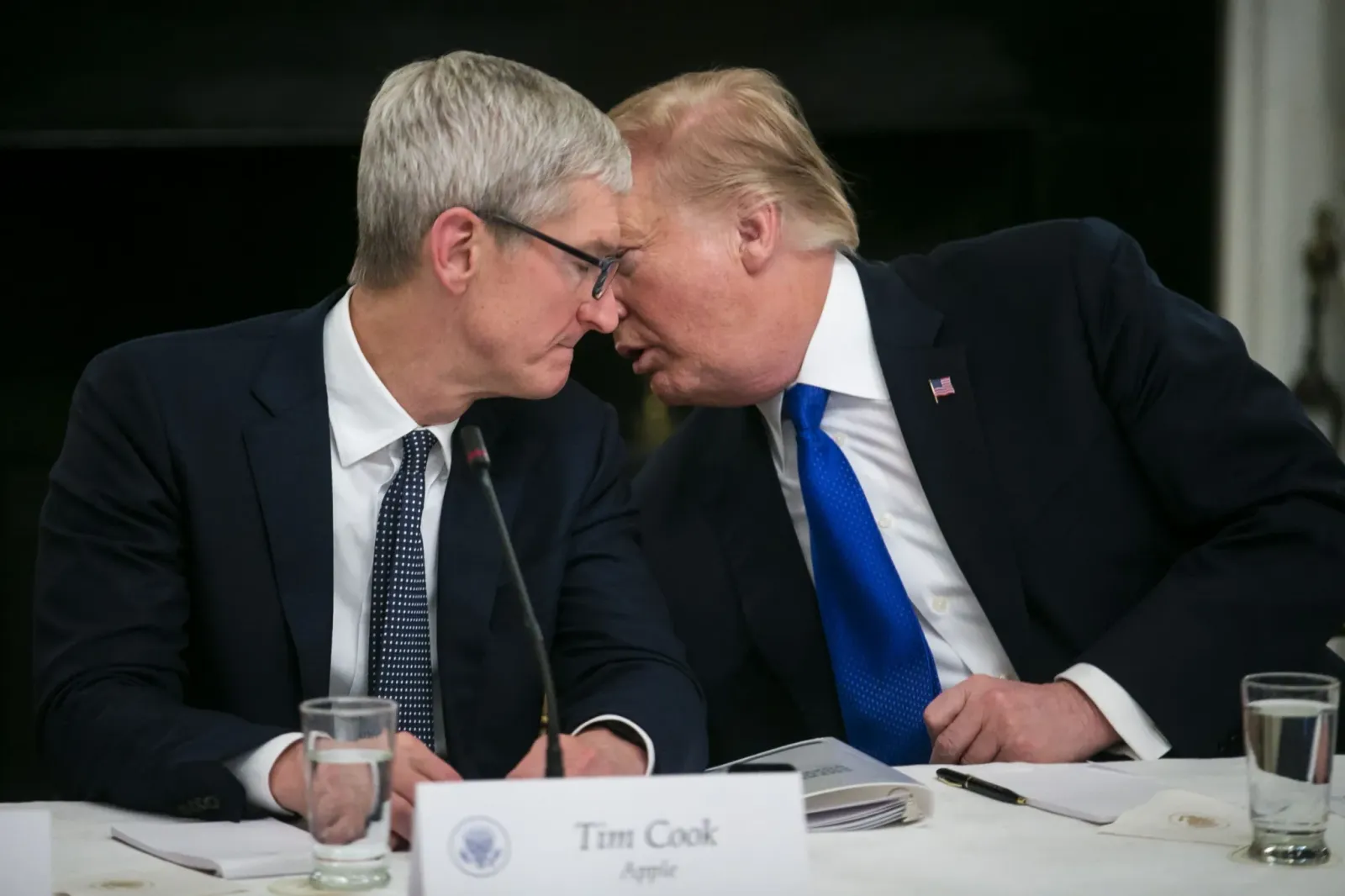
Tim Cook steps down as Apple CEO, stays on as chair with $45M equity
The 'Trump whisperer' keeps his White House and Beijing access as Apple navigates tariffs and a $4.6 trillion market cap.

Snowflake shares surge as AI data demand crushes estimates, lifting full-year forecast
Stocks jumped on stronger-than-expected guidance, signaling enterprise AI workloads are accelerating faster than Wall Street priced in.

Tim Cook's 15-year Apple CEO run ends: 3 lessons for any successor
After 15 years, Tim Cook hands Apple to John Ternus - here's how he turned a $350B company into a $4.6T juggernaut.