
9th Circuit says sports bets aren't swaps, setting up Supreme Court clash
A federal appeals court just handed prediction markets a win, but a rival ruling means the Supreme Court will likely decide the fate of the $100 billion industry.

The 9th U.S. Circuit Court of Appeals ruled that sports-related event contracts are not swaps, directly contradicting a 3rd Circuit decision from April. This circuit split all but guarantees Supreme Court review, leaving prediction platforms like Kalshi and Polymarket in regulatory limbo until the high court weighs in.
The 9th U.S. Circuit Court of Appeals just threw a curveball at the Commodity Futures Trading Commission (CFTC), ruling that sports-related event contracts are not swaps. The decision, which directly contradicts a 3rd Circuit ruling from April, creates a circuit split that makes Supreme Court review nearly inevitable. For the fast-growing prediction market industry, this is a moment of both triumph and uncertainty: one court says they're free from swap regulation, another says they're not, and the final word now rests with the highest court in the land.
At the heart of the dispute is a simple question: Are sports prediction contracts-where users bet money on outcomes like who wins the Super Bowl or whether a player gets traded-legally equivalent to swaps? The CFTC has argued yes, claiming these contracts fall under the Commodity Exchange Act's broad definition of a swap, which would subject them to heavy federal oversight, including clearing and reporting requirements. The 9th Circuit disagreed, concluding that sports event contracts lack the financial characteristics of true swaps. The court's reasoning, while not fully detailed in the summary, signals a narrow reading of the CFTC's jurisdiction-one that could have ripple effects far beyond sports betting.
The 3rd Circuit's April ruling took the opposite view, siding with the CFTC and treating similar contracts as swaps. That decision, which came in a case involving a different platform, had given regulators a powerful tool to police the industry. Now, with the 9th Circuit openly rejecting that interpretation, the legal landscape is fractured. Companies operating in different parts of the country face different rules: a platform headquartered in San Francisco might be free to offer sports contracts without swap compliance, while one in New York could be forced to register as a swap execution facility. That patchwork is a nightmare for a digital-native industry that operates across state lines and serves users nationwide.
For platforms like Kalshi and Polymarket, which have been fighting for regulatory clarity for years, the 9th Circuit's ruling is a major victory. It validates their argument that event contracts are more like traditional betting or insurance than complex financial derivatives. But the win is fragile. The CFTC is almost certain to appeal, and the circuit split gives the Supreme Court a clean reason to take the case. If the high court sides with the 3rd Circuit, the 9th Circuit's ruling will be overturned, and the entire industry could be forced to comply with swap regulations overnight. That would likely crush smaller platforms that lack the resources to handle the compliance burden, while larger players might pivot to offshore jurisdictions.
The stakes extend beyond sports. Prediction markets have exploded in popularity, with contracts covering everything from election outcomes to interest rate decisions to the timing of AI breakthroughs. The CFTC has been trying to rein in these markets, arguing that they pose risks to market integrity and could be manipulated. But the 9th Circuit's decision suggests that the agency may be overreaching. If the Supreme Court upholds the 9th Circuit's reasoning, it could strip the CFTC of authority over a wide range of event contracts, not just sports. That would open the door for a new wave of innovation-and a new wave of risk-in an unregulated corner of the financial system.
For investors and operators, the immediate takeaway is uncertainty. The 9th Circuit's ruling does not take effect immediately; the CFTC can request an en banc rehearing before the full court, which is a long shot but not impossible. More likely, the agency will petition the Supreme Court, and the case could be heard as early as next term. Until then, platforms are left to navigate a legal minefield. Some may choose to expand aggressively in the 9th Circuit's jurisdiction, while others will hold back, waiting for a definitive answer. The smartest players are already preparing for both outcomes, building compliance teams that can pivot quickly if the Supreme Court reverses course.
This is not just a legal story; it's a business story. Prediction markets are a multi-billion-dollar industry, and their growth has been fueled by the rise of retail trading apps and the mainstreaming of sports betting. The Supreme Court's decision will determine whether these markets remain a Wild West of innovation or become a tightly regulated sector akin to futures exchanges. For now, the 9th Circuit has given the industry a breath of fresh air, but the clock is ticking. The next move belongs to the CFTC, and the final word belongs to the nine justices in Washington. Until then, every platform, every investor, and every user is operating under a cloud of legal uncertainty that no amount of market optimism can dispel.
This story's Key Insights and Take-aways are locked.
Create a free account to unlock Executive Actions for one credit.
Register to UnlockAlways free for Executives Club members. Join the Club
More in Business
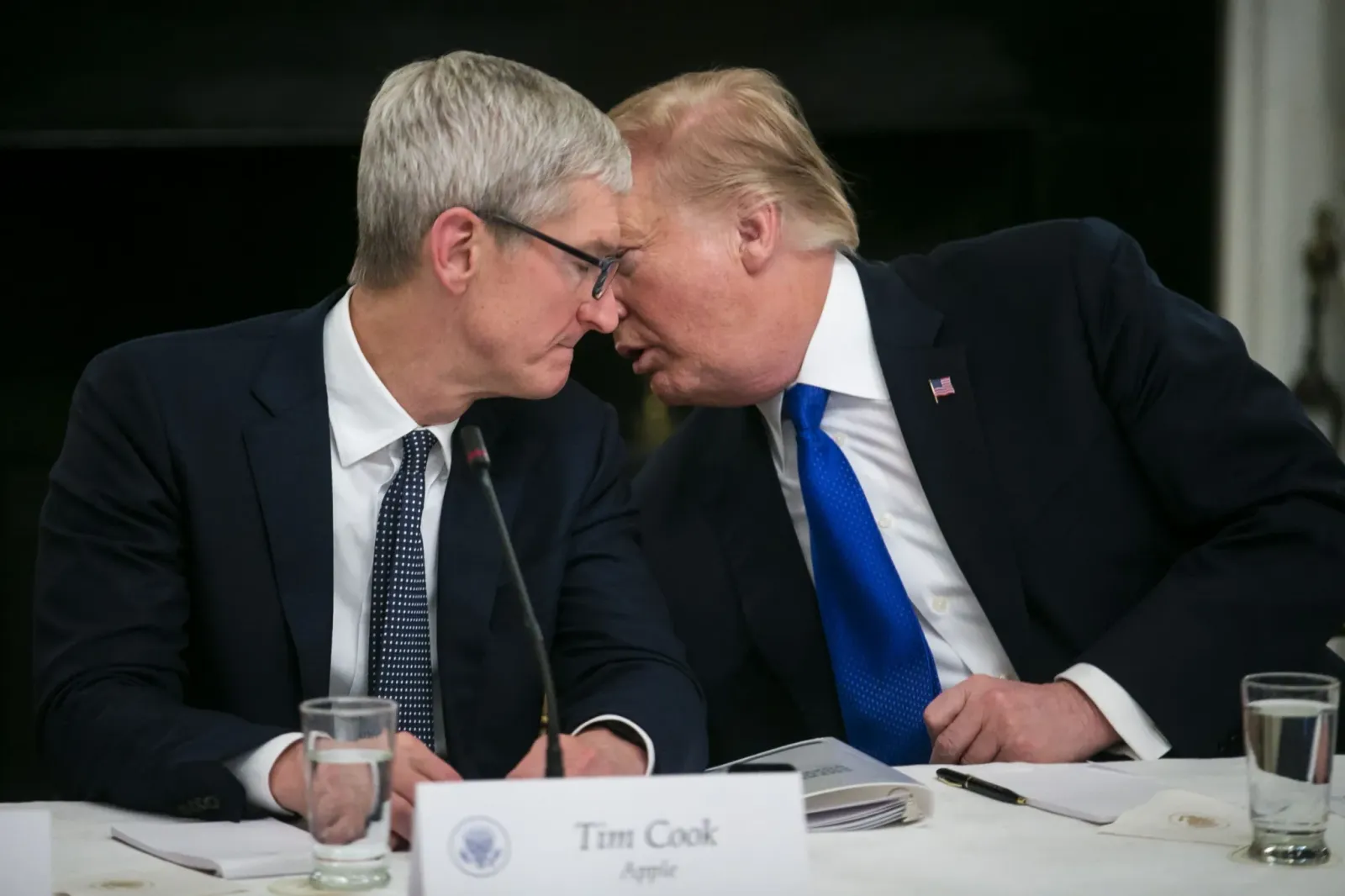
Tim Cook steps down as Apple CEO, stays on as chair with $45M equity
The 'Trump whisperer' keeps his White House and Beijing access as Apple navigates tariffs and a $4.6 trillion market cap.

Snowflake shares surge as AI data demand crushes estimates, lifting full-year forecast
Stocks jumped on stronger-than-expected guidance, signaling enterprise AI workloads are accelerating faster than Wall Street priced in.

Tim Cook's 15-year Apple CEO run ends: 3 lessons for any successor
After 15 years, Tim Cook hands Apple to John Ternus - here's how he turned a $350B company into a $4.6T juggernaut.