
A 2017 YouTube clip gave sand cat proof scientists could not ignore
Wildlife photographer Mohammed Almuntasir posted 18 seconds in Libya. Scientists confirmed it, and the story shifted fast.
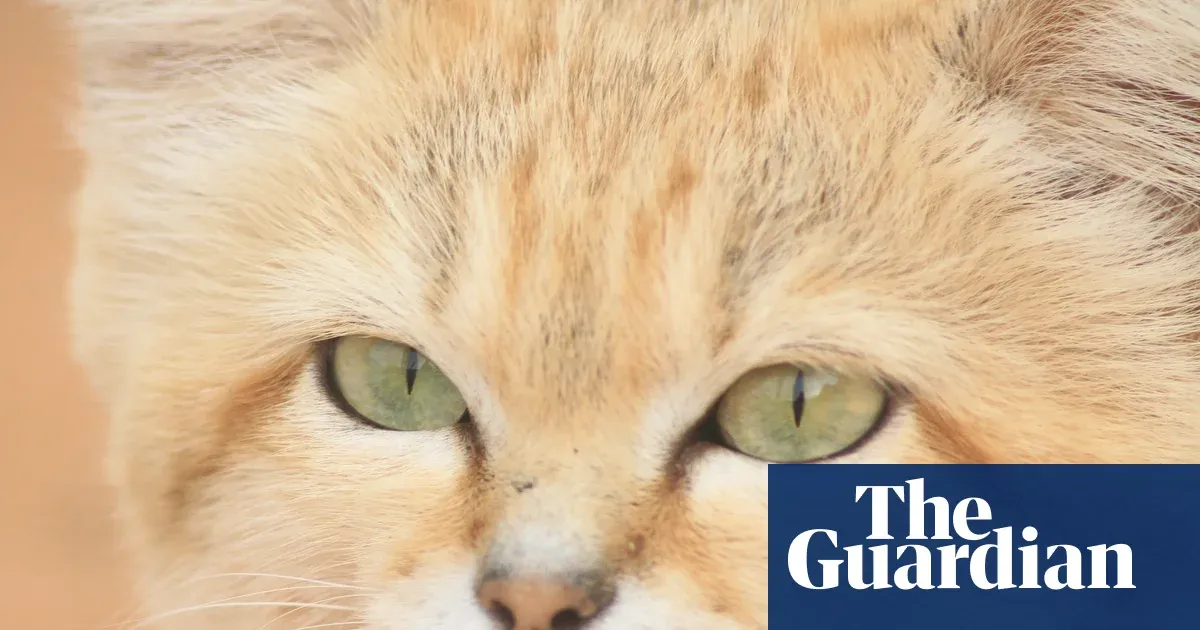
Mohammed Almuntasir, a wildlife photographer, uploaded 18 seconds of footage to YouTube in 2017 showing a small, pale cat digging a hollow in sand in remote south-west Libya. The clip became the first material evidence that Libya’s sand cat, Felis margarita, exists there after scientists started contacting him.
In 2017, wildlife photographer Mohammed Almuntasir posted 18 seconds of footage on YouTube. He thought it was just a small, pale cat digging a hollow in the sand in the remote dunes of south-west Libya. He had no idea that those seconds would later become the first material evidence that Libya’s sand cat really exists in the country.
The video, which Almuntasir uploaded in 2017, sparked a real-world chain reaction. Once scientists got in touch, the footage stopped being a random internet upload and turned into a validation problem with ecological stakes. It helped establish that the sand cat, Felis margarita, which is described as the world’s only felid adapted to true desert conditions, exists in Libya.
Why this matters to decision-makers is not “cool wildlife on the internet.” It is what happens when evidence gets misfiled. In deserts, where sightings are rare and conditions are harsh, the line between “possible” and “verified” can get blurry. A clip can be dismissed as too short, too unclear, or too easy to explain away. But here, the fact pattern is straightforward: Almuntasir captured something in the dunes, put it online, and later researchers engaged based on what they saw. The outcome was not a vibe, it was the “first material evidence” that the sand cat exists in Libya.
For boards and executives across media, research, conservation, and even regulated data ecosystems, this is a reminder that primary evidence can arrive from unexpected channels. YouTube is not designed as a scientific instrument. Yet the platform became a distribution layer for a field observation that scientists ultimately treated as meaningful. The second-order effect is that traditional gatekeeping around where evidence comes from gets weaker. What changes is not that rigor disappears, but that the funnel for discovering leads expands. A small team of experts might otherwise never hear about a sighting from a remote dune. Posting a clip made it discoverable, time-stamped, and accessible.
This case also highlights a common incentive mismatch between researchers and the public. Scientists often wait for repeatable, properly documented evidence from structured studies. Creators and photographers are doing something else: documenting what they encounter, then sharing it. When the two worlds intersect, the result can be a fast legitimacy transfer. The source story explicitly says Almuntasir “had no idea what he had found” until scientists started to contact him. That detail matters. It signals that the initial upload was not a targeted attempt to create scientific proof. It was accidental evidence that later proved its value.
There is also a conservation and ecosystem angle that decision-makers should not ignore. The sand cat is described as the world’s only felid adapted to true desert conditions. That is a niche so specific it tends to attract scrutiny because it implies high specialization. When a species is highly adapted, its survival can be sensitive to habitat changes, disturbance, and prey availability. Material evidence of presence is not just a trivia win. It can shape what areas get priority for monitoring, how conservation plans are drawn, and which local knowledge or protective measures get justified.
Regulatory background plays in quietly, even when the headline is about a cat. Conservation work typically depends on documentation because it drives policy choices and resource allocation. “First material evidence” is the kind of phrase that can influence how authorities and organizations classify biodiversity in a region, and how they decide what to fund or protect next. Even if this story itself does not name a regulator, the logic is familiar to anyone who deals with standards, compliance, or reporting: you cannot manage what you cannot confirm. Here, a public video became a catalyst for confirmation.
Strategically, the lesson for executives is about speed and verification. Evidence can move at internet speed, while institutional processes move slower. The executives who manage research ecosystems, risk, or information pipelines should pay attention to where verification can be accelerated without compromising standards. Almuntasir’s 18 seconds from a remote south-west Libyan desert became “the first material evidence” of Felis margarita in the country once scientists engaged. That is a powerful example of how the interface between public platforms and scientific review can produce real outcomes.
If you run an organization that relies on field observations, data sourcing, partnerships, or regulated reporting, treat this like a stress test. Your next breakthrough may not come through a formal submission. It may come through a short clip that started as content, then got treated as evidence. And if you are a board member, investor, or operator in adjacent spaces, the stakes are simple: the ability to identify, validate, and act on weak signals before they fade can determine whether you lead the next wave or miss it entirely.
This story's Key Insights and Take-aways are locked.
Create a free account to unlock Executive Actions for one credit.
Register to UnlockAlways free for Executives Club members. Join the Club
More in Business

SK Hynix jumps 11% after seeking up to $29.4B in Nasdaq listing
The chip giant filed for a Nasdaq listing plan that could raise $29.4 billion, instantly reshaping investor expectations.
Micron revenue hits nearly $42B as AI memory lifts gross margins above 81%
Fiscal Q3 results crush estimates, prove AI memory is rewriting Micron's margins, and change the momentum math for the whole chip stack.

SpaceX sells $25B in debt under two weeks after IPO, despite $90B in orders
The satellite and rocket company’s quick $25 billion borrowing move signals how it plans to finance scale after going public.