
A spider's 'silk dope' turns into fiber tougher than Kevlar in milliseconds
Biologists are probing how a tangled protein soup rearranges into a steel-beating fiber, unlocking the secret behind nature's most versatile material.
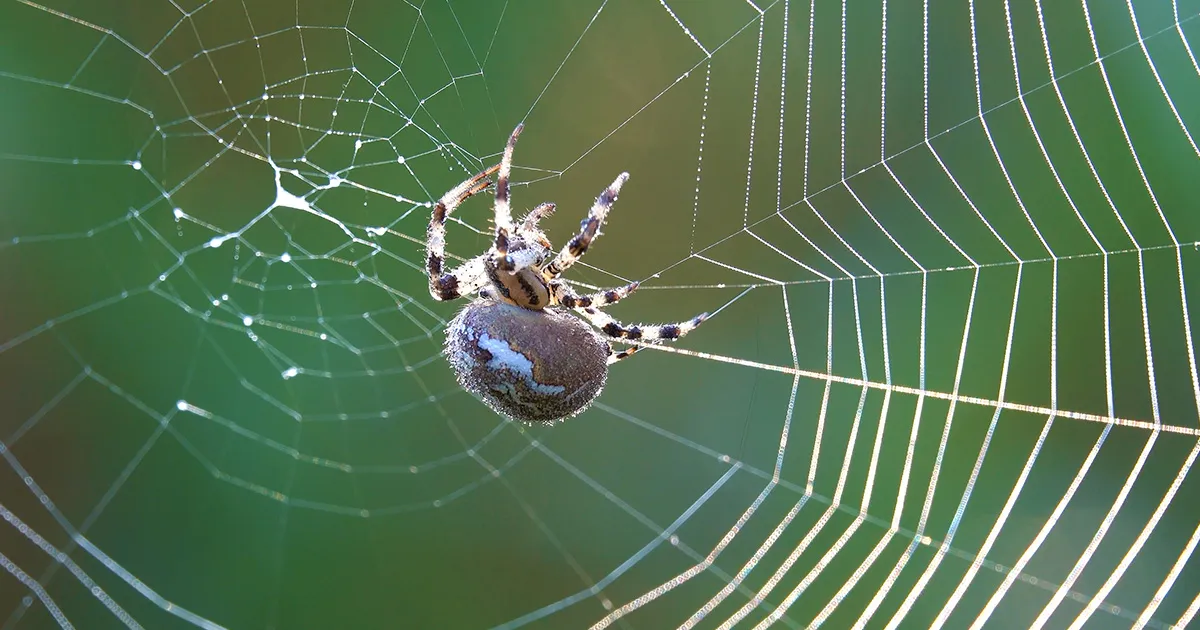
Biologists are decoding how a spider's protein-rich 'silk dope' transforms, in milliseconds, into a fiber tougher than Kevlar and stronger than steel. For materials and biomedical firms, replicating that process could unlock a new class of strong, flexible, biocompatible products.
Knock a spider off a wall, and it doesn't plummet for long. In milliseconds, it releases a shimmering strand, hauling itself back up on a line tougher than Kevlar, the synthetic used in bike tires and bulletproof vests, and stronger than steel. The same fiber is flexible enough to absorb impact and biocompatible with the human body. That combination makes spider silk a target for engineers and medical device makers, but the real puzzle is how the spider produces it: from a concentrated protein solution, known as silk dope, that looks like a tangled mess at the molecular level.
New research into that molecular structure is revealing exactly how the transition happens. The silk dope is packed with proteins that start out largely unstructured, but as the spider draws the liquid through its spinning organ, mechanical forces and chemical changes align those proteins into a tough, ordered fiber. Biologists are uncovering the physical cues that trigger this shift, hoping to translate the trick into an industrial process. If they succeed, the payoff could be enormous: a material that is renewable, biodegradable, and stronger per weight than steel could replace petroleum-based Kevlar in everything from surgical sutures to lightweight body armor.
The stakes extend well beyond the lab. Kevlar production relies on sulfuric acid and energy-intensive processing, while steel is heavy and resource-heavy to extract. Silk, by contrast, is produced at ambient temperatures in water, a fact that makes replicating the spider's internal spinning process an environmental opportunity as much as a materials science one. For companies in advanced textiles, medical implants, and defense, the ability to spin silk fibers on demand without raising cannibalistic spiders would disrupt current supply chains and material performance standards.
What makes the biological process so remarkable, and so hard to replicate, is the speed and control. The spider does not simply pull a gooey string; it manages a precisely timed phase change, converting a disordered protein soup into a crystalline structure that excels at both strength and elasticity. The balance seems contradictory: the same material must resist breaking under tension while also stretching enough to absorb sudden shocks. That balance is exactly what researchers are now mapping, protein by protein, to find the design rules for synthetic equivalents.
For decision-makers, the implications are practical. The research points toward new methods for spinning high-performance fibers at low cost, using fermentation or recombinant proteins rather than fossil feedstocks. Industries that depend on strong, flexible, and body-safe materials will be watching closely. Medical device firms could see absorbable sutures and implantable scaffolds made from synthetic spider silk; automotive and defense companies could use lightweight panels that outperform composites built around synthetic polymers. The same discoveries could also inspire new manufacturing methods that rely on shear forces and pH shifts rather than heat and toxic solvents.
The race now is to move from molecular insight to scalable production. Nature has already shown that a millisecond spin can yield a material with properties engineers have chased for decades. The question is whether companies can build a machine that mimics the spider's microscopic control. As researchers continue to untangle the process, the commercial potential only grows. The next breakthrough in materials manufacturing may not come from a lab synthesis but from understanding the humble spider, and the dope it spins in the blink of an eye.
This story's Key Insights and Take-aways are locked.
Create a free account to unlock Executive Actions for one credit.
Register to UnlockAlways free for Executives Club members. Join the Club
More in Science

The Pentagon is 'lethalitymaxxing.' Dictionary.com just made it official.
The suffix that conquered gaming, sleep, and the military is the word of the year - and it's a signal for how you brand, hire, and compete.

No Drill, No Needle: This Liquid Stopped Kids' Cavities in a Major Trial
A simple liquid painted on in seconds just cleared a major clinical trial, cutting the need for pediatric dental surgery and speeding the path to FDA approval.

Elon Musk's SpaceX gets US military's restricted space tracking data
The quiet data transfer hands Musk's company an orbital tracking edge, raising national security and competition alarms.