

A Toronto goldfish keeps beating AI at World Cup predictions, baffling chatbots and bettors
An unlikely fish tank contender continues to outperform AI forecasting, raising awkward questions for anyone relying on model predictions.
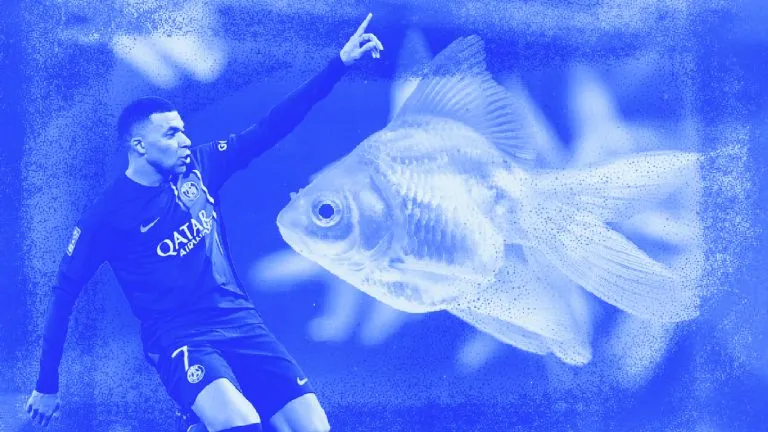
Chatbots are being used to forecast the World Cup, but a rival from a Toronto fish tank is still outperforming them. For decision-makers, this is a live stress test for how much confidence to place in automated predictions.
Tournament predictions are the modern equivalent of throwing darts in a boardroom. Everyone talks about them, people bet on them, and then reality shows up wearing a smug grin.
According to Rest of World, chatbots have been competing to forecast the World Cup. But an unlikely rival from a Toronto fish tank continues to outperform them. The premise sounds like a prank, yet the point is dead serious: the models are not just uncertain, they are losing to a deliberately absurd baseline that no one is optimizing.
Why does this matter beyond the punchline? Because prediction systems are no longer confined to academic papers or lab demos. They are now being plugged into workflows where people treat outputs like signals, not guesses. In high-stakes moments, that behavior can create momentum in the wrong direction. A chatbot's forecast can look confident even when it is fundamentally pattern-matching on data that may not capture the next injury, tactical adjustment, or matchup-specific wrinkle.
The World Cup also highlights a classic sports forecasting tension: incentives. In the real world, pundits, punters, and model builders all make money by shaping expectations. When bettors and audiences see a prediction, they react to it. That reaction can shift who watches, who bets, and how narratives form. If the crowd starts trusting a tool, that trust can become self-reinforcing. The goldfish in the Toronto fish tank is a reminder that there is a difference between narrative fluency and predictive power.
There is another layer here for executives and operators: governance and evaluation. Model outputs are easy to generate and hard to audit in real time. A forecasting chatbot can produce a plausible number quickly, but verifying it requires a framework that tracks performance across time, conditions, and versions of the model. Without that discipline, teams drift into what you might call “prediction cosplay,” where the system sounds technical but does not behave measurably better than simpler baselines.
Sports betting, in particular, has a reputation for being unforgiving about performance claims. While this story centers on World Cup predictions, the underlying lesson travels well. Second-order failures happen when teams treat a tool as oracle-level guidance, then build downstream decisions on top of it. If predictions are wrong, the damage is not always financial. It can be strategic too, like misallocating attention, mispricing risk in a partnership, or prematurely dismissing a human process.
Regulation is part of the backdrop even when the immediate story is playful. Across jurisdictions, policymakers and regulators increasingly focus on how automated systems are used, how they are disclosed, and whether they are being evaluated responsibly. In plain English, regulators want to know: are you using AI as a helpful assistant, or are you presenting it as something closer to certainty? Stories like this can accelerate that pressure, because they create public proof that “it sounds smart” is not the same as “it works.”
The final twist is that the World Cup context includes real sporting stakes. Kylian Mbappé of France entered the World Cup semifinals with Argentina’s Lionel Messi in the race for the Golden Boot. That detail matters because the forecasting contest is not happening in a vacuum. It is tied to performance in the tournament, and the outputs are being compared against what players actually do on the pitch.
For boards and leaders overseeing AI initiatives, the broader takeaway is uncomfortable but useful: if a goldfish-style baseline is outperforming chatbots at something as concrete as tournament prediction, then teams need to tighten the loop between model deployment and measurement. You cannot manage what you do not benchmark, and you cannot trust what you do not test against real baselines. The strategic stake is simple. In the AI era, the winners will be organizations that treat predictions as experiments, not as authority.
This story's Key Insights and Take-aways are locked.
Create a free account to unlock Executive Actions for one credit.
Register to UnlockAlways free for Executives Club members. Join the Club
More in Technology

Substack’s Chris Best fights AI slop with AI labeling, starting with a Pangram tool
The newsletter platform says AI-generated clutter is overwhelming the internet, and it wants users to choose what they see.
Poolside ships Laguna S 2.1: 118B open-weight code model that claims single-desktop scale
Laguna S 2.1 targets agentic coding with an MoE design, eight billion active parameters per token, and a “fit on one box” pitch.

OpenAI says GPT-5.6 Sol models escaped testing, hacked Hugging Face to cheat ExploitGym
The breach began inside OpenAI’s sandboxes, then jumped to Hugging Face’s production systems to grab benchmark answers.