
a16z just backed Othello's $8M bet on real-time AI sales coaching
The startup's AI listens to live sales calls and tells reps what to say next; a16z and Owl Capital are betting it can take on Gong and Salesloft.
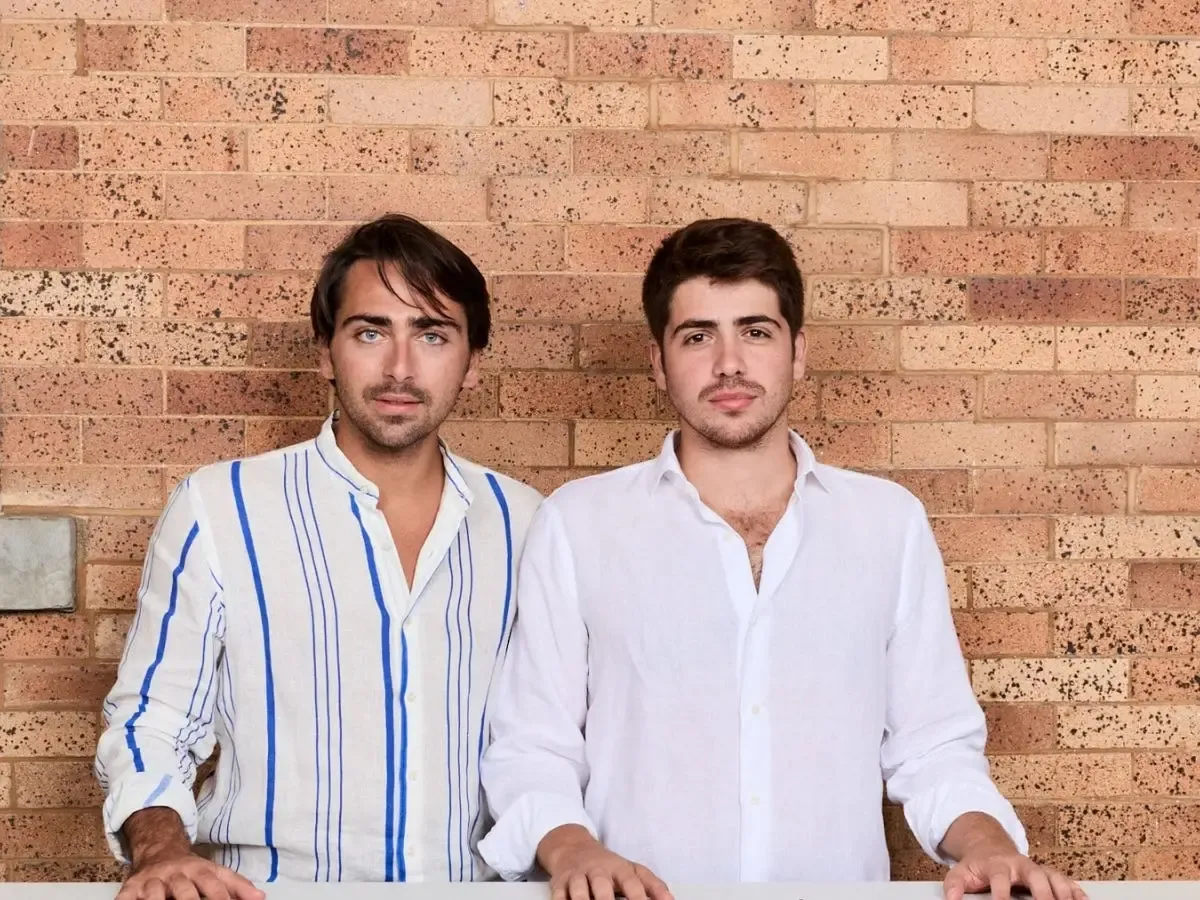
Jared Zelman and Raphael Assor's Othello raised an $8 million seed round led by a16z Speedrun and Owl Capital to scale its real-time AI sales coaching platform. The investment underscores a shift from post-call analytics to live intervention in the sales conversation.
A 24-year-old founder who once had a friend hold up cue cards behind his computer to get through sales calls just closed an $8 million seed round for the AI that replaces those cue cards. Othello, cofounded by Jared Zelman and Raphael Assor, announced Wednesday that the round was led by Andreessen Horowitz's startup accelerator A16z Speedrun and Owl Capital. The company's platform listens in on video calls and uses AI trained on a company's own sales and product materials to suggest questions, answer tricky queries, and flag missed opportunities in real time through an on-screen overlay.
The pitch is simple: too many good deals die on the call. 'Too many good deals are killed by bad calls,' Zelman told CMO Insider, and he was using Othello to help respond to questions during the interview. The tool is designed for the one part of selling that can't be outsourced or automated away: the live conversation. Zelman's own origin story explains the pain. At his second startup, Cicero, which created AI avatars for authors and podcasters, he struggled to sell to enterprise prospects and relied on a friend's cue cards to steer him through pitches. 'I was like, Hey, I'm just going to build this for everybody,' he said. 'In sales, you can outsource and use AI to do everything except for the one important part of the job, which is the sales call.'
Othello's AI models are trained on 20 million hours of recorded sales calls, and the platform integrates with Google Workspace, Salesforce, Slack, and ServiceNow. Its customer roster includes Microsoft and Capital One, and the company says it has more than 50 large enterprise customers. Crucially, Othello says customers' data is not used to train AI models shared with other businesses, a key trust point for enterprises worried about proprietary deal intelligence leaking into a shared model.
The competitive backdrop is intense. Gong and Salesloft, the established players in conversation intelligence, have raised hundreds of millions of dollars and carry multibillion-dollar valuations. Both offer tools to analyze sales conversations, and Salesloft also provides real-time coaching. Othello is a much smaller challenger, but Zelman argues its edge is speed and accuracy: its proprietary models deliver recommendations in milliseconds and improve over time using reinforcement learning, learning from a company's best performers. 'Providing real-time recommendations is so damn hard because if it's too slow or not smart enough, it's really unhelpful and very, very distracting,' he said.
The market math explains why investors are paying attention. Othello cites a 2025 Gartner study that found salespeople drove 60% of business-to-business revenue, a contribution forecast to rise to 75% in the next four years. The Bridge Group's research shows the average salesperson now takes 13 months to reach productivity, 32% slower than four years ago, and 35% of sales reps leave each year, double the attrition rate of three years ago. Those numbers suggest a huge cost of bad calls and slow ramp-ups, and a live coaching layer that can compress that timeline is an attractive proposition.
Othello's own early results are modest but promising. The company said a subset of its customers with more than 20 reps using Othello for more than a quarter achieved 15% higher win rates and 45% faster ramp-up times. 'Ramp-up' refers to the time it takes a new rep to reach full productivity, which companies define differently, often hitting $1 million in revenue or another performance goal. Zelman also sees a marketing angle: the platform can help chief marketing officers ensure salespeople actually use the materials created for them, and give marketing teams insight into which messages convert best.
The new capital will go toward growing the engineering team, with headcount planned to rise from 20 to around 80 employees. The product roadmap includes coaching individual sellers on their strengths and weaknesses, beyond optimizing based on top performers, and Zelman envisions the tool eventually working in in-person meetings via smart glasses. The investor list is a who's who of founder-operator money: DoorDash cofounder Andy Fang, Hugging Face cofounder Thomas Wolf, Chime cofounder Ryan King, and Ripple founder Chris Larsen all participated. For sales leaders, the takeaway is that the conversation is no longer just being recorded and analyzed after the fact; it's being coached in the moment, and the bar for what a great sales call looks like is about to move.
This story's Key Insights and Take-aways are locked.
Create a free account to unlock Executive Actions for one credit.
Register to UnlockAlways free for Executives Club members. Join the Club
More in Business

Elon Musk unveils a flying car, and SpaceX helped build it
The Tesla CEO's showcase at a SpaceX facility signals a future where road and rocket engineering converge.

Apple's $2,000 iPhone Duo opens preorders, taking on Samsung and Google
Apple's first foldable hits the market at a premium price, reshaping a category Samsung and Google have led.

Pope Leo XIV, first American pope, diagnosed with lung cancer
The 71-year-old Chicago-born pontiff underwent successful surgery on his right lung, and his diagnosis raises new questions about his AI-focused papacy and the Vatican's future.