
Abbas Sajwani nears £190m London mansion deal tied to Regent's Park
AHS Properties’ rising billionaire son targets The Holme for about £190m, re-raising the stakes on Gulf trophy real estate in London.

Abbas Sajwani, son of Emirati billionaire and DAMAC founder Hussain Sajwani, is nearing a deal to acquire The Holme, a historic mansion overlooking Regent's Park, for approximately £190 million (AED 920 million), according to the Financial Times. The transaction underscores a growing Gulf appetite for landmark London properties, even while Dubai continues pulling in record international wealth.
Abbas Sajwani is nearing a deal to buy a London trophy residence for approximately £190 million (AED 920 million), a price point that would place the transaction among the highest-value residential property deals ever completed in the UK capital, according to the Financial Times.
The property in question is The Holme, a historic mansion overlooking Regent's Park. The FT reports that Sajwani is set to purchase it on behalf of his family, after the home was previously under offer earlier this month. The timing matters because The Holme is not just a big house, it is a reputation-heavy asset with a long paper trail, including a period when it fell into receivership after being owned by members of the Saudi royal family.
So why does this matter beyond real estate gossip? Because the number and the destination are doing work. £190 million is not merely an upgrade to residential square footage. It is an unmistakable signal in a market where the highest-end homes are often treated like financial assets with prestige attached. The FT notes that even if the proposed acquisition goes through, it would still fall below London’s record-breaking residential sale earlier this year, when property developer Nick Candy sold his Chelsea mansion for more than £275 million. That comparison frames The Holme not as the top of the mountain, but as a close, very expensive neighbor at the summit.
The Holme is also built for the kind of buyer who wants headline features. The Grade II-listed property is regarded as one of London’s most prestigious homes. It sits close to the official residence of the US ambassador, spans approximately four acres of private gardens, and is held on a long lease from the Crown Estate. The mansion reportedly includes around 40 bedrooms, a detail that turns “luxury” into a kind of shorthand for scale, privacy, and staff capacity. In other words, this is the opposite of a boutique “small and curated” luxury play. It is a fortress estate.
The reported ownership cycle tells a second story about risk and structure. Less than two years earlier, the current owner of The Holme, whose identity has not been made public, acquired the mansion for £139 million. That means the proposed new price, if it is finalized around £190 million, would reflect a large jump over a short period. The receivership history, tied to Saudi royal family ownership, adds another layer: landmark properties can move slowly because they come with legal and ownership complexity. When those complications clear, the end buyer is often paying for both the physical asset and the resolution of the prior chapter.
Sajwani’s involvement also ties this deal to a broader pattern in Gulf ultra-high-net-worth family behavior. The FT says the acquisition highlights growing appetite among Gulf ultra-high-net-worth families for landmark real estate in global gateway cities. That appetite is happening even as Dubai continues to attract record levels of international wealth and investment. The underlying theme for executives is that capital is not sitting still just because Dubai is winning headlines. London, New York, and other global hubs remain strategic “identity markets” for wealth, where the purchase is also a brand statement.
For Sajwani personally, this is consistent with his trajectory in Dubai’s luxury property market. The source notes that his company, AHS Properties, focuses on ultra-luxury residential developments and has rapidly expanded its portfolio. Earlier this month, the developer announced the acquisition of Dubai’s five-star Shangri-La Hotel on Sheikh Zayed Road in a deal valued at approximately $300 million. On AHS’s website, Abbas Sajwani is described as “the youngest billionaire in global real estate,” and it says he built a multibillion-dollar development company in less than five years. In short: The Holme would be another marquee asset, not a one-off bet.
His father, Hussain Sajwani, is a major anchor in this story. He is chairman of DAMAC Properties and is described as one of the Middle East’s best-known property developers. The source also adds that Sajwani has a long-standing relationship with US President Donald Trump and maintained business ties for more than a decade. Their partnership began in 2011, when DAMAC and the Trump Organization developed the Trump-branded golf course in Dubai. More recently, Trump announced alongside Sajwani a planned $20 billion investment into US data centre infrastructure over the next four years, describing the Emirati businessman as “a great investor.”
Even beyond real estate, the source reports Hussain Sajwani has invested in Elon Musk’s SpaceX and xAI, and that Forbes estimates his personal fortune rose sharply over the past two years to $15.3 billion. Those details matter here because they point to a broader capital engine: property developers at this level often manage influence, financing, and high-profile partnerships across sectors. Meanwhile, UK Sotheby’s International Realty, which was involved in the transaction, declined to comment, and neither Abbas Sajwani nor Hussain Sajwani immediately responded to requests for comment, according to the Financial Times. That silence is typical for deals at this tier, but it also reminds decision-makers that the market often waits for official confirmation before pricing in completion risk.
Second-order implication for boards and senior finance leaders: when Gulf ultra-high-net-worth families target Grade II-listed assets in central London, it tightens the feedback loop between trophy real estate and global capital flows. It can raise expectations for deal speed and bargaining power among sellers, especially when properties are rare, regulated, and historically significant. It also suggests that luxury developers and asset managers should be prepared for cross-border buyers who treat landmark homes as both a residence and a long-duration statement of control. In a world where capital rotates between gateway cities, the winning strategy is less about predicting the next purchase and more about understanding how prestige assets get funded, underwritten, and finally transacted.
This story's Key Insights and Take-aways are locked.
Create a free account to unlock Executive Actions for one credit.
Register to UnlockAlways free for Executives Club members. Join the Club
More in Business

A flaw in PHP just forced governments to pull their own sites offline
European agencies from Belgium to Germany took websites dark to patch a critical weakness in the language behind almost 70% of the web, and the blast radius extends far beyond government portals.

BioWare shuts down, Mass Effect 5 dead after $55B EA buyout
The legendary RPG studio's closure lands months after a $55 billion investment group buyout of EA, raising tough questions for gaming's biggest acquirers.
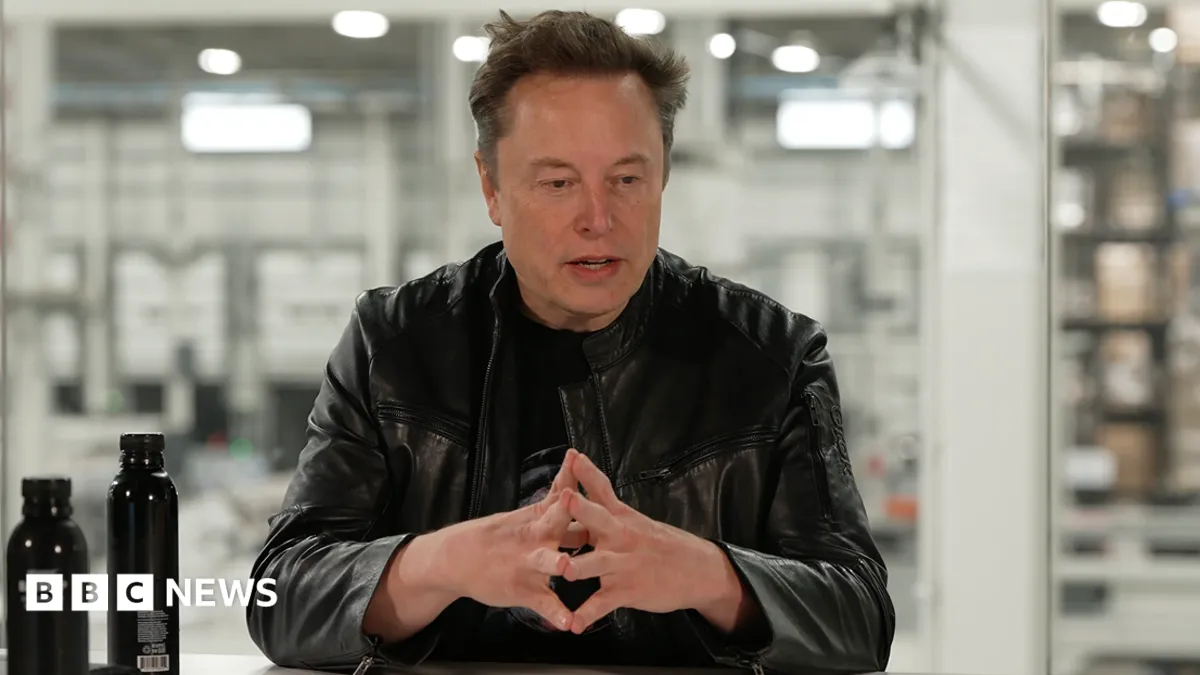
Musk weighs Tesla-SpaceX mega-merger as boards form review panels
Special committees at both companies will examine a tie-up that could fuse electric vehicles and space launch, forcing a fresh look at governance and valuation.