

Adults spend $270 on Panini 2026 stickers, and some say they hit $1,300 to finish
The sticker market is turning World Cup fandom into a real swap economy, with “mature collectors” doing spreadsheets.
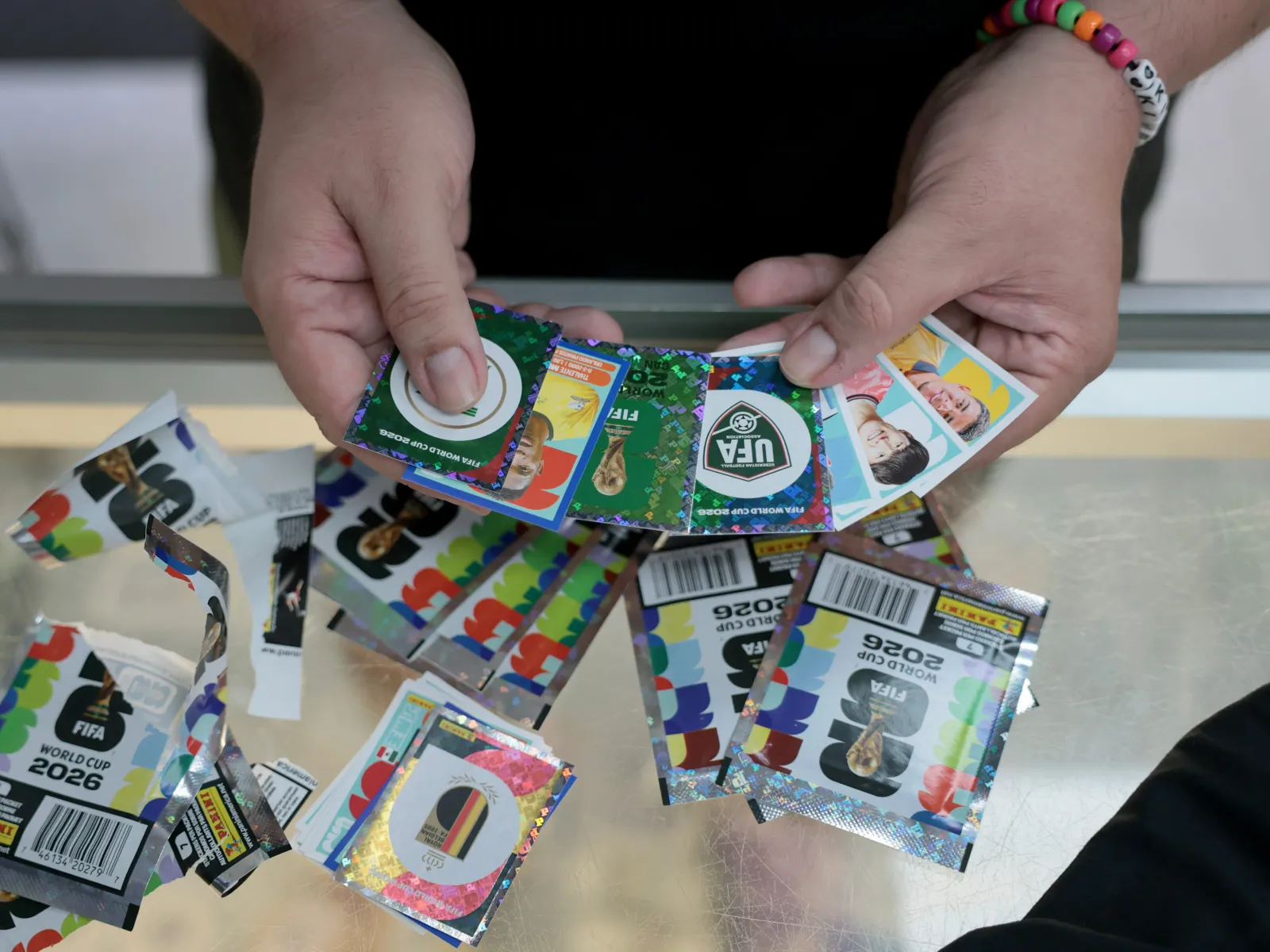
Ryan Hannon and Christian Fialho are spending hundreds trading Panini World Cup 2026 stickers, as the 980-sticker album grows into the brand's biggest ever. For decision-makers, the bigger story is how scarcity, randomization, and online trading create a quasi-market with spillover into sports card investing behavior.
Adults have gotten into trading Panini 2026 World Cup stickers, and for some collectors the bill is no longer pocket change. Ryan Hannon, 29, told Business Insider he has spent “around a thousand in total” on Panini stickers since he started collecting in 2018, explicitly tying the spending to nostalgia rather than the stadium-ticket dream. Christian Fialho, a 30-year-old customer success manager from Kent, is also deep in it and trying to complete the Panini World Cup 2026 album, which runs with 48 competing teams and a 112-page, 980-sticker lineup. The practical twist is that this isn’t just about buying packs. It is about managing a randomized inventory, hunting missing pieces, and using swaps to finish without setting cash on fire.
The numbers behind that cash burn explain why adult fandom is becoming a micro-economy. Each pack costs $2 in the US and £1.25 in the UK, with seven stickers per pack. With zero duplicates, buying 140 packets would cost $280. But because the sticker contents are randomized, some collectors have estimated the cost of completing the album solo to be over $1,300. That gap between “the math on the box” and “the math in your inbox” is the opening that swapping communities rush to fill.
So how does the swap market work, exactly? Collectors buy a physical booklet with blank spaces for each player and team badge, plus bonus stickers for mascots, host stadiums, and sponsors. Then they trade duplicates until the album is full. Business Insider frames this as an evolved version of the childhood playground ritual, now amplified by adult organization. Hannon trades on a Facebook group with more than 13,000 members, describing it as a “wild west” where people post handwritten notes or Excel sheets listing teams and player numbers, and sometimes philosophical musings about how the swap market feels. The second-order effect is not subtle: when adults start building spreadsheets to complete a physical album, you get a more deliberate system for scarcity, value, and negotiation.
This year adds extra logistical pain, because Panini’s 2026 album is not just big, it is bigger in a way that raises the probability of costly missing pieces. The tournament is the biggest since Panini launched its World Cup books in 1970. The 2026 lineup expands the sticker universe with 48 teams and includes competitors like Curaçao, Cape Verde, and Uzbekistan for the first time, which increases the combinatorial chase for collectors still chasing completion. Not everyone is cheering the scale. Paddy Te, 37, said stickers are “lower quality” this year, pointing to colors that “don’t even match,” “lighting on players is awful,” higher prices, and more to collect than ever before. Yet Te has around 800 stickers collected and is nearly done, suggesting the market is resilient even when the product experience is frustrating.
Incentives are doing the rest of the work. Online communities and swap platforms reduce the cost of completing albums, but the underlying economics are clear: packs are randomized, and rare variants create outsized demand. Collectors chase specific players and inserts, and that demand can spill into recognizable “sports card market” behavior. Louro, a 37-year-old London-based designer, built Swap Club as an alternative to what he called a clumsy Facebook setup. Swap Club is a free website where collectors can trade by post, “all free, no selling, no ads,” because Louro argues ads “defeat the whole purpose” of finishing albums. The site has a few hundred users, and Louro says some collectors are close to finishing entirely through postal swaps with strangers.
Even with free swapping, the spending story does not disappear. Fialho says trading is a way to “meet other collectors, help each other out, and importantly, keep the costs down,” but he still spent around $270 on stickers this year and is 70 percent complete. Hannon’s spending totals also show that swapping alone does not eliminate cost, especially when you are missing hard-to-find pieces. Collectors talk about risk and opportunism, too. Fialho is not naive: he warned that “Whenever there’s profit to be made, there are certain individuals you should watch out for,” linking sticker trading to behavior seen in the sports card market. That context matters because the sticker hobby is sitting next to a larger ecosystem where investment-like dynamics are already present.
And the adjacent investment behavior has evidence. A 1979 Panini sticker of a teenage Maradona sold for $637,000 at auction in 2021. Rare inserts from this year’s album, including gold, silver, and bronze variants of star players, can generate serious interest: Louro said he has seen gold Ronaldos go for $535 online. Hannon’s family got a piece of that action too, selling a Gold Salah sticker for $74. For collectors, this is not just nostalgia. It becomes a negotiation between “finish the album” and “don’t miss the profit.” Louro keeps his Portugal repeat stickers for sentimental reasons and has around 900 stickers, 92 percent complete, while still missing Messi. The “waiting by the mailbox” rhythm is both fandom and supply chain reality.
Taken together, the World Cup sticker chase illustrates how mainstream entertainment products can accidentally build a marketplace. Randomized packaging drives repeat purchasing. Large albums with 980 stickers and newly included teams expand the search space. Online communities and swap tools reduce direct spend but create value signals, especially for rare variants. For executives and boards, the second-order implication is that consumer collectible ecosystems can behave like low-friction markets, with the same ingredients that show up in higher-stakes trading domains: scarcity, differentiation, and community-based liquidity.
In other words, this is a World Cup story, but it is also a systems story. Adults are treating the sticker hunt like a project, not a whim, and the cost curve shifts fast when completion becomes a target. If your company touches consumer collectibles, commerce platforms, or sports-adjacent communities, this is a reminder that “hobby” demand can become structured, quantified, and monetized in ways that surprise even the people who thought it was just nostalgia.
This story's Key Insights and Take-aways are locked.
Create a free account to unlock Executive Actions for one credit.
Register to UnlockAlways free for Executives Club members. Join the Club
More in Business

Anthropic’s Levant Alpöge cracks the Jacobian conjecture after 87 years
A Harvard valedictorian used Claude to hit a 1939 breakthrough, but the missing “why” is the real problem.

Uber buys Delivery Hero for nearly $15B, vaulting to top food delivery outside China
The deal doubles Uber's dual-services footprint and pushes a ride-and-eats bundling play into 50 more markets.

Epic and Google drop settlement bid, forcing rival Android app stores by July 22
Google told the court it is ready to carry third-party app stores starting Wednesday, July 22.