
Agility Robotics eyes a $2.5B SPAC go-public deal, WSJ says
Digit robot maker Agility Robotics is reportedly in talks to merge with an unnamed SPAC at about $2.5B valuation.
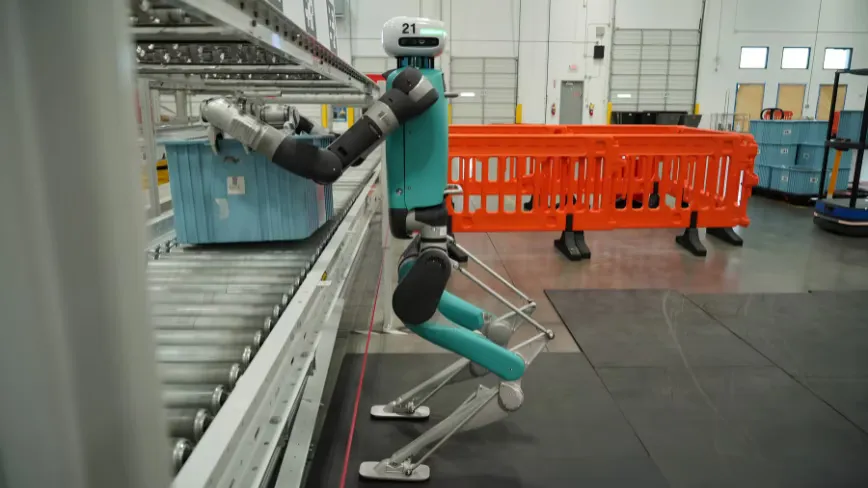
Agility Robotics, the Oregon startup behind the bipedal Digit robot, is reportedly in talks to go public via a merger with a special-purpose acquisition company. Wall Street Journal reports a deal valuing it at about $2.5 billion, though the SPAC partner and terms are unconfirmed.
Agility Robotics, the Oregon startup behind the bipedal Digit robot, is reportedly in talks to go public through a merger with a special-purpose acquisition company. Wall Street Journal says the deal could value the company at about $2.5 billion, putting the spotlight on whether early robotics players can convert hype into durable public-market demand.
The fast part here is the headline number. A roughly $2.5B valuation through a SPAC route is the kind of figure that can change who has leverage in the room. But the slower part, the part executives actually need to understand, is what is not yet nailed down: the terms are not confirmed, the SPAC partner has not been named, and the company has not been publicly pinned to a definitive structure. That uncertainty matters because SPAC deals live or die on details like deal economics, timing, and the risk allocation between founders, public investors, and the SPAC sponsors.
For decision-makers, the first-order question is simple: why would Agility Robotics pursue this path now? SPACs have historically served as an alternative route to the public markets, often offering faster access to capital than a traditional IPO. For a robotics company developing hardware in the real world, capital is never optional. Manufacturing, iteration, safety testing, logistics, and customer deployments all come with cost and timing risk. When you are trying to scale a physical product, runway can matter more than narrative, and a reported path to public-market liquidity can be a strategic tool to fund the next phase.
The second-order question is sharper: what happens after a valuation gets attached to a rumor? The market does not wait for confirmation. Even before terms are final, a reported valuation can influence expectations around revenue growth, bookings, margins, and technical milestones. In robotics, where timelines can be longer and outcomes harder to benchmark, public investors will look for traction signals that go beyond prototypes. That is where “about $2.5B” becomes a governance and investor-relations challenge. The company and its future board will need to align internally on what metrics can be defended and when.
There is also the incentive geometry unique to SPACs. While this report does not name the SPAC partner, it flags that key pieces are still missing. In many SPAC structures, negotiations cover everything from how much cash is in trust, whether additional financing is needed, how warrants and redemption mechanics affect dilution, and what protections exist if performance or market conditions disappoint. Board members and finance leaders typically focus on downside protection and dilution control, because public-market scrutiny is immediate once the deal is announced. The valuation headline can draw attention, but the economics decide whether the company can actually invest through downturns without getting forced into expensive capital raises.
Regulatory framing is another reason this headline is worth your attention. SPAC transactions must still clear securities-law requirements and disclosure expectations, and the bar for public-market communications tends to rise as timelines tighten. Even if Agility Robotics has not confirmed the terms, the process will eventually require a level of transparency that private-market buyers may not demand. For robotics in particular, regulators and investors often want clarity about risk factors: technical execution, operational scalability, liability exposure for robots used in the field, and the competitive landscape for similar automation solutions.
Finally, there is the peer-effect. If Agility Robotics is indeed moving toward a public listing via a $2.5B SPAC merger, other robotics founders and early-stage operators will notice the playbook. The public markets can reprice entire categories based on a single well-timed transaction. Even if the specifics remain unconfirmed, the reported move signals that capital allocators are looking for robotics exposure that can scale, and that robotics companies may be shopping for liquidity routes that keep momentum while development continues.
The strategic stakes are straightforward: for Agility Robotics, the deal needs to translate into real funding and credibility, not just a valuation sticker. For executives and board members watching from adjacent categories, this is a live case study in how hardware-heavy startups try to bridge the gap between engineering timelines and market timelines. And until the SPAC partner and deal terms are confirmed, the most accurate takeaway is also the most important one: everyone is trading on incomplete information right now, and the final structure will determine whether the $2.5B number becomes a platform or a problem.
This story's Key Insights and Take-aways are locked.
Create a free account to unlock Executive Actions for one credit.
Register to UnlockAlways free for Executives Club members. Join the Club
More in Business

A flaw in PHP just forced governments to pull their own sites offline
European agencies from Belgium to Germany took websites dark to patch a critical weakness in the language behind almost 70% of the web, and the blast radius extends far beyond government portals.

BioWare shuts down, Mass Effect 5 dead after $55B EA buyout
The legendary RPG studio's closure lands months after a $55 billion investment group buyout of EA, raising tough questions for gaming's biggest acquirers.
Musk weighs Tesla-SpaceX mega-merger as boards form review panels
Special committees at both companies will examine a tie-up that could fuse electric vehicles and space launch, forcing a fresh look at governance and valuation.