
AI-altered bird photos flood forums, risking fake sightings and scientists' credibility
As enhanced images spread on birding platforms, experts warn AI-generated slop could corrupt research and public trust.
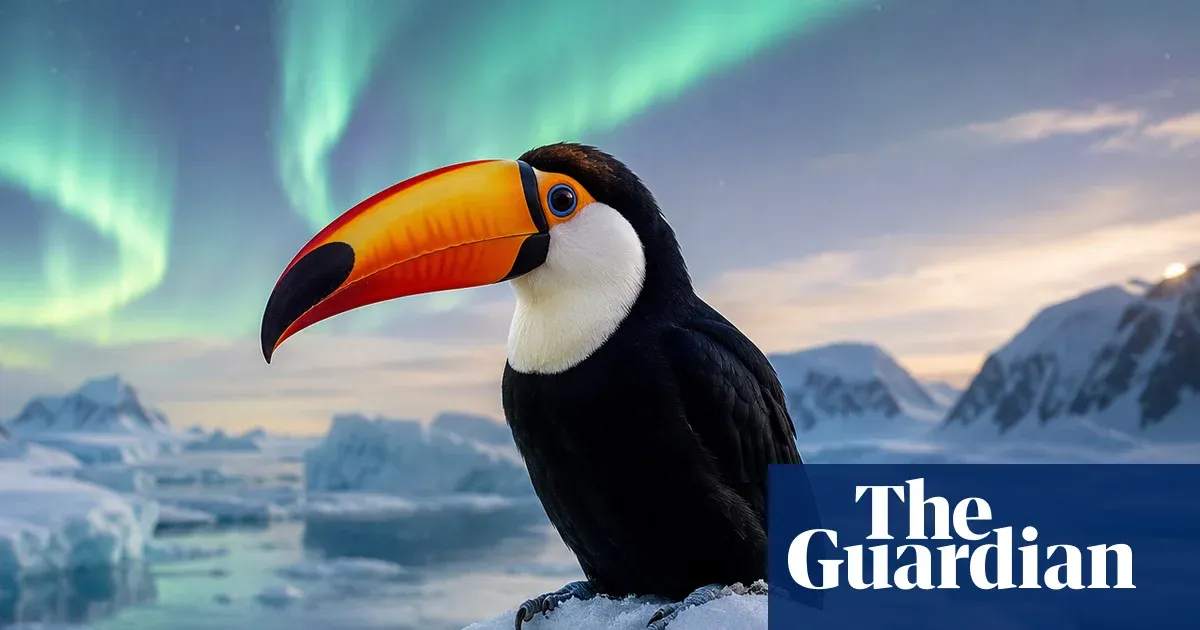
Experts warn that an increase in enhanced, AI-altered bird images on birdwatching forums is putting research at risk by enabling fake sightings. The consequence for decision-makers is a credibility hit for scientific tools that rely on public observations.
For a lot of birdwatchers, spotting a species in the “wrong” place is the whole point. In the UK, when those finds happen, they often turn into national headlines, and communities celebrate them in real time on birding forums.
Take the western reef heron, which is usually found in Africa and southern Europe. In June, it was spotted in a seaside town in north Wales. The birding forums widely celebrated the sighting, but experts now warn a new problem is rising fast: AI slop, meaning AI-altered images that make fake sightings look real enough to spread.
Why does this matter beyond the drama of online bird circles? Because birdwatching is not just hobby trivia. In many research settings, scientists and monitoring tools lean on observations reported by the public. That makes credibility the currency of the entire system. If enhanced photos become common enough, the workflow stops being “collect evidence” and starts being “triage likely fakery,” which costs time and money and can still fail if the fake is good.
The concern described by experts is straightforward: as AI-enhanced photos increase on birding platforms, they can create false records. A convincing image can get repeated, logged, and treated as data. Even if only a fraction of posts are altered, the damage can be outsized because attention is sticky and ecosystems of reports often amplify what looks legitimate. In other words, the first casualty is trust in the sighting itself. The second casualty is confidence in the tool or pipeline that uses those sightings.
This is where incentives get awkward. Birding forums are built for speed, community recognition, and discovery. People want to be first to post, first to confirm, and first to celebrate the rare find. AI makes that “first” easier to manufacture. If someone can generate a plausible image quickly, they can potentially bypass the slower social checks that normally help communities police mistakes, misidentifications, or hoaxes.
Regulatory and governance are not the primary focus of this specific story, but the implications are very familiar to anyone who has watched data ecosystems evolve. When inputs degrade, downstream systems absorb the cost. That can show up as more verification steps, revised methodologies, or stricter moderation policies. For scientists and platform operators, the hard part is that you cannot simply delete skepticism. If you tighten rules too aggressively, you risk discouraging genuine observations. If you stay permissive, you invite more fake sightings and poison the dataset.
Second-order effects are also likely. When the public sees high-profile sightings later questioned, the reputation cost can spread beyond birding forums into how people view science more generally. That is especially true when the original discovery was celebrated on mainstream attention. The story of the western reef heron in north Wales illustrates the fragile chain: a real-looking report can travel far before anyone has a reason to doubt it, and then the credibility repair becomes a separate, time-consuming effort.
There is also a coordination problem. Birdwatching platforms are not one monolith. They are networks of users, posts, and workflows. That means governance has to happen across multiple spaces: the forum where an image appears, any moderation system that decides what gets pinned, and any downstream data products that integrate public reports. Even if one site responds quickly, the altered image can already have migrated.
For decision-makers watching this space, the strategic stakes are not just “avoid fake photos.” It is about protecting the integrity of public-sourced data, which is increasingly common in everything from conservation to citizen science to environmental monitoring. If credibility falls, the value of the whole model falls. And that affects budgets, partnerships, and the willingness of institutions to rely on community-generated evidence. The birding world is getting a taste of a bigger AI-era reality: authenticity is becoming an operational problem, not a moral one.
This story's Key Insights and Take-aways are locked.
Create a free account to unlock Executive Actions for one credit.
Register to UnlockAlways free for Executives Club members. Join the Club
More in Science

Illinois tests 64 one-acre plots to map crop research for the next 150 years
A massive, tile-drained field experiment is underway at UIUC, and farmers are helping set the research targets.
Anaerobic digestion turns animal waste into energy and income for farmers
A centuries-old ingredient, a modern process: livestock waste becomes renewable gas while cutting emissions and diversifying revenue.
Magnetic orientation turns into a three-way handshake inside a single-celled organism
A new study explains how a ciliate-like eukaryote uses Earth’s magnetism, solving a long-standing biological puzzle.