
AI chip trade unravels: PHLX Semiconductor Index drops ~12% in two sessions pre-4th July
The GPU proximity trade cracked, with a roughly 12% two-day selloff after an 80% first-half surge.
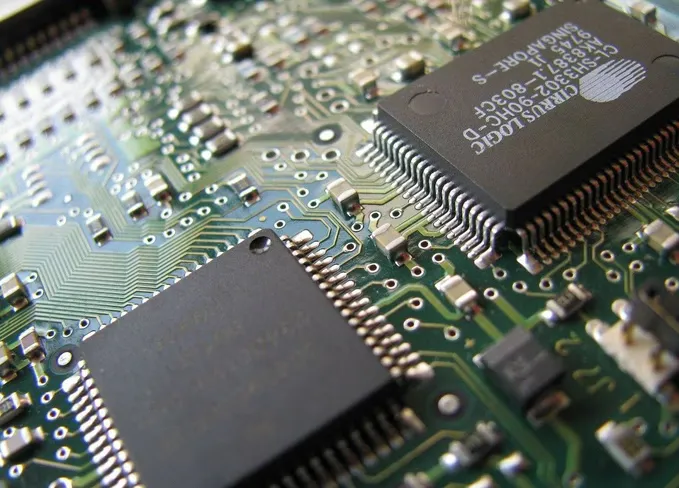
The Next Web reports that the GPU-proximity trade that defined the first half of 2026 broke down in the holiday-shortened week before Independence Day. The PHLX Semiconductor Index, up more than 80% year to date, fell 6.3% on Wednesday and 5.4% on Thursday, about a 12% decline across two sessions.
The AI chip trade that defined the first half of 2026 just cracked in a way traders could not ignore. In the holiday-shortened week before Independence Day, the PHLX Semiconductor Index sank 6.3% on Wednesday and 5.4% on Thursday, for a two-session drop of roughly 12%. That is a fast reversal from the momentum the same index had already built, having surged more than 80% in the first half.
If you have been leaning on semiconductors as a proxy for AI demand, this matters because the move was not a slow bleed. It was a sharp break over two sessions, right before a major market holiday week, when liquidity and attention typically thin out. The headline takeaway is simple: the trade that had rewarded “buy anything with proximity to a GPU” stopped paying in a hurry. The bigger question is what replaces that trade, and what it signals for anyone making near-term capital allocation decisions based on AI-adjacent narratives.
To understand why this kind of selloff is so disruptive, it helps to remember what “GPU proximity” trades usually do. They treat the entire AI supply chain as one crowded bet, where success and risk get bundled together. When money pours into the theme, that bundle can lift even companies that are only indirectly exposed. But when the theme breaks, the selloff tends to be broad first, selective later. You typically see index-level moves (like the PHLX Semiconductor Index) before investors sort out which business models deserve to survive the repricing.
The timing is also telling. This happened in the holiday-shortened week before Independence Day. Markets can behave differently around holidays, but the important point is that the decline still happened, specifically with two consecutive down sessions: 6.3% on Wednesday and 5.4% on Thursday. A roughly 12% drop in just two days is big enough that it usually forces a rethink, not just a pause. It can trigger systematic risk controls, prompt managers to rebalance thematic portfolios, and push valuation arguments from “the story will carry us” into “prove it with results.”
There is a regulatory and policy dimension to why investors can get overconfident in AI-adjacent equities in the first place. Semiconductors and AI chips do not exist in a vacuum: export controls, national security concerns, and procurement decisions can materially affect where demand is allowed to flow. Even when those policies do not change week to week, they sit in the background and shape long-horizon expectations. When a theme trade gets crowded, any friction in expected demand can land with outsized force. In other words, the market can treat the theme as inevitable until the tape disagrees.
So what does “hunt for what replaces it has begun” really mean? It means investors now need a new framework for allocating capital. A trade defined by GPU adjacency is a blunt instrument. When it fails, boards and finance leaders usually face the same problem: your strategy may be correct, but your stock might be priced like it is guaranteed. When broad semis sell off, the market starts demanding differentiation. That differentiation can come from execution, margins, specific product cycles, customer concentration, or manufacturing positioning. The source does not list which companies were hit or how the performance split across names, but the index-level data already tells you the first-order story: the crowd exited the theme together.
For executives in tech, investors managing risk, and anyone on a board who has semis exposure in a portfolio, the second-order implication is about behavior. After a roughly 12% index drop over two sessions, people stop treating AI as a single bet. They scrutinize the mechanics: who converts AI demand into revenue, who captures value, who gets caught in delays, and who benefits when capital spending decisions become more discriminating. If your company relies on being “close enough” to the GPU wave for valuation support, this kind of reversal is a reminder that markets can unbundle quickly.
Finally, this is a strategic stake for peers: once a high-performing theme like semiconductors can give back speed, the cost of being late to a new narrative rises. The hunt for what replaces the trade is not just a trading game. It is a signal that the market is re-pricing the link between AI adoption and semiconductor returns. And if that linkage tightens or loosens, it can reshape financing conditions, partner negotiations, and long-term planning across the entire ecosystem that sits near the GPU.
This story's Key Insights and Take-aways are locked.
Create a free account to unlock Executive Actions for one credit.
Register to UnlockAlways free for Executives Club members. Join the Club
More in Technology

KRISS ships a room-temperature, plug-and-play single-photon source in a 19-inch rack
A cryogen-free single-photon device that powers on ready could move quantum light from lab benches to real sites.
Starcloud and Axiom Space sprint to build AI data centers in orbit ahead of Big Tech
Startups like Starcloud and Axiom Space want to lock in orbital capacity before Google and SpaceX scale up AI deployments.

Cognition AI’s Devin-kun deal: Tokyo now modernizes legacy code with agentic software
A Tokyo office, a METI hiring crunch, and a Sapporo code overhaul show why Japan is betting on AI agents.