
AI-generated image wins Nikon contest, now Nikon rewrites rules
Nikon is re-evaluating its Small World in Motion contest after an AI-created entry took the prize, raising the stakes for authenticity in visual competitions.
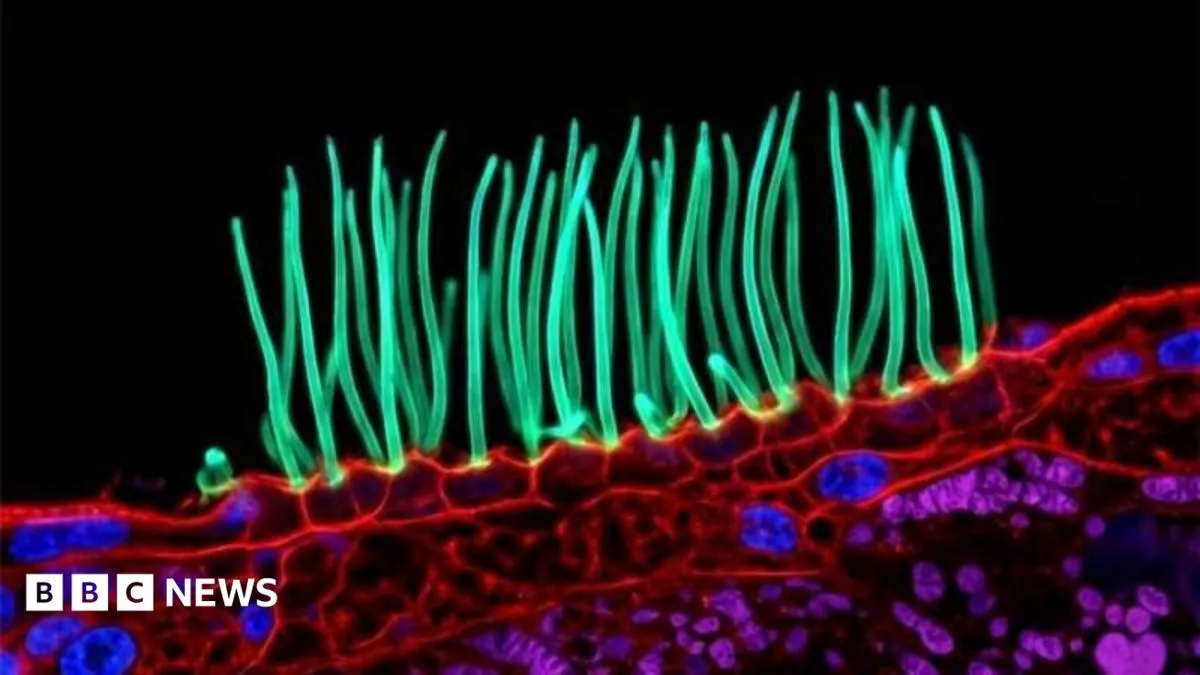
Nikon is re-evaluating the rules and procedures of its Small World in Motion contest after an AI-generated image won the prize and sparked backlash. The decision signals a broader reckoning for photography contests and brands that must now police the line between human and machine-made imagery.
Nikon, the camera maker, is re-evaluating the rules and procedures of its Small World in Motion contest after an AI-generated image won the prize and sparked backlash. The company confirmed it is now reviewing its guidelines, a direct response to a controversy that has put the authenticity of its most visible scientific imaging competition under a microscope.
The winning image, which was created with AI rather than captured through a microscope, triggered criticism from photographers and scientists who argued it violated the spirit of a contest built to celebrate human observation and optical craft. Nikon's re-evaluation is an admission that its current rules did not anticipate a machine-made entry slipping through, and that the definition of "photography" itself is now in question. The company's statement, reported by BBC News, is short on specifics, but the implication is clear: the rulebook is being rewritten because the old one no longer fits the reality of generative AI.
The Small World in Motion contest has long been a showcase for the intersection of art and science, inviting researchers and hobbyists to submit videos and images captured through microscopes. Winners have historically been celebrated for their technical skill and aesthetic vision, often revealing structures invisible to the naked eye, from the firing of neurons to the dance of cellular division. But the arrival of generative AI has blurred the line between observation and invention, and Nikon's own competition has now become a flashpoint for that ambiguity. The backlash was not just about one image; it was about the integrity of a competition that has built its reputation on the idea that the images are real, captured, and verified.
Nikon is not alone in facing this reckoning. Across the creative industry, awards and contests are scrambling to update their rules as AI-generated work becomes indistinguishable from human-made pieces. Some organizations have moved to ban AI outright, while others are requiring disclosure or creating separate categories. The challenge is that verification is difficult, and the incentives to cheat are rising as prizes and prestige grow. For a contest like Small World in Motion, which sits at the intersection of science and art, the stakes are even higher because the images are often used in research and education, where trust in the source is paramount.
For Nikon, the stakes are particularly high. The company's brand is built on the promise that its cameras capture reality, not fabricate it. If its own contest cannot guarantee that a winning image was actually seen through a lens, it undermines trust in the entire ecosystem of photography, from professional photojournalism to scientific documentation. Re-evaluating the rules is a necessary first step, but the harder question is how to enforce them. Will Nikon require raw files, metadata, or a declaration of AI use? Will it use detection software, which is itself imperfect? These are the practical questions that will determine whether the re-evaluation leads to meaningful change or just a new set of loopholes.
The decision also sends a signal to the broader market. Camera makers, software companies, and content platforms are all being forced to define what counts as authentic visual media. Nikon's response will be watched by competitors like Sony and Canon, as well as by the millions of creators who submit work to contests and expect a level playing field. The outcome could set a precedent for how the industry handles AI-generated imagery in the years ahead. If Nikon chooses to ban AI outright, it will draw a bright line that other contests may follow. If it opts for disclosure or a separate category, it will acknowledge that AI is now a legitimate tool in the visual arts, even in scientific contexts.
For executives and decision-makers, this episode is a reminder that generative AI is not just a tool for productivity or creativity; it is a force that is rewriting the rules of trust and authorship. Any organization that runs a competition, awards program, or certification process should be asking the same questions Nikon is now asking: What is the role of human input? How do we verify it? And what happens when the answer is no longer obvious? The cost of getting it wrong is not just a single embarrassing incident; it is a slow erosion of credibility that can take years to rebuild. Nikon's move is a defensive one, but it is also an opportunity to lead. By re-evaluating its rules transparently and thoughtfully, the company can turn a moment of backlash into a demonstration of integrity, and set a standard that others will be forced to meet.
This story's Key Insights and Take-aways are locked.
Create a free account to unlock Executive Actions for one credit.
Register to UnlockAlways free for Executives Club members. Join the Club
More in Technology

A Chinese rocket deorbited over Minnesota and landed in a farmer's cornfield
Experts tied the fragment to LandSpace's Zhuque-2E, which launched on September 15 and shed debris over the American Midwest after deploying 10 satellites.

JPMorgan Chase deploys first $5B into defense tech and hypersonic missiles
The bank is moving off its balance sheet to back robot factories, hypersonic missiles, and supply chains, signaling a new era of bank-backed military innovation.

Cop fired after sharing Flock login with ICE husband: 983 searches
A Savannah officer's shared credential let an ICE agent run hundreds of plate searches on Hispanic drivers, exposing a surveillance backdoor.