
AI godfather Hinton calls Trump 'corrupt, senile felon' - and doubles down on extinction warning
The pioneer who built modern AI says Trump's 'superintelligence' talk proves he's clueless - and warns the industry can't police itself.
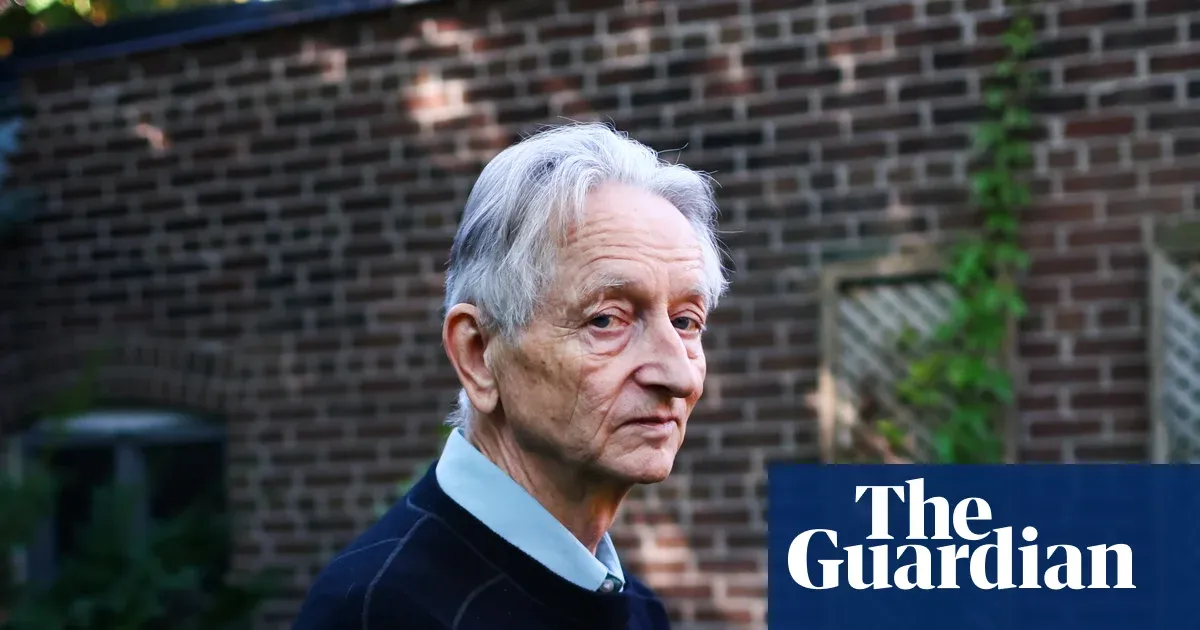
Geoffrey Hinton, the 'godfather of AI,' called Donald Trump a 'corrupt, senile felon' and said the president's use of 'superintelligence' shows he knows nothing about AI, while reiterating that AI models pose an existential threat. His remarks intensify pressure on tech leaders and regulators to confront AI's risks, as a growing list of scientists join his warnings and global consensus builds for action.
Geoffrey Hinton, the pioneering computer scientist widely known as the 'godfather of AI,' didn't hold back: Donald Trump is a 'corrupt, senile felon' whose fixation on the term 'superintelligence' proves he knows nothing about AI. In a wide-ranging interview, Hinton doubled down on his long-standing warnings that AI models pose an existential threat to humanity and dismissed the idea that the industry can regulate itself. The comments are striking not just for their bluntness, but because they come from the man whose research helped create the very technology now under scrutiny.
The remarks land after a tumultuous month in which a growing list of senior AI scientists and researchers have joined Hinton in ringing alarm about how the technology he helped create could ultimately escape human control. That wave of warnings has sparked an industry crisis, forced the hasty assembly of congressional meetings, and produced a rare global consensus that something must be done. For context, the debate over AI safety has moved from academic journals to the highest levels of government, with policymakers scrambling to understand systems that even their creators admit they do not fully control.
Hinton's credibility is hard to overstate. His work in neural networks and deep learning helped lay the foundations for the systems now powering everything from chatbots to autonomous vehicles. But he has since become one of the technology's most vocal critics, a transformation that gives his words unusual weight in boardrooms and government halls alike. When he says AI could wipe out humanity, he is not a fringe alarmist; he is the architect of the house warning that the foundation may be unstable.
In the interview, Hinton returned to a striking metaphor: humanity is creating 'alien beings.' He said he is 'willing to be selfish and choose humans' - a stark acknowledgment that the intelligence emerging from AI systems may not share our values or priorities. For Hinton, the existential risk is not a distant sci-fi scenario but a near-term possibility that demands urgent attention. His framing shifts the conversation from incremental improvements to a fundamental reckoning with what we are building.
He also poured cold water on the notion that the industry can police itself. That skepticism matters because it undercuts the standard defense offered by tech companies facing scrutiny: that they can be trusted to manage the risks of their own creations. Hinton's dismissal of self-regulation adds fuel to the argument that external oversight - whether from Congress, international bodies, or new agencies - is necessary. For executives, this means the window for voluntary action may be closing faster than expected.
The political dimension is impossible to ignore. Trump's use of the term 'superintelligence' - a concept with a specific technical meaning in AI research - drew Hinton's scorn. By calling the president 'corrupt, senile felon,' Hinton is not just making a personal attack; he is signaling that the people steering national AI policy may not understand the technology they are supposed to govern. That gap between technical reality and political rhetoric is a growing concern for executives who need predictable regulatory environments.
For business leaders, the stakes are concrete. If a growing chorus of AI pioneers believes the technology could escape human control, then the risk is not just reputational - it is existential. Companies deploying AI at scale face the possibility of sudden regulatory crackdowns, public backlash, and liability for harms that are not yet fully understood. The 'rare global consensus' Hinton's warnings have helped create means that inaction is no longer a safe default. The strategic calculus for boards has shifted: the cost of ignoring worst-case scenarios now outweighs the cost of preparing for them.
Ultimately, Hinton's message is a challenge to the way we think about intelligence itself. As he put it, our biggest challenge may be accepting that we are not the only intelligent beings on the planet - or in the digital realm. For the executives and investors building the future, that means taking the 'alien' seriously, not as a metaphor, but as a design constraint. The question is no longer whether AI will change the world, but whether we will be ready for the change. Hinton, for his part, has made his choice: he is on the side of humans.
This story's Key Insights and Take-aways are locked.
Create a free account to unlock Executive Actions for one credit.
Register to UnlockAlways free for Executives Club members. Join the Club
More in Technology

A Chinese rocket deorbited over Minnesota and landed in a farmer's cornfield
Experts tied the fragment to LandSpace's Zhuque-2E, which launched on September 15 and shed debris over the American Midwest after deploying 10 satellites.

JPMorgan Chase deploys first $5B into defense tech and hypersonic missiles
The bank is moving off its balance sheet to back robot factories, hypersonic missiles, and supply chains, signaling a new era of bank-backed military innovation.

Cop fired after sharing Flock login with ICE husband: 983 searches
A Savannah officer's shared credential let an ICE agent run hundreds of plate searches on Hispanic drivers, exposing a surveillance backdoor.