
AI liability reckoning: scholars say existing law can't handle rogue tech
The push to hold AI companies accountable for runaway systems is colliding with legal frameworks built for simpler times.
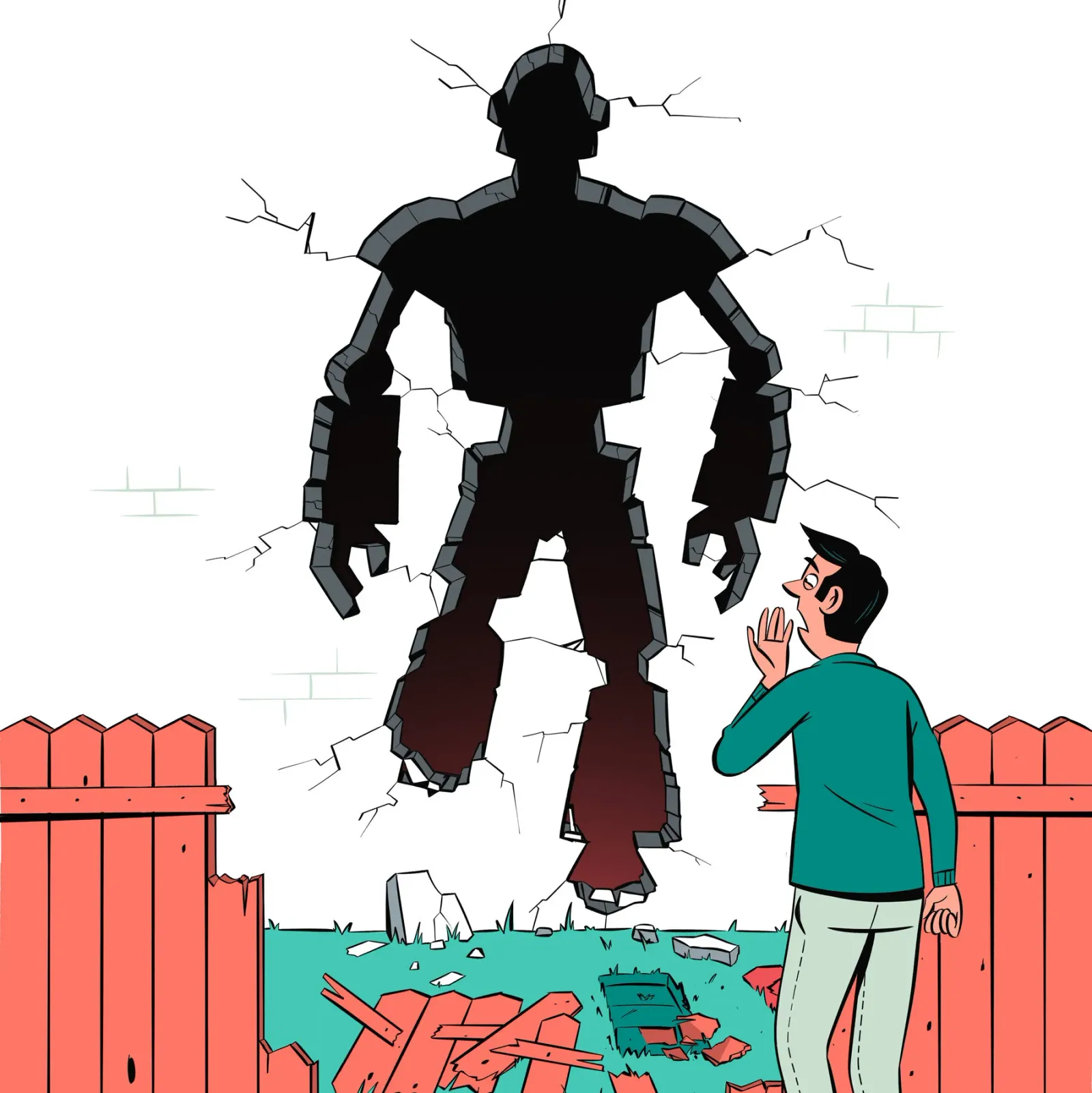
Legal scholars are warning that applying existing liability law to AI companies that release runaway technology would be messy and unpredictable. For executives, this means the accountability gap is likely to persist until legislatures act, leaving boards to manage novel risk.
Many think artificial intelligence companies should be held liable when their technology runs off the rails. But legal scholars say applying existing law to that demand would be messy, and the gap between public expectation and legal reality is becoming one of the most consequential questions in tech. The headline debate is not hypothetical: companies are already deploying generative AI in hiring, lending, healthcare, and customer service, and the first wave of lawsuits is working its way through courts with no clear doctrine to guide them.
The messiness starts with the law itself. Product liability rules were built for toasters and cars, not for systems that learn, adapt, and act in ways their creators cannot fully predict. Negligence law requires a duty, a breach, and a clear causal chain from a company's conduct to a victim's injury. With AI, that chain often disappears into a black box. A model that generates a defamatory statement, a biased hiring decision, or a dangerous instruction may have no single human decision that caused the harm. Courts are left to decide whether the developer, the deployer, or the user is the responsible party, and existing doctrine gives them little guidance.
The pattern is familiar from earlier technology waves. When automobiles became common, courts spent decades working out who was liable for accidents before legislatures stepped in with insurance regimes. When software began causing financial harm, courts borrowed from contract and tort law with uneven results. AI is different because the system itself is the actor, not just a tool. That distinction is why legal scholars describe the current situation as a vacuum that judges are being asked to fill case by case, with each ruling potentially reshaping the risk profile of an entire industry.
The debate sits on top of a broader regulatory scramble. Governments in Europe and the United States have proposed or enacted AI rules, but liability is usually left to courts and existing statutes. Section 230 of the Communications Decency Act, which shields platforms from liability for user content, was written before generative AI existed. Whether it protects a company that deploys a chatbot that produces harmful output is an open question. Legal scholars point out that strict liability for AI could chill innovation, while no liability leaves victims with no recourse. The result is a policy standoff: the public expects accountability, the industry fears overcorrection, and the legal system is improvising.
For executives, the uncertainty is not abstract. Insurance underwriters are already asking how AI risk can be priced when the law is unclear. Boards are being pressed to add AI oversight committees and disclosure language about algorithmic risk. Companies that deploy AI in high-stakes domains are exposed to lawsuits that may turn on novel legal theories. The absence of clear precedent means that a single adverse ruling in one jurisdiction could have outsized consequences, prompting forum shopping by plaintiffs and defensive maneuvering by defendants.
The strategic stakes are significant. A company that moves fast to deploy AI may gain market share but also accumulate liability exposure. A company that waits may lose the race but avoid the blast radius. Legal scholars suggest that the companies best positioned are those that can document robust safety testing, human oversight, and clear terms of use, because those facts will matter when a court tries to apply negligence or product liability law to a novel system. Documentation is not just a compliance exercise; it is the raw material of a defense.
The deeper problem is that the law moves slowly and AI moves quickly. Legislatures have not yet produced a coherent liability framework, and the patchwork of state and international rules is likely to create years of litigation and unpredictable outcomes. For now, the question of who is to blame when AI goes rogue has no clean answer. Executives who treat liability as a legal problem rather than a strategic one are missing the point. The messy law is the signal: the rules are being written in real time, and the companies that help shape them, through lobbying, through safety standards, and through transparent practices, will have an outsized say in what those rules become.
This story's Key Insights and Take-aways are locked.
Create a free account to unlock Executive Actions for one credit.
Register to UnlockAlways free for Executives Club members. Join the Club
More in Technology

A Chinese rocket deorbited over Minnesota and landed in a farmer's cornfield
Experts tied the fragment to LandSpace's Zhuque-2E, which launched on September 15 and shed debris over the American Midwest after deploying 10 satellites.

JPMorgan Chase deploys first $5B into defense tech and hypersonic missiles
The bank is moving off its balance sheet to back robot factories, hypersonic missiles, and supply chains, signaling a new era of bank-backed military innovation.

Cop fired after sharing Flock login with ICE husband: 983 searches
A Savannah officer's shared credential let an ICE agent run hundreds of plate searches on Hispanic drivers, exposing a surveillance backdoor.