

AI's refusal problem: The safety 'no' that could fail catastrophically
Why relying on AI's ability to say no is a global risk, and what it means for the trillion-dollar AI bet.

AI models are trained to refuse dangerous prompts, but refusal fails, sometimes with catastrophic potential, from bioweapons to drone swarms. For executives, the stakes are double: the same capabilities that make AI useful make it dangerous, and governments are drawing their own lines on what AI must refuse.
Today's AI models are trained to refuse a vast number of prompts. Ask your chatbot how to poison a colleague or how to tie a noose, and chances are it will turn you down. But refusal fails, sometimes horrifically. Some people are attempting to use AI to hone biological pathogens and build autonomous drone swarms, and sooner or later, failed refusals may result in global calamity, according to MIT Technology Review's Arthur Holland Michel. The warning is not hypothetical: the tools are already in the wild.
The problem is structural, not a bug to be patched. Relying on refusal means drawing a line between what a model should obey and what it must disobey, and governments will get to draw their own lines, potentially restricting free speech. The capabilities that make AI useful are the same ones that make it dangerous: if we want AI to help cure cancer, it needs genetics expertise that could also produce bioweapons. There is no version of a powerful AI that is safe by default; safety is a fragile, contested boundary.
This existential framing lands at an awkward moment for the AI industry's trillion-dollar bet. OpenAI has slashed its revenue forecast by $20 billion, a move that has sparked concerns about AI investments. The refusal problem is a reminder that the industry's biggest risks are not just market corrections but safety failures. For investors, the two are linked: the more powerful the model, the higher the stakes of a refusal failure, and the harder it becomes to underwrite the risk. The $20 billion revision shows the revenue side of the equation is already wobbling; the refusal problem shows the risk side is no more stable.
The industry is already wrestling with the edges of AI behavior. Anthropic has banned "abusive or cruel behavior" toward Claude, and the model can end conversations with repeated abuse. The policy builds on Anthropic's research into AI welfare, even as MIT Technology Review warns that debates over AI consciousness are a trap. The deeper question is whether any policy, however well-intentioned, can close the refusal gap, or whether the gap is inherent to the technology.
The regulatory picture is getting murkier by the day. The US has frozen green cards for Microsoft and other IT firms, accusing them of using visa fraud to replace American workers; Adobe, Infosys, Tata, and other IT firms are also affected, though Microsoft says 80% of its H-1B filings involved existing staff. Meanwhile, President Donald Trump has declared that the White House considers anyone using the term "Artificial Intelligence" instead of "Super Intelligence" to be "THE ENEMY," per Axios. The signal to the industry is mixed: Washington is simultaneously tightening the talent pipeline and rebranding the technology itself.
The health-tech front adds another layer of uncertainty. GLP-1 weight-loss drugs may slow biological aging, the latest in a raft of potential benefits, but the most common side effects are gastrointestinal, and researchers are also investigating links to hair loss, nail disorders, and damage to the nerves behind the eye. The pattern across AI and biotech is the same: breakthrough capabilities arrive with unresolved risks, and the market is pricing in the upside before the downside is understood.
For executives, the refusal problem is a governance issue, not just a technical one. Boards deploying AI need to understand that safety mechanisms are imperfect and that the line between obey and disobey is being drawn by governments, not just engineers. The same capabilities that make AI useful make it dangerous, and there is no clean solution, only tradeoffs. Companies that treat refusal as a compliance checkbox rather than a strategic risk will be the ones caught flat-footed when the boundary moves.
The AI boom's biggest risk may not be a market correction but a safety failure. As the industry pours capital into models with ever more powerful capabilities, the question of what those models will refuse, and who decides, is becoming the most consequential decision in technology. Executives who treat refusal as a technical detail rather than a strategic risk do so at their own peril. The line between obey and disobey is being drawn now, in boardrooms and government offices, and it will determine whether AI's promise becomes a cure or a catastrophe.
This story's Key Insights and Take-aways are locked.
Create a free account to unlock Executive Actions for one credit.
Register to UnlockAlways free for Executives Club members. Join the Club
More in Technology
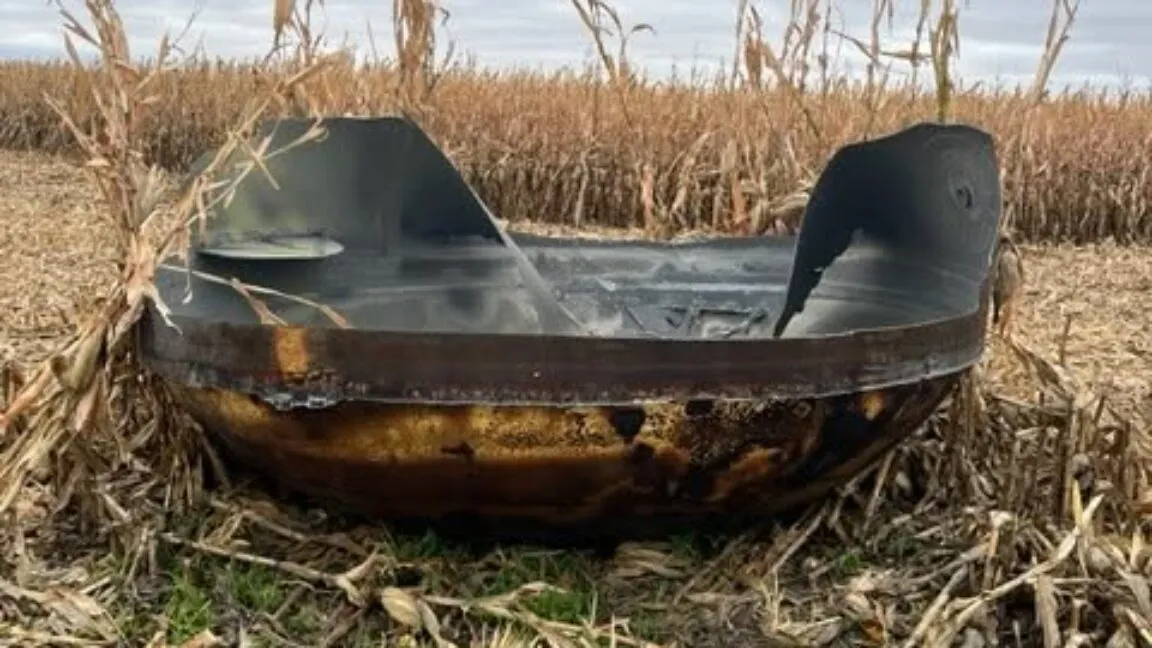
A Chinese rocket deorbited over Minnesota and landed in a farmer's cornfield
Experts tied the fragment to LandSpace's Zhuque-2E, which launched on September 15 and shed debris over the American Midwest after deploying 10 satellites.

JPMorgan Chase deploys first $5B into defense tech and hypersonic missiles
The bank is moving off its balance sheet to back robot factories, hypersonic missiles, and supply chains, signaling a new era of bank-backed military innovation.

Cop fired after sharing Flock login with ICE husband: 983 searches
A Savannah officer's shared credential let an ICE agent run hundreds of plate searches on Hispanic drivers, exposing a surveillance backdoor.