
AI selloff looked like a repricing Friday. By Monday, chip stocks raced back
Nasdaq’s worst day in a year flipped fast, with Micron and Broadcom leading as macro and IPO risk moved into focus.
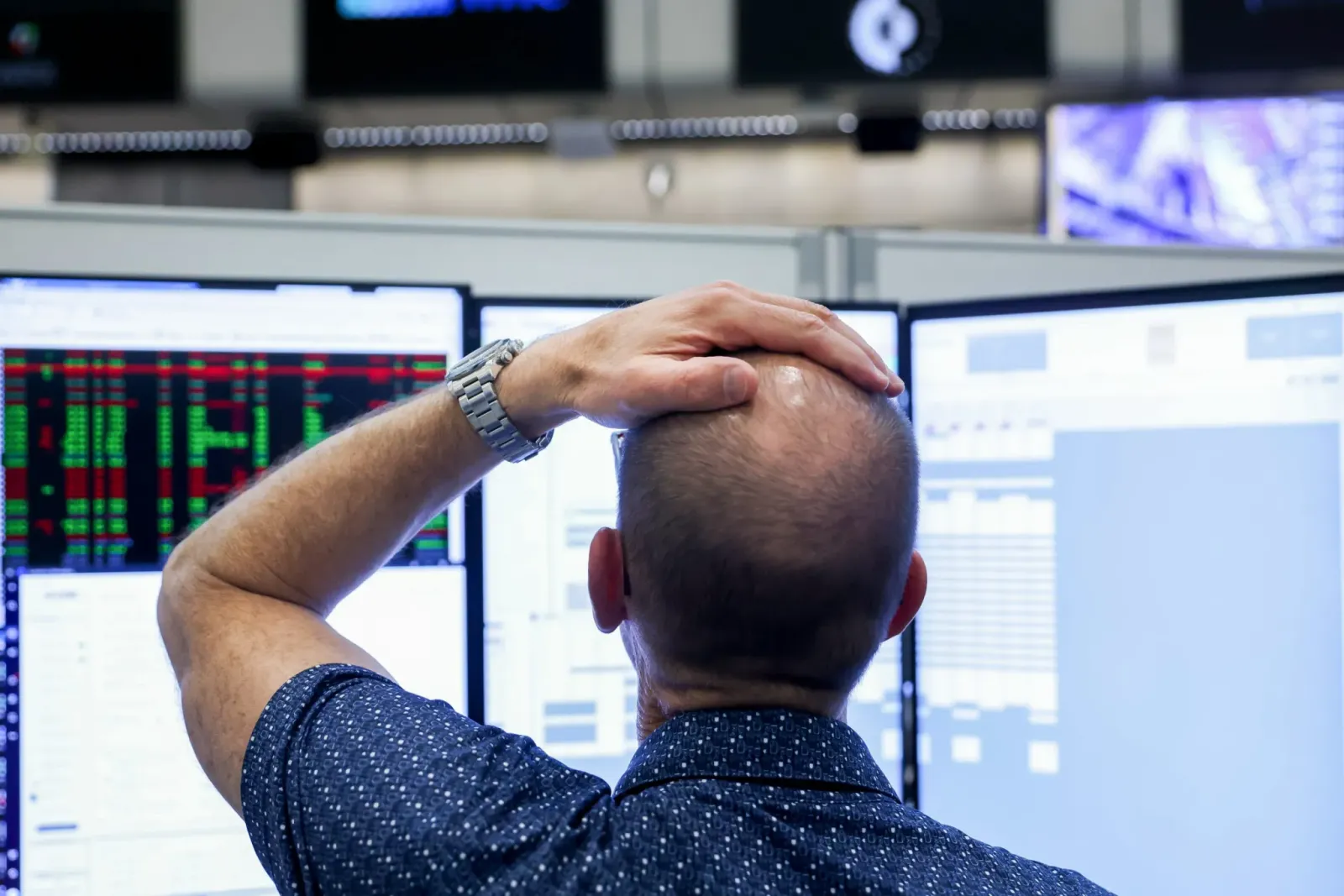
Fortune reports Friday’s Nasdaq rout, the worst session in a year, reversed by Monday as Micron and Broadcom rebounded and chipmakers led gains. The quick flip matters for executives deciding how to size exposure to AI demand versus rate and macro shocks.
Friday’s Nasdaq selloff was dramatic enough to look like the start of a true repricing of the AI trade. By Monday, that story was already getting questioned. The chipmakers that took a beating on Friday, including Micron and Broadcom, were Monday’s best performers, up 6.5% by midday. In other words, the market wasn’t acting like the AI bubble had popped. It was acting like Friday was a reset, not a verdict.
That nuance matters because Friday’s move set an ugly tone. The Nasdaq had its worst session in a year, and the same day saw chipmakers post their worst performance since 2020. But by Monday morning, the “AI repricing” narrative had to compete with what investors actually did with their money. Investors in chip exposure chased the rebound quickly, suggesting they saw Friday’s drop as an easing off a record-setting rally rather than a fundamental collapse in AI demand.
If that sounds like Wall Street calming down, Asia’s tape did not get the memo. South Korea’s KOSPI, the best-performing major index in the world this year, plunged as much as 8.8% at the open Monday. The exchange triggered a 20-minute trading halt, its third of 2026, and the index closed down 8.29%. Samsung Electronics and SK Hynix, the two memory-chip makers that together make up roughly half of the index, fell about 10% and 8%, respectively. The won opened at a 17-year low against the dollar. Japan’s Nikkei fell 3.9%, and China’s CSI 300 dropped 2.1%. So yes, chip strength returned on Nasdaq, but the rest of the semiconductor ecosystem was still absorbing stress, especially in memory.
Zoom out and the market’s incentives start to look clearer. The “rates story” is the villain that keeps showing up in different outfits. Friday’s selloff tracked a rise in Treasury yields. The two-year Treasury yield, described as the most rate-sensitive point on the curve, rose on Friday to its highest since February 2025, while the 10-year pushed above 4.5%. The mechanism is straightforward: an AI stock can earn a lot of its money years out, so higher discount rates can make those future earnings less valuable today. That is why the Nasdaq lost 4% on Friday while the Dow, with less riding on tech, dropped 1.4%.
But Monday’s read-through wasn’t just “rates changed.” Fortune points out that Treasury yields barely moved Monday, which implies investors were leaning more toward upcoming inflation data rather than reacting to a new bond-market tantrum. The near-term calendar is packed: May CPI arrives on Wednesday and PPI on Thursday. The Fed is already in its pre-meeting blackout, so there are no officials to talk the numbers up or down. That forces the market to do what it always does under uncertainty: trade the probability of hot inflation. Morgan Stanley analyst Chris Larkin framed Friday as a move that may have made the market more sensitive to negative surprises in the near term after nine straight weeks. The surprise, in that framing, is not “jobs broke things.” It is that inflation could do something annoying.
And Friday did contain a positive economic surprise: a stellar May jobs report. Employers added 172,000 workers, roughly double what forecasters expected. Oxford Economics is cited for the point that traders fully priced a quarter-point Fed rate hike this year. For the AI trade, that is a double bind. A stronger labor market reduces pressure to cut rates, and higher rates hit high-growth, long-duration names the hardest. That is why a hot jobs print can act like a stealth tightening. Fortune also ties this to politics, noting the report was the first jobs data of Kevin Warsh’s tenure as Fed chair. It makes it harder for him to appease President Donald Trump with a rate cut. Trump said on Meet the Press that the report was “great” and insisted “there’s no reason to raise interest rates,” adding that doing so would “kill success,” and saying Warsh should “do whatever he wants.” Even if you ignore the theater, the rate path is what matters.
The other macro variable, in Fortune’s telling, is war risk. Even as fighting intensified over the weekend, Fortune says Iran struck Israel overnight in retaliation for Israeli attacks on Lebanon, and Israel struck back. By Monday morning in New York, both sides had pledged to de-escalate. Markets could be pricing an end to the war in Iran, but crude jumped more than 4% on the strikes before trimming to about 1.5%, which Fortune calls hardly a market pricing in peace. Another flare-up could disrupt the AI rally. It is not just sentiment. Oil and geopolitics can re-enter inflation expectations quickly, and inflation expectations feed straight back into discount rates.
Finally, the market has a very specific high-stakes test that ties directly to AI demand. Fortune points to Friday, when SpaceX is set to price what would be the largest IPO in history at a $1.75 trillion valuation. Much of the case rests on AI. SpaceX has lined up roughly $75 billion in future contracted compute revenue, including a $30 billion deal under which Google will pay $920 million a month to rent about 110,000 Nvidia chips from the data centers SpaceX picked up in its xAI merger. Not everyone takes the number at face value. Morningstar is cited as valuing the company at less than half its target. But the question under the chip rebound and the question under the IPO are the same one: whether AI demand justifies the price.
So Monday’s bounce is a signal, not a conclusion. It tells you markets are still willing to buy the dip in at least parts of the AI supply chain. But it also tells you how fragile the setup is if inflation prints hot, geopolitics flares, or the market treats the SpaceX valuation as another AI assumption priced too aggressively. For executives and board members with AI exposure, the takeaway is simple: what looked like a repricing Friday is already being traded as a buying opportunity, but the next data points and the IPO valuation will decide whether that opportunity holds or becomes the next hard lesson.
This story's Key Insights and Take-aways are locked.
Create a free account to unlock Executive Actions for one credit.
Register to UnlockAlways free for Executives Club members. Join the Club
More in Business

Anthropic’s Levant Alpöge cracks the Jacobian conjecture after 87 years
A Harvard valedictorian used Claude to hit a 1939 breakthrough, but the missing “why” is the real problem.

Uber buys Delivery Hero for nearly $15B, vaulting to top food delivery outside China
The deal doubles Uber's dual-services footprint and pushes a ride-and-eats bundling play into 50 more markets.

Epic and Google drop settlement bid, forcing rival Android app stores by July 22
Google told the court it is ready to carry third-party app stores starting Wednesday, July 22.