

AI wrote a free PDF editor, safely avoiding file changes by design
A ZDNet author uses ChatGPT to build an editor they do not trust the model to operate directly.
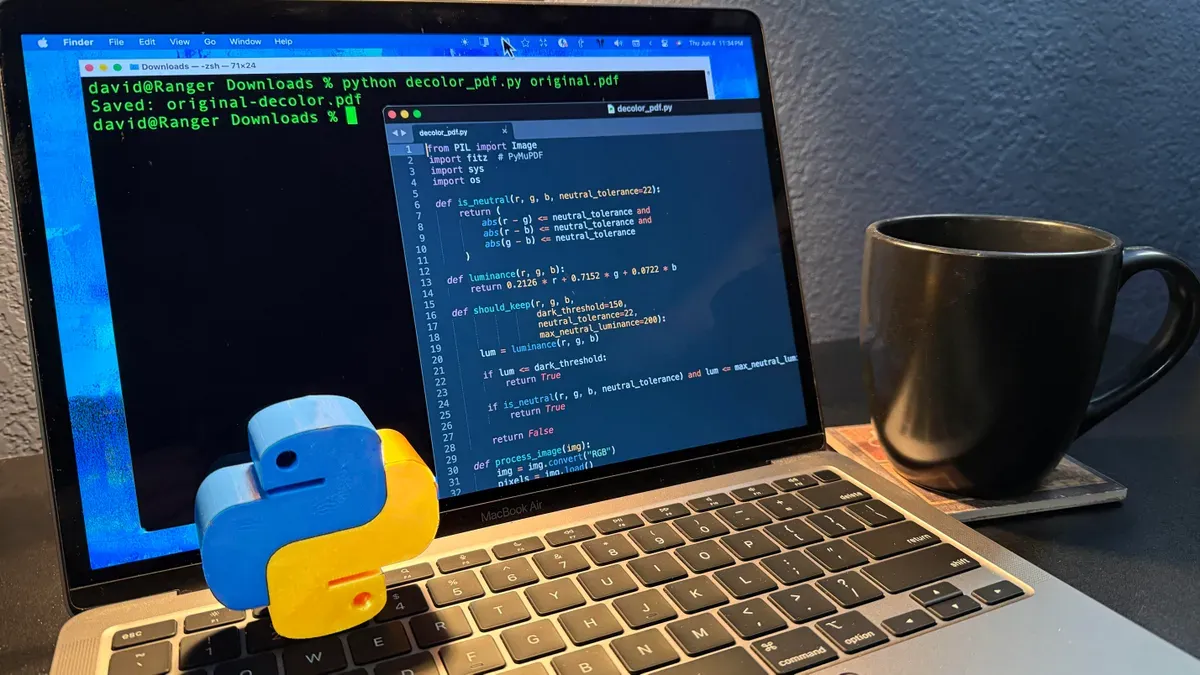
The ZDNet author built a free PDF editor with ChatGPT specifically to avoid letting the AI change their files directly. The result is a workflow where AI helps create software, while the software handles documents safely.
The smartest way to use AI may not be letting it touch your files. Instead, use it to write software that handles your files safely. That is the core takeaway from a ZDNet story about an author who turned ChatGPT into a builder, not a document operator.
Here is the practical reversal the piece leans on: rather than trusting ChatGPT to modify their documents, the author used it to create a free PDF editor. The author’s framing is simple, but it hits a real nerve for anyone who works with sensitive data. If you are already thinking, “Could this model mess up my formatting, or worse, leak something?” you are not paranoid. You are planning for the oldest rule in software risk: the less direct control a system has over valuable inputs, the better.
Under the hood, this approach is less about “AI magic” and more about threat modeling, even if the author never uses that phrase. When ChatGPT edits a file directly, it is both the decision-maker and the executor. That is convenient. It is also exactly why many people feel uneasy. With a generated app, the AI becomes a first draft maker. It proposes logic. Then the execution shifts to code that you can reason about, run locally, and test. In other words: you take the part you do not trust and put it upstream, where you can validate the output before it ever sees your documents in production.
This is also why the story matters for leaders, not just tinkerers. Most organizations are racing toward AI adoption, and the adoption bottleneck is rarely “Can we build something?” It is “Can we deploy something we can stand behind?” That question shows up in IT, compliance, and the boardroom. If AI is directly transforming customer data, internal documents, contracts, or regulated content, the risk profile changes instantly. Even when no breach happens, the operational fear remains: undoing a bad edit can be harder than preventing one.
So what is the governance angle? In the regulatory world, expectations trend toward control, auditability, and data minimization. The safest pattern is usually to ensure AI is not the last mile for sensitive operations. Instead, either human review, deterministic tooling, or constrained systems handle the critical data path. The ZDNet author’s method is essentially a consumer version of that principle. ChatGPT is used to generate a tool, but the author does not hand the model carte blanche to touch the documents themselves.
That design choice has second-order implications. First, it changes how you measure AI success. If the AI is just creating software artifacts, then quality becomes testable. You can run the editor, compare before and after results, and confirm it behaves consistently across document types. Second, it changes how you train teams internally. Instead of teaching “prompting as a workflow,” you teach “AI-assisted development plus software validation.” That is a bigger cultural shift, but it is the kind that reduces chaos.
There is also a strategic implication for product teams. Many companies are tempted to ship AI features that directly operate on user content, because it feels seamless. But if you are building a safer posture, you might prefer AI as a generator of constrained capabilities. Think of it like using AI to build a specialized assistant, then limiting the assistant’s permissions. Even in consumer apps, the mental model tracks: AI can help you create, but the system that touches your files should be the one you can constrain and verify.
Finally, the story is a reminder that “free” and “secure” can coexist, at least as a design philosophy. The author’s workflow is grounded in distrust, but the distrust is productive. It forces an engineering boundary. If you are a founder or operator, that boundary is where responsible adoption often begins. Not with blanket bans on AI, and not with reckless trust either. It begins with an architecture that treats AI as a helpful engine for building tools, while treating document handling as a high-integrity operation.
If you are sitting on an AI roadmap, the stakes are straightforward: the more you let AI systems directly manipulate sensitive inputs, the more every failure, mistake, or compliance question becomes existential. The ZDNet piece offers a cleaner pattern. Use AI to create the software, then keep the AI out of the critical execution path. That is how you get the benefits without gambling the integrity of your files.
This story's Key Insights and Take-aways are locked.
Create a free account to unlock Executive Actions for one credit.
Register to UnlockAlways free for Executives Club members. Join the Club
More in Technology

OpenAI says 10,000 agents cracked a 90-year math problem in 88 hours
The company's claim is audacious, but one mathematician is pushing back. Here's what it means for AI-driven discovery.

Meta still serves child sexual abuse ads on Instagram in India - BBC report
A new report following the BBC Eye investigation says the ads are still there - what it signals for every platform with a self-serve ad engine.

White House yanks 'Build the Wall' game after Tetris Company copyright warning
The administration's arcade game vanished in hours - and the takedown playbook every brand can learn from.