

AIIB’s Domenico Nardelli explores tokenized payments, eyes Hong Kong as it raises record funds
AIIB’s treasurer says the bank is digging into tokenized payments and digital settlement, using Hong Kong as a hub.
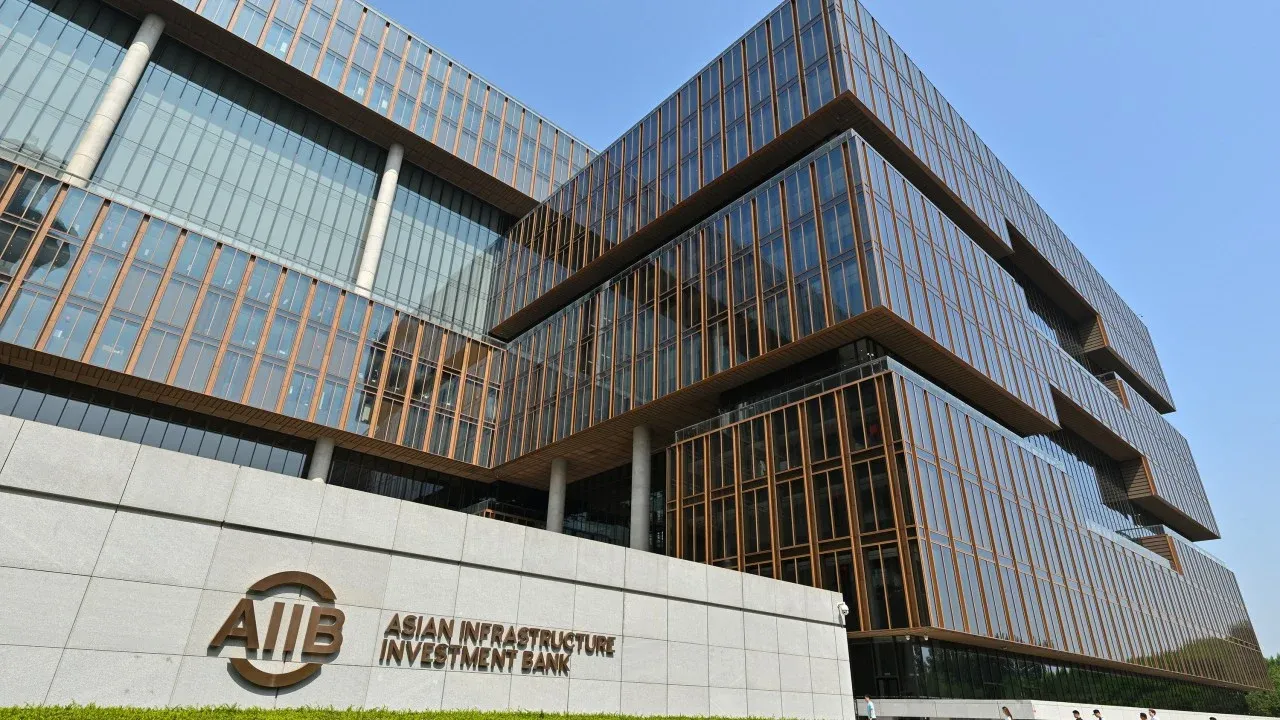
AIIB treasurer and acting chief financial officer Domenico Nardelli told SCMP the bank is exploring tokenized payments and digital settlement systems. The push signals how multilateral finance is modernizing capital market operations, with Hong Kong positioned to benefit.
The Asian Infrastructure Investment Bank (AIIB) is looking beyond traditional finance and into tokenized payments and digital settlement systems, and it has a specific anchor in mind: Hong Kong. Domenico Nardelli, AIIB’s treasurer and acting chief financial officer, told the South China Morning Post in an interview last week that tokenized payments and digital settlement are “a sector that we are exploring with interest.”
This is not just a tech curiosity. Nardelli frames the move as part of a broader effort to modernise the bank’s capital market operations, while also tapping into Hong Kong’s growing digital finance ecosystem. In other words, AIIB is testing whether next-generation settlement rails can make how it raises and deploys funds faster, smoother, and more efficient, and it is doing so while Hong Kong competes for the role of regional digital finance hub.
To understand why this matters, it helps to know what “tokenised payments” and “digital settlement systems” are aiming to fix. Traditional payment and settlement flows often involve multiple intermediaries, multiple queues, and timing gaps between when value is authorized and when it is finalized. Tokenisation is the attempt to represent value in a digital form so that transfers can move through systems in a more programmable, automated way. Digital settlement systems, broadly, are the plumbing that handles those transfers and reconciliation. If AIIB can improve settlement efficiency and transparency for capital market activity, that can ripple into everything from how quickly markets react to how operational risk is managed.
Hong Kong’s angle is also straightforward. The bank is explicitly “tapping into Hong Kong’s growing digital finance ecosystem,” according to the SCMP account. Hong Kong has been positioning itself as a bridge between global capital markets and regional growth, and digital finance has become part of that pitch. For AIIB, aligning with an ecosystem that already has talent, infrastructure experiments, and regulator-facing dialogue can reduce the friction of testing new approaches at scale. For Hong Kong, hosting projects or partnerships tied to an institution like AIIB is credibility, volume, and a potential pipeline of future initiatives.
Nardelli’s role is worth highlighting because it points to who inside the bank is likely to champion this. As treasurer and acting chief financial officer, he sits close to the mechanics of funding, risk, and balance sheet execution. Even if a project starts as an innovation effort, the people who run treasury and finance tend to care about what can be operationalized, audited, and scaled without breaking the bank’s controls. That is why a comment like “exploring with interest” can be a real tell. It suggests the idea is under active consideration, not merely a peripheral headline.
There is also a second-order implication for decision-makers watching AIIB. When a multilateral institution explores tokenized payments and digital settlement systems, it can shift expectations for the broader market. Private banks, fintechs, and infrastructure providers often calibrate their roadmaps based on who is willing to pilot, procure, or partner. If AIIB moves forward, it could increase pressure on counterparties to support interoperability, compliance workflows, and settlement standards that match how multilateral finance wants to operate.
Finally, the article frames this as part of AIIB raising record funds, and that timing is important. Raising capital in financial markets is a choreography of investor demand, issuance logistics, and settlement throughput. Modernisation efforts that touch capital market operations are most valuable when the institution’s funding activity is at peak intensity. If AIIB is increasing its fundraising scale while exploring digital settlement, then the bank is effectively asking: can new rails keep up with the volume and complexity of global capital flows?
For executives and boards, the strategic stakes are simple: multilateral finance is a pace-setter. If AIIB pursues tokenised payments and digital settlement with Hong Kong as a hub, it is signaling where the next wave of infrastructure investment and market standard-setting could land. And even if the first deployments are incremental, the direction matters. The organizations best positioned for that future will be the ones already building the regulatory, operational, and technology readiness to participate when multilateral money starts moving on newer rails.
This story's Key Insights and Take-aways are locked.
Create a free account to unlock Executive Actions for one credit.
Register to UnlockAlways free for Executives Club members. Join the Club
More in Business

Anthropic’s Levant Alpöge cracks the Jacobian conjecture after 87 years
A Harvard valedictorian used Claude to hit a 1939 breakthrough, but the missing “why” is the real problem.

Uber buys Delivery Hero for nearly $15B, vaulting to top food delivery outside China
The deal doubles Uber's dual-services footprint and pushes a ride-and-eats bundling play into 50 more markets.

Epic and Google drop settlement bid, forcing rival Android app stores by July 22
Google told the court it is ready to carry third-party app stores starting Wednesday, July 22.