

Alanah Pearce says Sony issued "strictest" social media gag rules before disc kill
The God of War Laufey writer claims PlayStation staff were told not to comment as Sony planned an all-digital shift.
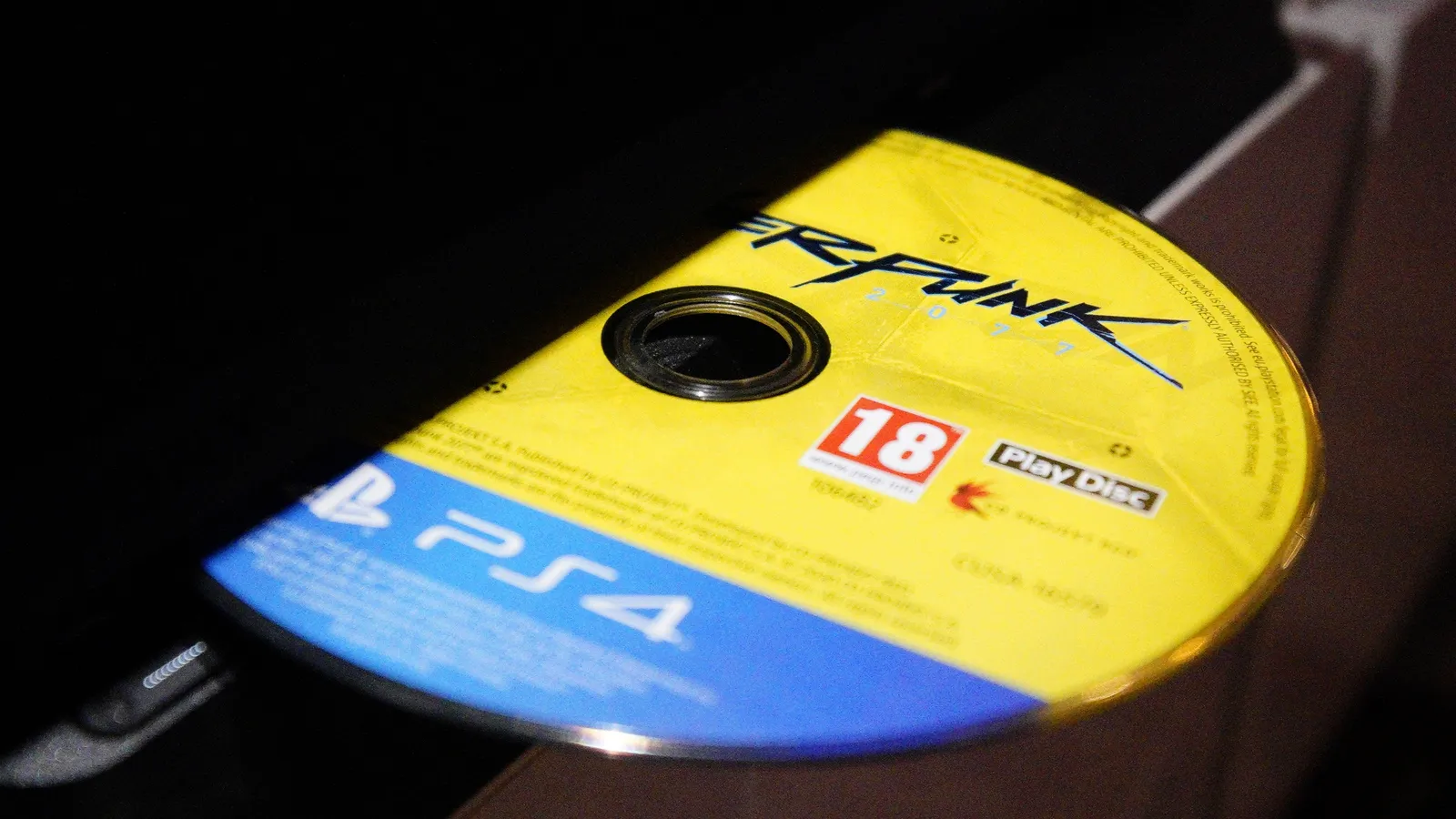
Alanah Pearce, a writer on God of War Laufey, alleges in a new YouTube video that Sony anticipated blowback over ending PS5 disc releases and issued the "strictest" social media guidelines she had seen. The consequence for decision-makers is a clear signal that Sony believes the commercial upside outweighs reputational and consumer-retention risks.
Sony knew its PlayStation 5 disc decision would trigger outrage, and one former God of War Laufey writer says it responded by tightening the leash on employees. Alanah Pearce alleges in a new YouTube video that Sony issued what she calls the "strictest" social media guidelines she has ever seen for PlayStation staff, specifically to prevent public commentary on the controversy.
The timing matters because Sony’s bombshell is still fresh. Earlier this month, Sony announced it would stop launching PlayStation 5 games on physical discs from January 2026 onwards. Pearce frames the internal posture as premeditated, not reactive: she says the guidelines were tightened because Sony expected an “enormous PR issue” and would rather control the narrative than engage it.
To understand why this became such a flashpoint, you have to separate two audiences that often coexist in gaming but rarely agree. One group prefers physical ownership, whether for personal reasons or because they worry about game preservation and long-term access. The other group is mostly comfortable with digital convenience, and Sony is following that “consumer trends” direction.
Sony’s stated rationale is straightforward. Sid Shuman, Senior Director, Sony Interactive Entertainment Content Communications, said on the PlayStation Blog that “new games will be released on PlayStation Store and at retailers in digital formats only.” He added two key timeline points: physical game disc production for all new games releasing on PlayStation consoles will be discontinued starting January 2028, and the transition “has no impact on games that already released, or will be releasing, prior to January 2028 in disc format.” Shuman also argued this is a natural alignment with how “most of our community prefers to access and play games today,” emphasizing that digital media preference significantly outpaces physical discs.
But Sony’s commercial math is the reason executives should care, even if you’re not a preservation crusader. The source lays out what digital and physical revenue share can look like for first-party titles and what happens with third-party licensing. For a first-party PlayStation game such as The Last of Us, Sony keeps around 65% of the money from a physical copy, with roughly 30% going to the retailer and about 5% on manufacturing costs. For a physical copy of a third-party game such as Activision-published Call of Duty, Sony receives a licensing fee, likely around 15%.
That changes materially in digital. For digital sales, Sony keeps 100% of first-party game revenue, and can take a far better cut from third-party titles than with a disc plus retail split. In other words: shifting the business model isn’t just about customer preference. It’s about unit economics, and it’s about capturing more of each transaction.
This is where Pearce’s alleged “strictest” internal guidance becomes more than drama. If staff are told not to comment, it signals leadership expects the conversation to be noisy, prolonged, and potentially damaging. Pearce also claims Sony regularly tells employees what they can and can’t say about certain topics, and she says she was under similar guidelines during her work on God of War Laufey, including restrictions around what she could say on the day that game was announced. But she says this particular instance was different, “apparently the strictest” she has seen.
Sony is also dealing with a very visible protest campaign. The source notes that gamers have been vocal in opposition, including a high-profile Change.org petition. More than 335,000 people have signed the petition calling on Sony to U-turn. Even so, Pearce suggests the odds of a reversal are low, and she points to what she says employees in first-party studios already knew: that the reaction would be coming.
Analysts quoted in the piece reinforce that interpretation with a calculation-first view. Dr. Serkan Toto, CEO of Japanese game industry consultancy firm Kantan Games, told IGN that even if half a million PlayStation Plus subscribers cancelled in protest, it would be “just a drop in the ocean.” His reasoning: Sony has over 120 million active PlayStation users and around 50 million PlayStation Plus subscribers. In a thought experiment where 500,000 cancel, that’s about 1% of that business. He concludes Sony will not reverse because “digital is just too lucrative,” and because leadership expects the storm to pass.
For decision-makers across gaming, media, and any subscription-based ecosystem, this story is less about discs and more about governance. When an executive team decides to maximize digital margins and reduce physical dependencies, the reputational risk often shows up immediately in social channels. Pearce’s claim suggests Sony responded by pre-empting that risk with internal communications control rather than public debate.
Strategically, the second-order takeaway is simple: if your organization expects backlash, you have two choices. You can engage and risk escalation, or you can limit who can speak and assume customers will absorb the change. Sony appears to be betting on the second option, and the “strictest” guidelines claim implies it wasn’t blind luck. It was a plan.
If you’re running a platform, investing in a content pipeline, or advising a board, the signal here is that Sony believes its commercial upside from digital distribution is strong enough to withstand both petitions and the loudest corners of community reaction, even as timelines move from January 2026 onwards to a broader disc discontinuation starting January 2028.
This story's Key Insights and Take-aways are locked.
Create a free account to unlock Executive Actions for one credit.
Register to UnlockAlways free for Executives Club members. Join the Club
More in Business

Anthropic’s Levant Alpöge cracks the Jacobian conjecture after 87 years
A Harvard valedictorian used Claude to hit a 1939 breakthrough, but the missing “why” is the real problem.

Uber buys Delivery Hero for nearly $15B, vaulting to top food delivery outside China
The deal doubles Uber's dual-services footprint and pushes a ride-and-eats bundling play into 50 more markets.

Epic and Google drop settlement bid, forcing rival Android app stores by July 22
Google told the court it is ready to carry third-party app stores starting Wednesday, July 22.