

Alice Oseman shifts Heartstopper’s final chapter to a movie, citing scheduling and a bigger finale
Netflix’s queer YA safe space ends with Heartstopper Forever instead of a fourth season. Oseman explains why and what it changes.
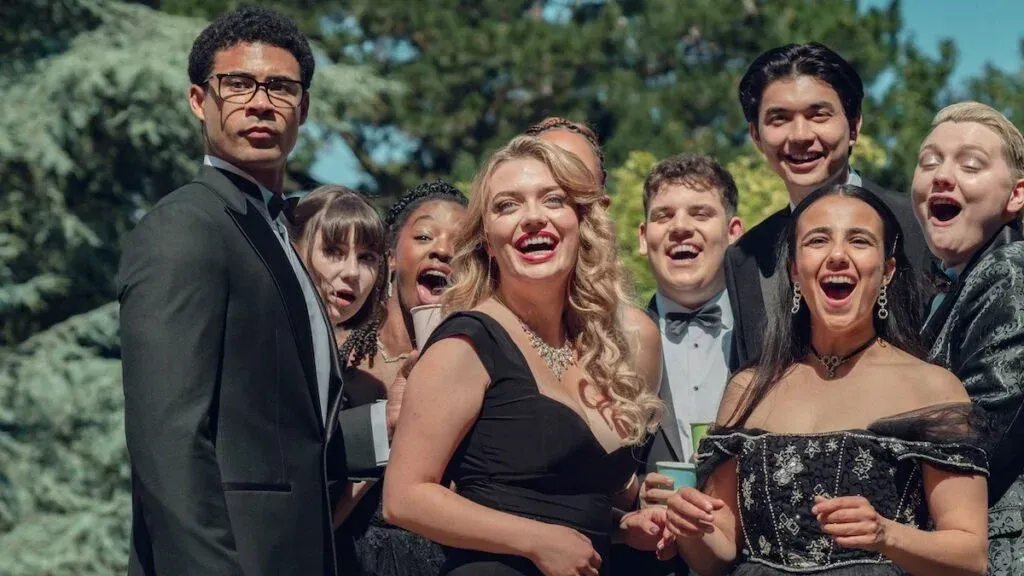
Alice Oseman, who created and showran Netflix’s Heartstopper alongside three seasons’ worth of TV development, says logistics pushed the series finale into a movie, Heartstopper Forever. For decision-makers in content, it signals how talent availability and production math can reshape brand narratives and audience promises.
Heartstopper is closing out Netflix’s queer YA safe space, but the ending looks nothing like what Alice Oseman initially wanted. Oseman, the author and illustrator of the graphic novels and the showrunner behind the TV adaptation over the past three seasons, told TheWrap the original hope was “a fourth season.” The shift to a film conclusion was not creative whim. It was logistics, specifically scheduling for the two leads, Kit Connor and Joe Locke, whose careers have blossomed since the series debuted in 2022.
Oseman put it plainly: “There’s so many logistical problems that you can’t even imagine.” And crucially, she framed the decision as a team priority problem. “The priority for everyone was that we wanted to come back together [and] end ‘Heartstopper’ the way it deserved - everyone was fighting for that.” That “come back together” clause is the heart of it. When lead schedules diverge, you can either stretch timelines or change the format so the story can still land. For Heartstopper, the solution was Heartstopper Forever, a film that gives the characters nearly two hours without having to pause for another season cycle.
Oseman said she was “so set” on it being the fourth season at first. But as she worked through the change, she found a creative upside in the constraint. In her telling, the movie “adds so much to the story,” especially because it lets the finale feel like a true cinematic culmination. “Getting to go into this film and spend nearly two hours with these characters without stopping,” she said, is a different storytelling rhythm than episodic pacing. It also changes what viewers feel. Instead of ending on a season cliffhanger rhythm, Heartstopper Forever is designed to read as “a big finale for ‘Heartstopper.’”
That finale approach also drives who gets the center of gravity. Rather than evenly dispersing time across the ensemble, Oseman says the film “hyper focus[es] on Nick (Connor) and Charlie (Locke).” The cast includes Yasmin Finney as Elle, William Gao as Tao, Rhea Norwood as Imogen, Kizzy Edgell as Darcy, Corinna Brown as Tara, and Tobie Donovan as Isaac. Oseman acknowledged the math of ensemble arcs in a movie runtime: “There’s just not room to give everyone a really big arc.” Even so, she was “still really determined that everyone would have their goodbye moment,” and that the audience would see how far each character has come, and “where they might be going” after the credits.
On-screen, the stakes for Nick and Charlie are about more than romance plot points. Their final “Heartstopper” chapter arrives as Nick prepares to head to university, forcing both of them to look back at their journey and also at what they still need to figure out. Oseman also notes that Nick starts to realize how issues in his family life have affected who he is as a person. And for a show that has grown up with its audience, this is where the tone shift matters. As Nick and Charlie reach the cusp of adulthood, Oseman says it felt realistic to show more of “that side of their relationship,” including amped up intimacy scenes.
She connects the intimacy directly to character psychology, not just steam: “These intimate moments tell us so much about where they are individually and together, sort of mentally.” Oseman said she found those scenes “really interesting to write,” and that they work “really well in this sort of the drama of this final part of Nick and Charlie’s relationship.” The actors, in her account, also delivered standout moments. She singled out their breakup scene, where Nick insists Charlie would be better off without him, saying it “stunned everyone to silence” even during rehearsal. In a production environment, reactions like that are a signal that the script and performance alignment landed.
But the film is not only romance and goodbyes. Oseman also uses Heartstopper Forever to reflect a changing external world for queer communities, especially trans youth and trans rights. Elle’s storyline centers the “dismal state of trans right,” which Oseman says has “gotten worse” since the onset of Heartstopper. She points to “so much more vocal aggressive transphobia across every aspect of life now in 2026.” That matters because it turns the series finale into an embedded social document, not just a character capstone. Elle tells Charlie her “fear and frustration,” and Oseman frames the pride parade moment as an “undercurrent of fear because of the way the world is at the moment.”
For executives and boards, this is the second-order takeaway: when a flagship title is also a cultural touchstone, format shifts do not just change production plans. They alter how the audience experiences closure, and how the brand speaks to the moment. Oseman said it “felt like a really important thing to show and to put into the world, particularly at this moment,” especially since “Heartstopper” is seen by “so many people around the world.” In other words, the movie is not simply a logistical patch. It is an editorial decision about what the series should mean when it ends.
The last chapter also keeps some futures intentionally open. Elle and Tao do not get their happy ending until the epilogue, where Tao surprises Elle at her art showcase. Oseman says what comes next is “up for interpretation,” explaining, “What the ending tells us is that they’ve got more of a story.” In her view, “Life doesn’t all wrap itself up neatly in a bow when you leave school,” and the characters “still got a lot to figure out about themselves and about their relationship.”
Oseman also hinted that this might not be a total stop. Asked whether she would do another full book or full series, she said, “I don’t know if I’d ever do another full book or a full series - never say never, maybe I’ll change my mind in like 10 years time.” She added she “could never leave these characters behind” and expects she’ll return “in smaller ways.” For Netflix and peers watching audience expectations tighten around authenticity, this is another signal: the end of a show may not end the IP footprint, but it can redefine how future work is distributed across formats.
Finally, Oseman’s comments land like a cultural PR brief. She hopes Heartstopper inspires more greenlights for queer stories across publishing, TV, and film, and she explicitly wants variety: “less common marginalized experiences,” different genres, and stories where queerness is “simply incidental.” Her agenda is not only about more representation, but about more kinds of it. That is the strategic stake for decision-makers: Heartstopper’s success raised the credibility ceiling for queer storytelling, and Heartstopper Forever is built to either preserve that momentum or risk undercutting it with a too-small sendoff. In Oseman’s telling, the movie format is the difference between a rushed exit and a finale that “everyone” fought to deliver.
This story's Key Insights and Take-aways are locked.
Create a free account to unlock Executive Actions for one credit.
Register to UnlockAlways free for Executives Club members. Join the Club
More in Entertainment

12TB Steam 'teraleak' goes beyond Valve: GTA 3, Mafia 2 prototypes exposed
A 12-terabyte dump of Steam data reveals prototypes and builds of third-party classics like GTA 3 and Mafia 2, plus unreleased Valve content, rewriting game history.

LinkedIn's romance problem: 1 in 4 workers say dating on it is fair game
A new survey shows a quarter of U.S. employees treat the professional network as fair game for romance, even as LinkedIn bans it and removes hundreds of thousands of offending posts.

Enhypen's first No. 1 album breaks K-pop's Billboard 200 streak
The K-pop group's 98,000-unit debut tops the chart while Dolly Parton's catalog reentry shows how death reshapes streaming.