

Alix Earle’s skincare insight Harvard Business School almost missed
The 25-year-old creator-turned-founder built Reale Actives by treating herself as the customer, a lesson that reshapes how executives spot founders and market demand.
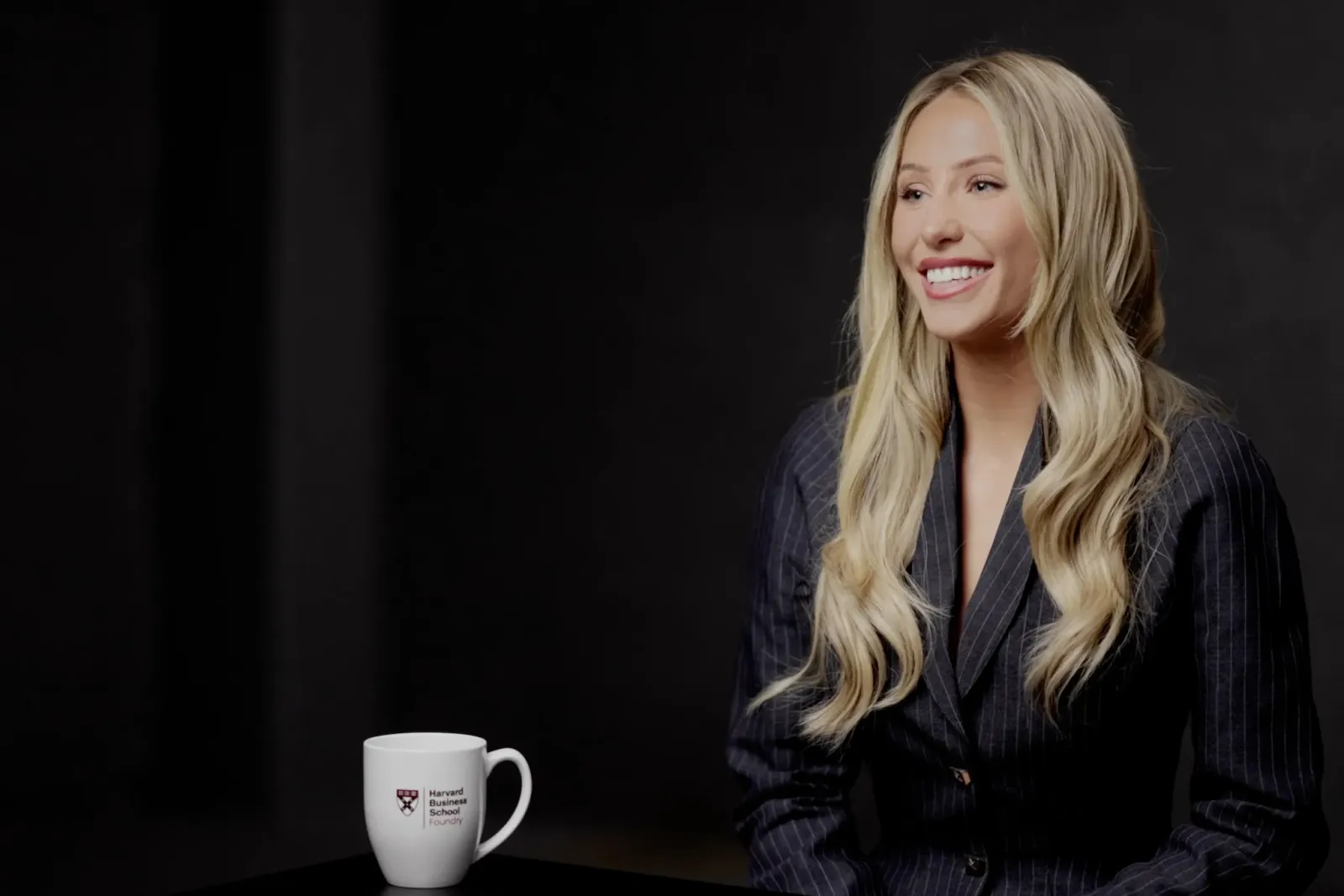
Harvard Business School professor and Fortune contributor says he nearly dismissed Alix Earle before realizing the 25-year-old creator-turned-founder had the rare founder trait of seeing herself as the customer. For executives, the story is a reminder that market insight can come from lived experience and that credentials alone do not predict who will spot the next real product opportunity.
Harvard Business School professor and Fortune contributor says he almost said no when Alix Earle’s publicist called. Earle, a 25-year-old creator-turned-founder, wanted to sit in on his class, serve as a case study, and speak to some of Harvard Business School’s sharpest young minds. His first reaction, after scrolling her TikTok and seeing glamour, parties, and someone seemingly just having fun, was to decline. Then his daughters weighed in. “Dad, you want her there.” He listened, and by his own admission, they were right and he was wrong. That reversal is the point. The lesson is not that TikTok fame equals business genius. It is that a founder’s edge can be easy to miss if you are looking only for the usual signals of seriousness.
What Earle had, and what the professor says many students at Harvard Business School missed, was a specific and unusually durable insight: “I am the customer.” His students understand the phrase academically. Earle understood it from the inside, through years of bad skin days, products that stung, and the sense that the skincare industry was speaking in a language designed to exclude her. That matters because product-market fit usually starts with pain someone actually feels, not with a polished strategy deck. For founders, the challenge is often not explaining the market in abstract terms. It is recognizing the market because you live in it. Earle’s insight was not trivial because it came with emotional specificity. She was not guessing at a user problem from a boardroom. She was the user.
That distinction is exactly why ambitious people so often get stuck. When they are standing at the edge of a new idea, they defer to the person with more credentials, more years, more institutional weight. They assume that if something were worth doing, someone more qualified would already be doing it. The professor argues that great entrepreneurs resist that logic. He points to Tesla as an example because Elon Musk did not accept that the engineers at GM would electrify the car. He points to Amazon because Jeff Bezos did not trust that Barnes & Noble would figure out the internet. The common thread is not arrogance for its own sake. It is the willingness to imagine a world that has not happened yet and refuse to be talked out of it. Earle, in his telling, fits that pattern not because she had an MBA or a decade of operating experience, but because she had judgment about a problem she knew intimately.
There is another layer here that makes the story more than a personality profile. Earle had already built a track record of trusting her judgment under pressure. When she posted an unfiltered video with her face covered in acne, her neck broken out, and her confidence visibly strained, she was not performing fearlessness. She was posting because something in her said this is true. The following month, she went from one million to two million followers. That is not just a social-media flex. It is feedback. It is a signal that honesty can outperform polish, and that audiences reward authenticity when it is tied to a real problem they recognize. More importantly for a founder, every time a hard call works out, the next hard call gets a little easier. That confidence compounds. By the time she was deciding whether to launch a brand, go on Dancing With the Stars, or turn down lucrative, safer partnerships, she had already trained herself to trust that internal signal.
That internal signal eventually became Reale Actives. The professor says Earle decided at 22 that she would launch a brand in three years, not while momentum was hot, but when the products were genuinely ready. She interviewed CEOs as a 23-year-old and admitted she had no idea what she was looking for, then chose one based on a Saturday phone call. She wants Reale Actives to outlive her. Her goal is not merely to be the face of a brand, but to build something durable enough that one day she can walk into a store and hear someone ask, “Who’s Alix Earle?” That is a founder mindset in plain English: build for the moment when your own name matters less than the thing you made.
The professor’s final takeaway is that he misjudged her because he was looking in the wrong place. He expected seriousness to look like his idea of seriousness. Instead, the seriousness was hiding in the long stretches of rejection, the years of going nowhere on TikTok, and the decision to be honest when the easier thing would have been to perform. That is a useful correction for anyone hiring, backing, or studying founders today. In a world where attention is fragmented and credibility is often performed first and proven later, the next big operator may not look like a case study on day one. Sometimes the real signal is that they know the customer because they are the customer, and they are disciplined enough to build from that truth. The Founder Mindset, the Harvard Business School Foundry podcast, is now streaming on YouTube. For executives, investors, and boards, the broader lesson is simple: if you keep waiting for founders to look like the old mold, you will keep missing the people who can actually build what comes next.
This story's Key Insights and Take-aways are locked.
Create a free account to unlock Executive Actions for one credit.
Register to UnlockAlways free for Executives Club members. Join the Club
More in Business

Anthropic’s Levant Alpöge cracks the Jacobian conjecture after 87 years
A Harvard valedictorian used Claude to hit a 1939 breakthrough, but the missing “why” is the real problem.

Uber buys Delivery Hero for nearly $15B, vaulting to top food delivery outside China
The deal doubles Uber's dual-services footprint and pushes a ride-and-eats bundling play into 50 more markets.

Epic and Google drop settlement bid, forcing rival Android app stores by July 22
Google told the court it is ready to carry third-party app stores starting Wednesday, July 22.