

Amazon has deployed enough satellites for Leo later this year
Leo is Amazon's bid to enter satellite internet now that it has the satellite base to launch.
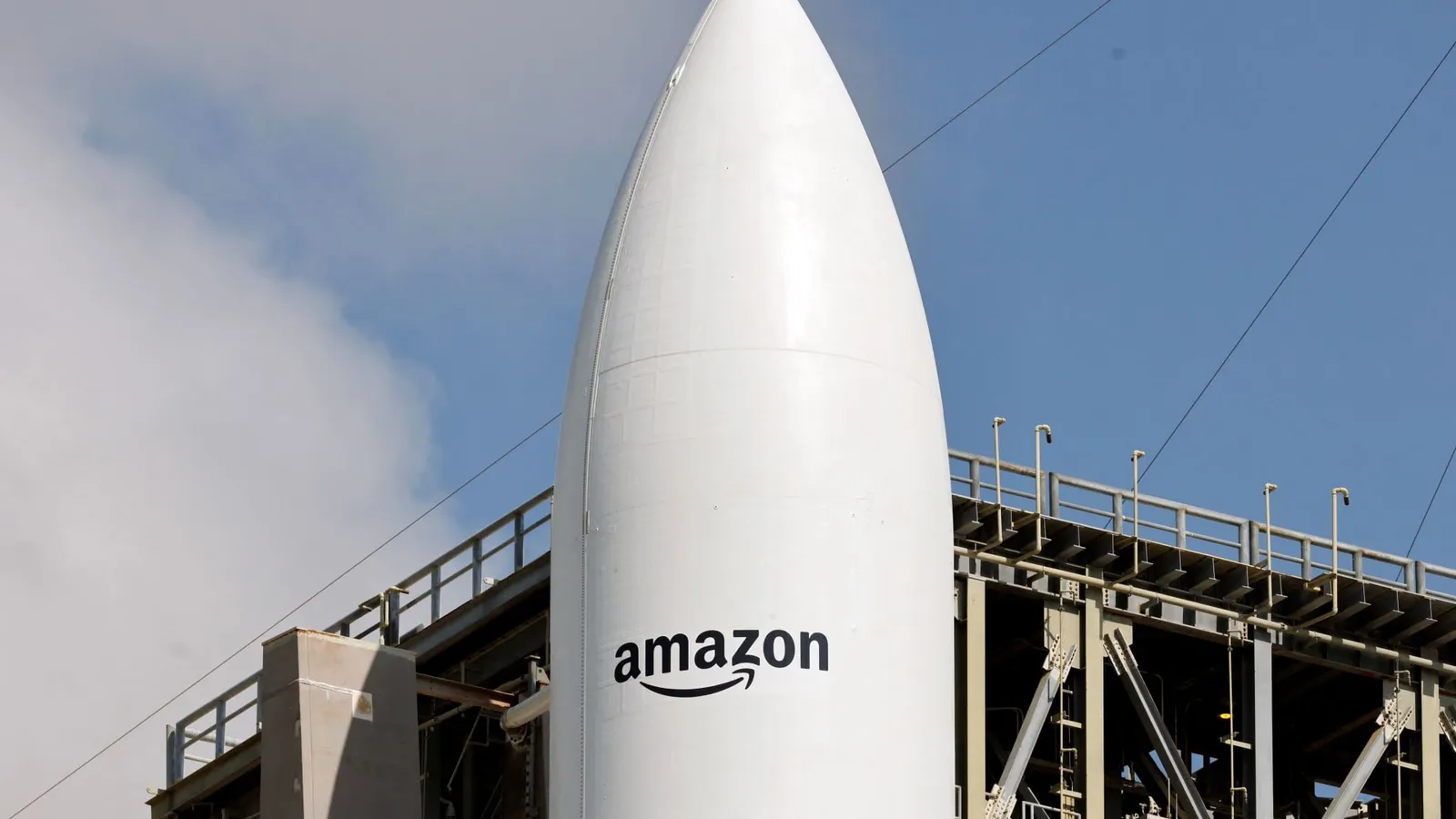
Amazon has deployed enough satellites to launch its Leo service later this year, positioning the company to compete in satellite internet. The move pits Amazon directly against SpaceX's Starlink, which launched earlier and has more than 10,000 satellites in orbit.
Amazon has deployed enough satellites to launch its Leo service later this year, signaling the company is ready to flip from testing and development into full deployment mode. The satellite internet market is no longer a concept pitch. It is a numbers game, a regulatory game, and an execution game, all at once.
The competitive pressure is obvious: Leo will compete with SpaceX's Starlink, which had a four-year start over Amazon and has more than 10,000 satellites in its constellation. That gap matters operationally. A constellation with thousands of satellites can support broader coverage, more resilient service, and faster scaling once commercial rollout begins. So when Amazon reaches the threshold needed to launch Leo, it is not just catching up in time. It is attempting to compress a lead that SpaceX built early, through years of accumulated satellite capacity.
To understand why this is consequential for executives, think about the industry structure of satellite internet. Unlike many software businesses where you can launch a new product quickly and iterate endlessly, satellite connectivity is constrained by physics and infrastructure. Satellites need manufacturing and launch schedules, ground infrastructure needs to be aligned, and spectrum access must be navigated. Once you are committed to deployment, you also end up committed to long-term spending. Capital plans, partnerships, and procurement timelines all become harder to reverse.
This is also why the phrase “deployed enough satellites” is a big deal. It implies Amazon has moved past the initial proof points and reached a stage where it can plausibly launch a service, not just talk about one. In these markets, “service launch” is the moment when demand signals start to count, because customers can actually buy connectivity, not just watch demonstrations. For decision-makers, that changes how you evaluate the business case. Market share becomes measurable. Churn becomes visible. Customer acquisition costs can be compared against actual connectivity performance, rather than projected promises.
Regulation is another lever that often determines who wins and who merely survives. Satellite internet operates in a world of national and international oversight, where licensing and spectrum coordination are required. While the source does not list specific regulatory filings for Leo, the broader context is straightforward: companies cannot simply “launch and figure it out later.” They need to fit within the rules governing how satellites operate and how services are authorized. That regulatory groundwork is part of what makes an announced later-this-year launch timeline meaningful. It suggests Amazon has progressed enough across the gating items to believe a service rollout can happen on schedule.
The strategic stakes expand further when you consider what Starlink’s early start represents beyond sheer scale. Starlink’s more than 10,000 satellites in its constellation are the visible output of years of manufacturing, launches, and operational learning. That can translate into improved network management, better odds of coverage targets, and an established brand with early adopters. For Amazon, Leo is not entering an empty market. It is entering an environment where a dominant incumbent already has deployed infrastructure and a head start in real-world operations.
For executives and boards watching competitive dynamics in connectivity, there is an important second-order takeaway: when Amazon accelerates toward launch, it changes how partners and customers think about switching risk. Telcos, government contractors, enterprise customers, and remote-region providers typically do not want to bet on a fragile rollout. Evidence of deployment progress shifts the perceived risk profile. If Amazon can launch later this year, it becomes a credible second source for satellite connectivity. That can influence pricing power and bargaining behavior even before Leo is fully ramped.
In short, Amazon’s milestone is a commitment signal. It is trying to turn satellite deployment into a commercial service that can compete with Starlink's established constellation, despite a four-year head start. Later this year is no longer a distant idea. It is the date by which Amazon will have to prove that Leo can compete not only on ambition, but on execution, coverage, and customer experience.
This story's Key Insights and Take-aways are locked.
Create a free account to unlock Executive Actions for one credit.
Register to UnlockAlways free for Executives Club members. Join the Club
More in Technology

Nvidia's $89B data center quarter: the 9 companies cashing in
The AI buildout is minting fortunes beyond GPUs, and memory, cloud, and cooling suppliers are riding the same wave.

Google quietly links your phone number to every Android account on your SIM
Adding a SIM now ties your phone number to all Google accounts - and future accounts inherit it. Here's the security and privacy stakes.

Hijacker AI 'Skynet mode' runs 100,000 attack steps against exposed models
Symantec caught a criminal AI agent that borrows other models, steals data, and mines crypto; the only relief is no confirmed victims yet.