
Amazon's 1 million robots haven't replaced its 1.5 million human workers
The world's largest robot operator is also the second-largest corporate employer. Inside the automation math that defines the future of warehouse work.
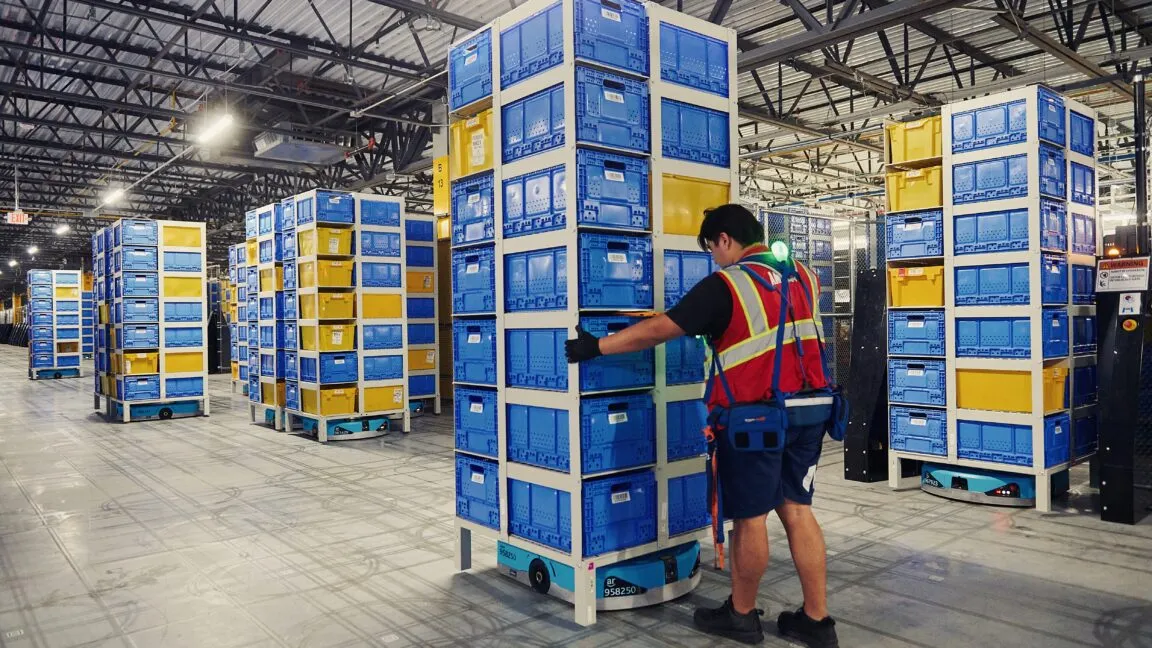
Amazon operates more than 1 million robots while employing 1.5 million humans, making it the world's largest robot operator and second-largest corporate employer. For executives, the company's bet on collaborative robots reveals how automation can scale operations without eliminating the human workforce.
Amazon operates more than 1 million robots in warehouses around the clock, making it the largest robot operator on the planet. Yet the company is also the second-largest corporate employer in the world, with more than 1.5 million full-time and part-time human workers, according to its 2025 annual report. The two numbers are not in conflict; they are the core of Amazon's operational strategy.
Amazon executives say the growing robot fleet has eased the burden on its human workforce by taking on the toughest fulfillment center tasks that carry the greatest risks of physical fatigue and injury. The company is poised to significantly grow that fleet in the coming years, establishing new factories to churn out increasingly capable robot workers. That expansion will likely deepen the integration of humans and machines in ways that other employers will be watching closely.
But labor advocacy groups and independent researchers point to evidence suggesting that warehouse automation driven by AI is not all upside for the humans who work alongside robots. The key shift is proximity. Brian Greenwood, professor of business at George Mason University, told Ars: "For the last 100 years, most of the automation that we've seen usually happens away from workers - you're taking that high-risk task away from the worker, and you're doing so in a way that is not physically proximate."
The rise of collaborative robots really changes that dynamic, Greenwood said, for two reasons: one is that it is physically proximate, and two, the robot has the ability to dictate the pace of work. That means the human is no longer just working alongside a machine; the machine can set the tempo. For warehouse employees, that can turn a tool designed to reduce strain into a source of new pressure, as workers must keep up with a robotic rhythm rather than their own.
Amazon's scale makes this experiment globally significant. With tens of millions of same-day and one-day deliveries happening daily, the company needs both robots and humans to meet demand. The 1 million robot figure is already larger than the industrial robot fleets of most countries, and the planned expansion suggests Amazon sees automation as a core competitive advantage, not a cost-cutting sideshow. The company is effectively building a template for how a modern logistics giant operates when machines and people share the same floor.
For executives in logistics, manufacturing, and retail, the Amazon model offers a clear lesson: use robots to handle the most physically punishing tasks, keep humans for the work that requires judgment and dexterity, and manage the pace-of-work question carefully. The risk is that automation becomes a labor relations flashpoint if workers feel the machine is driving them rather than helping them. The distinction between a tool and a taskmaster may determine whether automation wins acceptance or resistance.
Independent researchers are watching closely. The evidence cited by labor groups suggests that automation can reduce injuries but also increase monitoring and performance pressure. Regulators and policymakers may eventually weigh in on how collaborative robots are deployed, especially around issues of workplace pace and surveillance. Amazon's sheer footprint means any policy response would ripple across the entire industry, making this a story that extends far beyond one company's warehouses.
The strategic stakes for peers are clear: automation is not a binary choice between humans and machines. Amazon is showing that the winning play is integration - deploy robots at scale, keep humans in the loop, and be transparent about the trade-offs. Companies that ignore the pace-of-work dynamic may find that their automation investments create new operational and reputational risks. The future of work is not human versus robot; it is the negotiation of how they share the same space.
This story's Key Insights and Take-aways are locked.
Create a free account to unlock Executive Actions for one credit.
Register to UnlockAlways free for Executives Club members. Join the Club
More in Technology

A Chinese rocket deorbited over Minnesota and landed in a farmer's cornfield
Experts tied the fragment to LandSpace's Zhuque-2E, which launched on September 15 and shed debris over the American Midwest after deploying 10 satellites.

JPMorgan Chase deploys first $5B into defense tech and hypersonic missiles
The bank is moving off its balance sheet to back robot factories, hypersonic missiles, and supply chains, signaling a new era of bank-backed military innovation.

Cop fired after sharing Flock login with ICE husband: 983 searches
A Savannah officer's shared credential let an ICE agent run hundreds of plate searches on Hispanic drivers, exposing a surveillance backdoor.