
Amazon's $300M Bee wearable eavesdrops on your chats to sell you stuff
Two new Bee devices turn real conversations into summaries, reminders, and personalized shopping picks via Alexa+ and Amazon.com.

Amazon's wearable startup Bee, acquired for a reported $300 million, unveiled two devices that listen to conversations and generate summaries and shopping recommendations. The move pushes ambient AI deeper into daily life while testing consumer tolerance for always-on microphones tied to e-commerce.
Amazon is betting $300 million on your next conversation. The e-commerce giant's wearable startup Bee, acquired last year in a deal said to be worth $300 million, has unveiled two new devices designed to listen to your conversations, distill them into summaries and reminders, and use the context to recommend products sold on Amazon. The pitch is simple: never forget a detail, and never miss a shopping cue.
The hardware comes in two forms. Bee Frontier, available now for $74.99, is worn like a watch or fitness tracker, though The Register notes it looks more like wearing a doorbell. Bee Eclipse, arriving shortly for $99.99, is a slimline, credit-card-sized device that attaches magnetically to the back of a phone like a limpet. Both have a single button to turn them on or off and a visible indicator that lights up when the microphone is live and the AI is summarizing. When enabled, the devices gather context from conversations and turn the details you might otherwise forget into useful summaries, to-dos, and reminders, accessible through a Bee mobile app on iPhone or Android via Bluetooth, or a new desktop app.
Bee is not just a memory aid anymore. Along with the new hardware, the startup has gained the ability to connect to Amazon's Alexa+ AI assistant and Amazon.com. That means a user can ask Alexa for a meeting summary or get personalized shopping recommendations based on what the device overheard. For Amazon, the strategic logic is clear: capture an always-on slice of the user's day, understand what they care about, and turn casual conversation into commerce without a single search query.
The products also test how much listening consumers will accept. Bee's original product was tried out and sort of given approval by Corey Quinn, Chief Cloud Economist at Duckbill, earlier this year. The new devices go further: they identify recurring themes and trends in conversation and recommend personalized goals and actions. Amazon says privacy is protected because audio is processed into insights in real time and not stored, while transcripts are encrypted and only the user can access them. Still, the design invites skepticism: a device that listens to everything, knows what you like, and feeds that data into the largest retail recommendation engine on the planet is a bold proposition, even with encryption promises.
For executives and founders, the deeper signal is where Amazon is placing its next bet. Wearable AI is becoming the new interface between people and assistants, and Bee is Amazon's attempt to own a device that is always present, always listening, and always connected to a shopping cart. The reported $300 million acquisition price is small relative to Amazon's scale, but the strategic value is potentially large: Bee gives Amazon a physical foothold in the ambient computing race and wires that foothold directly into Alexa and Amazon's retail graph.
The hardware specs are competitive for the price. Bee Frontier is claimed to have IP67 water resistance, up to seven days of battery life, and a USB-C charging port. Bee Eclipse also has a USB-C port but is said to last more than 21 days on a single charge. Both devices come in a choice of colors. For a $75 to $100 price point, Amazon is positioning Bee as an impulse-priced experiment: cheap enough to try, useful enough to keep, and valuable enough to feed the broader AI ecosystem.
The real test will be adoption. Consumers have already accepted microphones in phones, smart speakers, and earbuds, but those devices are not explicitly marketed as eavesdroppers that turn conversations into shopping recommendations. Bee is asking users to wear the microphone on their wrist or phone and trust that the summaries and suggestions are worth the trade-off. The summaries can be organized using templates for things such as lectures, or users can simply review memories from the past few days to see what they discussed.
For product leaders building AI assistants, the message is clear: ambient listening is becoming a feature, not a bug. The winners will be the ones who can turn ephemeral speech into structured, useful actions while making privacy promises that hold up under scrutiny. The open question is whether users accept a device that remembers everything in exchange for convenience and personalized suggestions, or whether the earwig factor limits adoption to early adopters and privacy-tolerant shoppers. Amazon, with its retail and AI infrastructure, is betting it can tip the scales.
This story's Key Insights and Take-aways are locked.
Create a free account to unlock Executive Actions for one credit.
Register to UnlockAlways free for Executives Club members. Join the Club
More in Technology

Cop fired after sharing Flock login with ICE husband: 983 searches
A Savannah officer's shared credential let an ICE agent run hundreds of plate searches on Hispanic drivers, exposing a surveillance backdoor.
Elizabeth Holmes doc 'You Can See Everything' posts second-biggest doc debut ever
The true-crime draw shows fraud narratives still sell - a signal for media execs and a caution for founders.
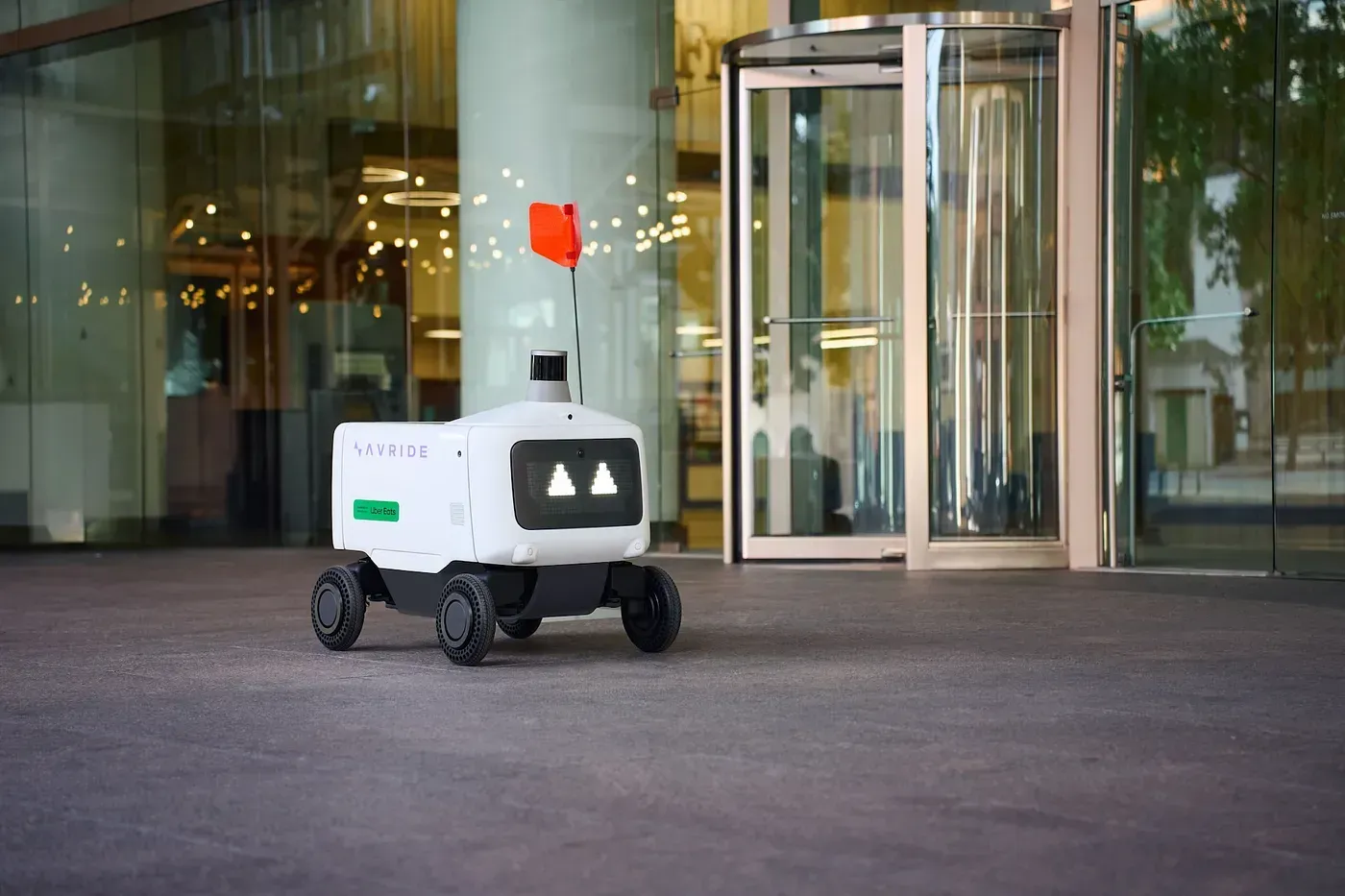
She blocked an Uber delivery robot to save jobs. Police arrested her.
Carolyn Marvin's disorderly conduct arrest turns a sidewalk standoff into a test case for how cities police the automation-versus-workforce debate.