
Amazon's Jeffrey Gattis pins Tomb Raider Catalyst to 2028, not 2027
The Amazon Gaming chief says Atlantis lands Feb 12, then the next Tomb Raider follows in 2028, reshaping planning horizons.

Jeffrey Gattis, chief of Amazon Gaming, said Amazon has announced two Tomb Raider titles: Legend of Atlantis on February 12 next year and Tomb Raider: Catalyst in 2028. For decision-makers, the shift forces studios, publishers, and platform teams to re-balance release calendars, marketing spend, and internal capacity against a new launch window.
Amazon Gaming chief Jeffrey Gattis just moved Tomb Raider: Catalyst's target from the “2027” storyline people were already using to plan their next year. In an interview with The Game Business, he said Amazon “announced the two Tomb Raider titles,” with “Atlantis comes February 12 th of next year” and then “we'll follow on in 2028 with the next one.” The important part for anyone tracking schedules: Catalyst had been set for launch in 2027 when it was announced at The Game Awards in 2025, but Gattis is now putting that follow-up into 2028.
This is the kind of calendar change that ripples outward fast. Investors and execs build go-to-market and headcount assumptions around “next year,” then suddenly the calendar says “the year after that.” And Gattis did not hedge with a vague “sometime later,” he said “2028” specifically. That specificity matters for platform operators, publisher planning, retailer and storefront merchandising cycles, and even community expectations, because gamers tend to coordinate their own time and spending around release windows.
Now, to be fair, the source also flags a possibility: Gattis could have mixed up years or the specific games when he spoke. The article lays out two reasons that skepticism feels reasonable. First, “2028” is materially different from “next year” when you are unsure about the year in question. Second, Crystal Dynamics, the Tomb Raider developer, appears to have been under heavy pressure. In March, the studio conducted its fourth round of layoffs in 12 months. In industries like games, repeated layoffs are rarely just a spreadsheet event. Even if leadership argues that cutting to the bone will not impact ongoing projects, the function of the people being removed does not simply vanish. They were part of the delivery machine, whether that meant production, QA, design support, tooling, narrative, or live operations.
Those layoffs also create second-order risk that is harder to model: context switching, morale drag, knowledge loss, and slowdowns from the organizational churn that follows waves of reductions. Execs know how this works across tech and media, even when the workstreams are nominally “separate.” When a studio is repeatedly restructuring, it is not only headcount that changes, it is communication paths, decision velocity, and the ability to absorb surprises. A delayed launch date can be the outcome of those pressures, or it can be the result of a broader portfolio strategy. In either case, the message for decision-makers is the same: schedules are not static, and the pipeline is sensitive to staffing reality.
There is also a strategic angle here for Amazon Gaming specifically. The Game Business interview frame is about investment strategy, and Gattis describes Amazon’s coverage “from what we call game night games,” meaning phone-as-a-controller, single-A scale with budgets “in the single millions of dollars to develop,” up to “triple-A.” That range is the tell: Amazon is not just dabbling at the low end. It is explicitly positioning itself for larger franchises and bigger moments, which makes the Tomb Raider timing more consequential. If your big-ticket titles move, you are not just adjusting one release. You are reallocating attention, marketing throughput, and the perceived momentum of your gaming platform.
For executives at publishers and studios, these calendar shifts are a management problem disguised as a communications issue. A delay changes the competitive set. It changes whether your marketing team has enough air cover, whether co-marketing partners can align, and whether internal teams can hold their focus through another year of uncertainty. It also changes what audiences do in the meantime. The article puts it plainly: until there is a confirmed hard release date for Catalyst, it is smarter for fans to make other plans for their gaming time in '27. That same logic applies to executives, except the costs are your budget, your runway, and your brand momentum.
The source also says the outlet reached out to Amazon to ask if the 2028 target expressed by Gattis is correct, and it will update if a reply comes in. Until then, the operational takeaway is not to panic, it is to plan for both worlds. If Catalyst is effectively being treated as a 2028 window in Amazon’s internal and external messaging, then other parties in the ecosystem need to assume their “2027” assumptions may be wrong. And when Crystal Dynamics has already seen four rounds of layoffs in 12 months, the risk of further schedule turbulence is not theoretical.
In short: Gattis’s statement pins Tomb Raider: Catalyst into 2028, after Legend of Atlantis lands February 12 next year. That is a clean, specific repositioning of the franchise timeline. For everyone responsible for portfolio timing, dev capacity, platform commitments, and marketing spend, the message is urgent: release dates in games are living documents, and when the studio ecosystem is under strain, the next domino is usually the one executives wish they had accounted for sooner.
This story's Key Insights and Take-aways are locked.
Create a free account to unlock Executive Actions for one credit.
Register to UnlockAlways free for Executives Club members. Join the Club
More in Entertainment

'It's a Magic Trick': Ballet Experts Say Rosalía's SNL Pose Is Impossible
Three ballet experts tell Rolling Stone Rosalía's gravity-defying SNL stillness shouldn't be possible - and why the debate is now part of the show.

Activision CMO: GTA 6 Will Boost Call of Duty, Not Bury It
Activision's top marketer says Rockstar's blockbuster will drive players back to consoles and into Modern Warfare 4, even as the company admits its recent strategy failed.
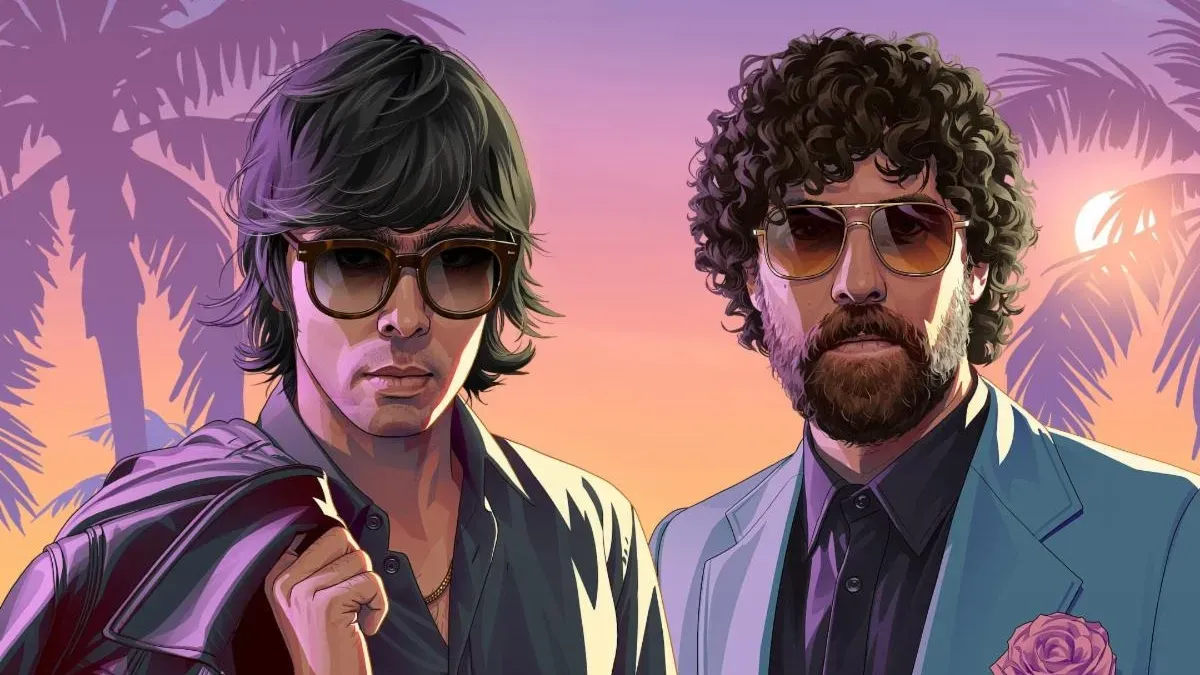
Justice to Score GTA 6, Share New Song with Tame Impala, SZA, King Gizzard
Rockstar taps the French duo for the GTA VI score, and the first taste is a genre-melting collab with Tame Impala, SZA, and King Gizzard & The Lizard Wizard.