
Amer al-Khudhiri turns Ronaldo's goal into “Allah” poetry on BeIN Sports
The Omani World Cup commentator fuels fan fervor with verse-like calls, and sports media is learning why it works.
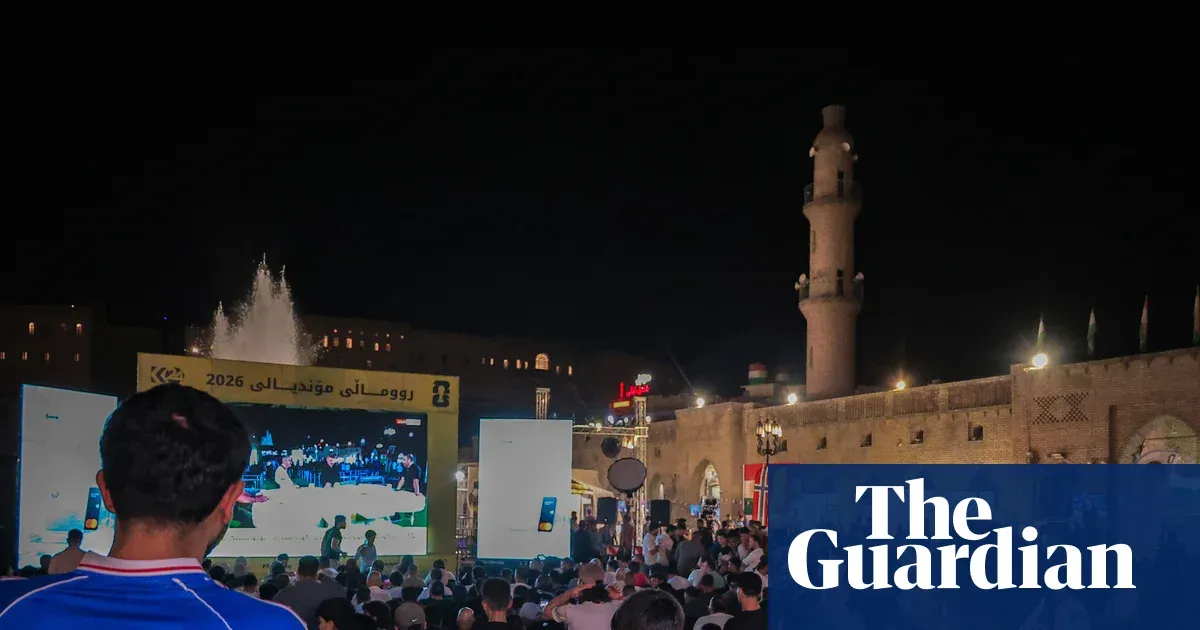
Amer al-Khudhiri, an Omani football announcer for BeIN Sports, reportedly shouted “Allllllllaaaaaaah!!!!” as Cristiano Ronaldo scored Portugal’s first goal at the 2026 World Cup against Uzbekistan on Tuesday. His commentary, drawing on Arabic’s poetic tradition, shows how broadcast style can intensify viewer passion and loyalty.
On Tuesday, as Cristiano Ronaldo’s close-range shot hit the back of the net for Portugal in the 2026 World Cup against Uzbekistan, Amer al-Khudhiri was already in full throttle. The Omani football announcer for BeIN Sports reportedly began shouting “Allllllllaaaaaaah!!!!” before the moment even landed, then leaned into a long, verse-like soliloquy that framed the goal as more than a scoreline.
In al-Khudhiri’s call, he appeared to locate Ronaldo’s first goal in a larger emotional arc: he said he “knew you were coming for revenge” and added that Ronaldo would “answer everyone, the world, the World Cup, the doubters, those who have lost their memory.” He then turned the shot into a historical tribute, calling on “history” to put Ronaldo “as Portgual’s all-time top scorer, through all its history,” before repeating “Allah, Allah, Allah!” The point was not subtle. This was football as a loud, living tradition.
That matters for executives because it highlights a real competitive lever in sports media: the voice. Viewers do not just watch a match; they absorb narrative. In Arabic-speaking regions, commentators can borrow from a deep cultural engine, Arabic’s rich history of poetry, which the Guardian describes as lending itself to “beautiful commentary that... sounds like a love letter to football.” When broadcasting is treated like performance art, it becomes harder to switch channels. You are not consuming information. You are being invited into a shared ritual.
There is also a commercial incentive built into the broadcast ecosystem. Rights holders and networks in a crowded attention market have to retain eyeballs through high-stakes minutes. World Cup moments are essentially peak-demand inventory. A typical problem for media companies is that the “event” is fixed, but the audience experience is not. Calls like al-Khudhiri’s try to make the same objective outcome feel different. The goal is to own the emotional soundtrack people remember, and that memory can outlast the match.
Board-level implications are obvious once you zoom out. Sports programming is often evaluated on metrics like reach, engagement, churn, and subscriber retention, but the hidden variable is brand affinity. When a commentator’s language aligns with viewers’ cultural references, it can become a differentiator that is not easily copied by a generic studio format. The Guardian’s framing matters: it is not claiming the commentary is random hype. It is connecting Arabic poetic tradition to a style that reads like devotion. That can translate into durable audience loyalty, especially among fans who treat the game as part of identity, not a brief entertainment option.
Regulatory background and compliance may feel far from poetry, but they are never far from broadcast content. In most jurisdictions, broadcasters operate under rules that can touch on live commentary, incitement, and standards of conduct. What executives should take from this example is not that “faith words” are inherently risky or inherently safe. It is that live sports is a high-intensity format where the line between passionate expression and content risk is always context dependent. Networks like BeIN Sports, as a major broadcaster, have to balance authenticity with safeguards, and that balance usually shows up in production choices: what is allowed to play on-air, how personalities are coached, and how editorial teams prepare for the unpredictability of live moments.
There is a second-order effect too: fan behavior and social spread. When commentators elevate a goal into something like history and memory, fans often share clips to demonstrate belonging, not just to celebrate. That can accelerate organic promotion, especially on mobile and short-form platforms where a single audio moment can travel faster than a highlight video without commentary. In that sense, the announcer is not just describing the match. He is generating shareable emotional proof that viewers did not merely witness something, they participated in it.
Finally, this is a lesson for peers running sports channels, leagues, and betting-adjacent products: style is strategy. Al-Khudhiri’s reported soliloquy, complete with “Allah” calls and a direct address to Ronaldo’s comeback narrative, is the kind of storytelling that makes the broadcast feel personal. Executives who treat commentary as interchangeable labor miss the point. In the World Cup, seconds become headlines, but voices become brand. The strategic stakes are simple: companies that win the emotional framing can turn a one-time event into longer-term audience commitment.
This story's Key Insights and Take-aways are locked.
Create a free account to unlock Executive Actions for one credit.
Register to UnlockAlways free for Executives Club members. Join the Club
More in Business

A flaw in PHP just forced governments to pull their own sites offline
European agencies from Belgium to Germany took websites dark to patch a critical weakness in the language behind almost 70% of the web, and the blast radius extends far beyond government portals.

BioWare shuts down, Mass Effect 5 dead after $55B EA buyout
The legendary RPG studio's closure lands months after a $55 billion investment group buyout of EA, raising tough questions for gaming's biggest acquirers.

Musk barred from the room as Tesla, SpaceX boards weigh $3.5 trillion merger
The CEO of both companies is a 'conflicted party' watching independent directors negotiate a tie-up that would create a $3.5 trillion giant he would own about a third of.