

Amiram Shachar says Upwind now covers the whole AI stack
Upwind's new "Security for AI" push reframes AI risk as infrastructure, not a side product, and that changes how buyers will budget, govern, and deploy.
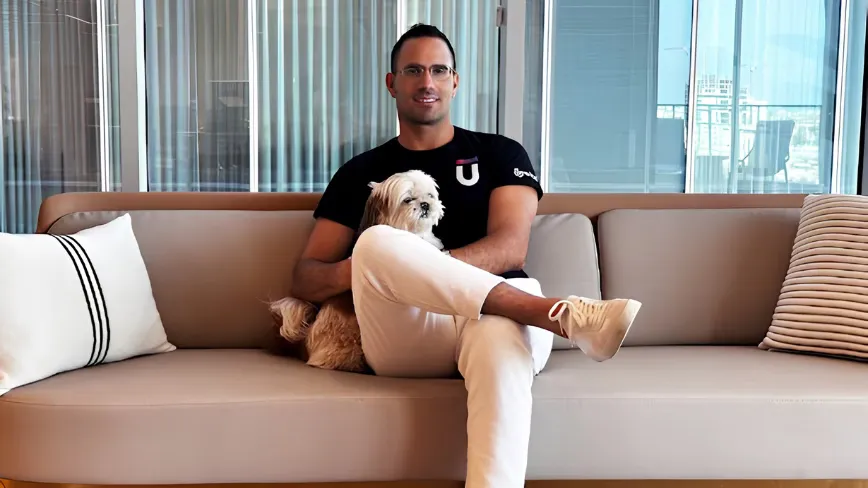
Upwind CEO Amiram Shachar published a new product thesis this morning, positioning the company’s "Security for AI" strategy as the companion to its earlier push into agentic AI capabilities. The move matters because it signals to decision-makers that AI security is becoming an end-to-end infrastructure problem, not a bolt-on feature.
Upwind CEO Amiram Shachar used a new product announcement this morning to make a pretty clear argument: if your company is serious about AI, then securing AI cannot live in a tiny side box. In his lengthy post, Shachar laid out Upwind’s "Security for AI" thesis, and the big idea is that AI security is not a standalone product. It has to span the stack. That is the shift. Upwind is no longer just talking about one more tool in the security drawer. It is positioning itself around the full AI environment, from the way systems are built to the way they are used.
That matters because the AI stack has become the place where modern risk hides. Companies are moving quickly from experimentation to deployment, and every layer brings its own exposure: models, agents, data, access, workflows, and the systems those agents touch. The source says this announcement is a companion piece to Upwind’s earlier push around agentic AI capabilities, which tells you the company is not treating AI security as a separate market. It is treating it as the missing control plane for the same AI systems enterprises actually want to ship. If that sounds abstract, it is not. For buyers, it changes the buying question from "Do we need another security product?" to "How do we secure the whole AI workflow before it becomes production reality?"
For executives, that framing is important because it lines up with how enterprise technology adoption usually happens. New platforms rarely arrive neatly packaged with their own risk envelope. They spread into existing infrastructure, and then security teams are forced to catch up. AI is following that playbook, except faster and with more moving parts. Agentic systems, in particular, are more autonomous than earlier software tools, which means they can make decisions, call services, and trigger actions across a business. That is exactly why a company like Upwind would want to position itself across the entire stack rather than as a point solution that only watches one layer. In plain English, the more AI gets to do, the more places there are for something to go wrong.
The strategic subtext here is also about budget and ownership. When a vendor says security is not a standalone product, it is making a case for being embedded in the core platform conversation, not bought as an afterthought. That can matter inside enterprises where responsibility is split between security, engineering, data, and product teams. AI deployments often get kicked off by one team and then suddenly become everyone’s problem once they reach real users or real workflows. A company that can tell a cleaner story about securing the whole stack has a shot at becoming part of the architecture discussion early, when standards are being set and tools are being chosen. That is where switching costs begin.
There is also a regulatory and governance angle, even if the source does not point to any specific rulebook. Around the world, companies are being pushed to explain how they manage AI risk, data handling, access control, and accountability. The practical reality is that boards and executives do not want to discover after deployment that they cannot trace what an AI system touched, who approved it, or how a bad output spread through internal systems. Upwind’s pitch suggests a response to that pressure: make AI security broad enough to cover the whole lifecycle instead of narrow enough to miss the messy parts. That is a meaningful distinction for enterprises that are trying to move fast without creating a compliance headache they will later spend months cleaning up.
The timing also matters because this announcement follows Upwind’s earlier work on agentic AI capabilities. Put together, the two pushes suggest a company trying to own both sides of the same problem: the power to build and deploy AI agents, and the security logic to govern them. That is a smart place to stand if the market keeps maturing the way most enterprise software markets do. Buyers do not usually want a pile of disconnected tools. They want a coherent story about control, visibility, and risk reduction that does not slow the business down too much. Upwind is trying to be that story for AI.
For peers, rivals, and the executives making procurement decisions right now, the takeaway is simple. AI security is no longer being framed as an isolated add-on. Upwind’s latest announcement says the market should think in systems, not snippets. If your company is deploying AI agents, building new internal tools, or trying to decide whether security can wait until after rollout, this is the kind of move that should snap the conversation into focus. The competitive edge in enterprise AI may not just come from what your systems can do. It may come from whether you can prove, from the start, that you can keep them under control.
This story's Key Insights and Take-aways are locked.
Create a free account to unlock Executive Actions for one credit.
Register to UnlockAlways free for Executives Club members. Join the Club
More in Business

Anthropic’s Levant Alpöge cracks the Jacobian conjecture after 87 years
A Harvard valedictorian used Claude to hit a 1939 breakthrough, but the missing “why” is the real problem.

Uber buys Delivery Hero for nearly $15B, vaulting to top food delivery outside China
The deal doubles Uber's dual-services footprint and pushes a ride-and-eats bundling play into 50 more markets.

Epic and Google drop settlement bid, forcing rival Android app stores by July 22
Google told the court it is ready to carry third-party app stores starting Wednesday, July 22.