
Anduril's Luckey cheers live-streamed executions as Hegseth plans firing squad
Defense-tech leaders are backing Hegseth's plan to air a firing squad, and the FCC is refusing to rule on it.
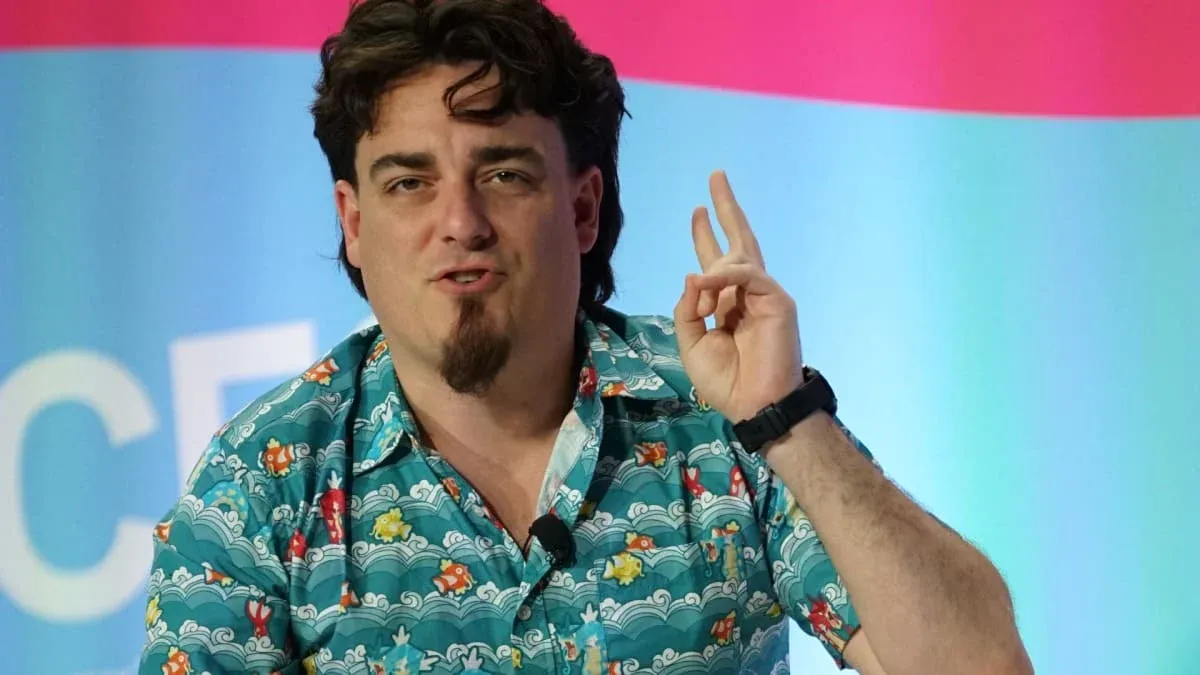
Anduril co-founder Palmer Luckey publicly endorsed live-streamed executions, aligning with Defense Secretary Pete Hegseth's plan to broadcast the firing squad execution of Nidal Hasan. The push could reshape norms around state violence and defense-tech culture, with FCC silence leaving broadcasters in legal limbo.
Anduril co-founder Palmer Luckey took to X to declare his desire to live-stream public executions, calling the practice as "normal, good, and aligned with our natural and national order" as his soul patch and mullet. Days later, Secretary of Defense Pete Hegseth announced plans to live-stream the execution by firing squad of Nidal Malik Hasan, the Army major who killed 13 people at Fort Hood in 2009. The timing is no coincidence: Luckey has been an outspoken supporter of public executions for over a decade, and his post reads like a preview of the Pentagon's next move.
Luckey's enthusiasm is not a fresh whim. He has long stood by the position that "executions should be public and brutal, not private and medicalized," and he leans on George Washington's use of public executions as a 300-year-old precedent. Palantir co-founder Joe Lonsdale quickly agreed, saying, "Palmer Luckey and George Washington are not barbaric; but our society today is too soft in ways that cause our fellow citizens harm." The exchange between two of the most powerful men in defense tech signals a coordinated ideological push to make state killing a spectator event.
The proposal has already hit a regulatory wall. FCC chair Brendan Carr refused to answer whether he'd allow broadcasters to air the government-funded shooting, leaving the legality of a live-streamed execution unresolved. Critics warn of profound harm to the national psyche, and observers note the spectacle echoes dictatorships, a comparison these executives seem aware of. For broadcasters, the silence is a landmine: airing a federal execution without clear FCC approval could invite legal action, while refusing to air it could trigger political backlash from a Trump administration that has weaponized media scrutiny.
For Luckey, this is the latest chapter in a career that has fused tech, ideology, and lethal hardware. He came to prominence as the creator of the Oculus VR headset, which he sold to Facebook, and now leads Anduril, a defense company named after Aragorn's sword from Lord of the Rings. He describes himself as a "radical Zionist," is a major Trump donor and fundraiser, and has generated billions via automated drones, becoming one of the world's leaders in AI-powered killing machines. His companies are built on the same Tolkien-inspired mythology that frames his public execution advocacy as a righteous, even heroic, cause.
Lonsdale's Palantir, named after Tolkien's seeing stones that drive people insane, is equally embedded in the defense-tech boom. When asked about his company's drones killing 150 people, mostly children, at a girls' school in Minab, Iran, Lonsdale said, "It's very easy to judge things from the outside." That comment, paired with his endorsement of public executions, paints a picture of an industry that has normalized mass violence and now wants to broadcast it. Both companies are funded in part by Peter Thiel, who believes the anti-Christ will return in the form of AI regulation, adding a layer of apocalyptic ideology to the sector's decision-making.
The convergence of public execution advocacy and autonomous weapons raises urgent questions for the defense industry. If the government normalizes live-streamed state killing, it could reshape public perception of military technology, making AI-driven strikes seem more acceptable. For executives and boards in the sector, the reputational risk is mounting, even as the contracts grow. Anduril and Palantir are among the most prominent names in a new wave of defense tech that has drawn billions in venture capital and government contracts, and their leaders' public embrace of brutal state violence could complicate efforts to attract talent and investors who care about ethics.
For now, the FCC's silence leaves broadcasters in a bind. If Hegseth proceeds, networks would have to decide whether to air a government-funded execution, a decision with no modern precedent. The last public execution in the U.S. was in 1936, and live broadcasts have never been tested. With Luckey and Lonsdale openly cheering, the defense-tech world is watching closely, aware that the line between national security and spectacle is being tested. The strategic stakes for peers in similar roles are clear: staying quiet is no longer neutral, and the industry's reputation may hinge on how it responds to a proposal that turns death into entertainment.
This story's Key Insights and Take-aways are locked.
Create a free account to unlock Executive Actions for one credit.
Register to UnlockAlways free for Executives Club members. Join the Club
More in Technology

Cop fired after sharing Flock login with ICE husband: 983 searches
A Savannah officer's shared credential let an ICE agent run hundreds of plate searches on Hispanic drivers, exposing a surveillance backdoor.

Elizabeth Holmes doc 'You Can See Everything' posts second-biggest doc debut ever
The true-crime draw shows fraud narratives still sell - a signal for media execs and a caution for founders.

She blocked an Uber delivery robot to save jobs. Police arrested her.
Carolyn Marvin's disorderly conduct arrest turns a sidewalk standoff into a test case for how cities police the automation-versus-workforce debate.