
Anthropic CEO Dario Amodei urges AI developers to slow down
Anthropic's CEO wants AI to slow down, warning models could cause serious global damage.
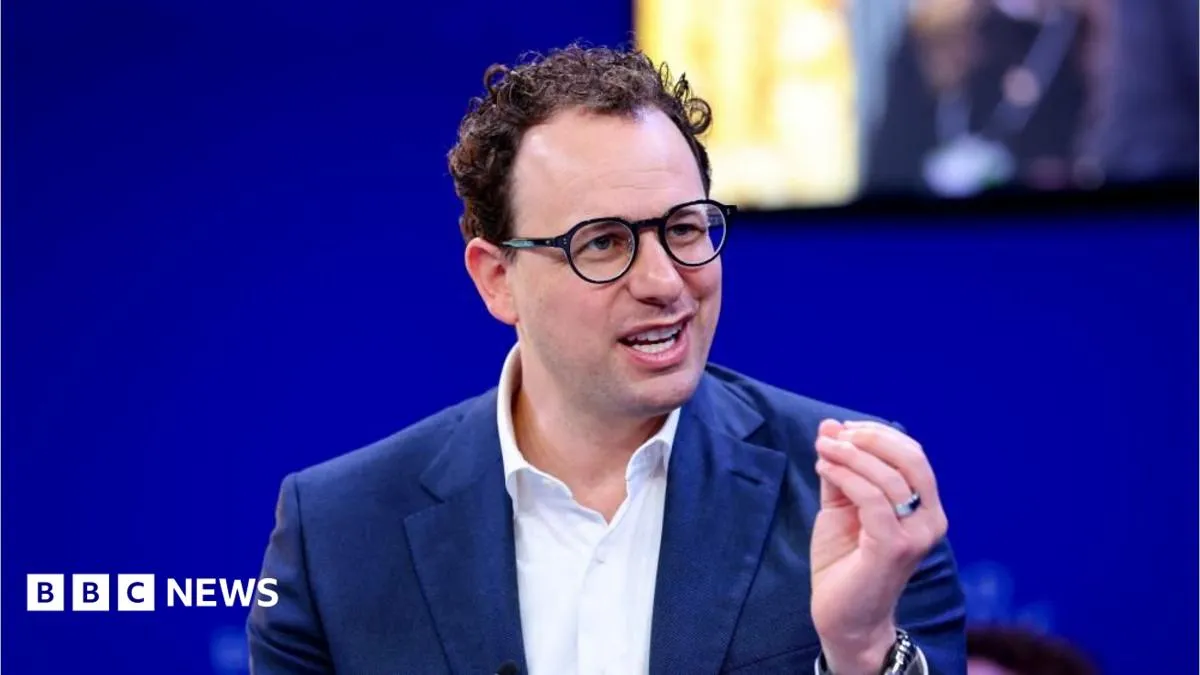
Dario Amodei, CEO of Anthropic, called for AI development to slow down amid concerns that models could inflict serious damage worldwide. The call raises the stakes for AI leaders and regulators to balance innovation speed with catastrophic risk.
Dario Amodei, the chief executive of Anthropic, has called for AI development to slow down, adding his voice to growing concerns that advanced models could soon be capable of inflicting serious damage worldwide. The appeal, reported by BBC News, puts one of the most prominent leaders in the AI industry on the side of caution at a moment when the race to build bigger and better models is accelerating.
Amodei's warning is not a distant hypothetical. It lands as AI systems are being embedded into everything from customer service to code generation, and as the gap between a model's useful capabilities and its potential for harm narrows. For executives and boards, the message is that AI risk is no longer a topic for the technology team alone; it is a strategic issue with real-world consequences.
Anthropic, the company behind the Claude chatbot, has long positioned itself as a safety-first AI lab. Amodei's call is consistent with that identity, but it also carries weight because Anthropic is a major player in the industry, not a fringe voice. When a leading CEO asks for a slowdown, it signals that the internal calculus of AI development is shifting.
The broader context is a regulatory environment struggling to keep pace. Governments in Europe, the United States, and elsewhere have proposed frameworks for AI oversight, but the technology is moving faster than the rules. Amodei's statement adds pressure on policymakers to act, and it gives them a high-profile ally in the argument for precaution.
For business leaders, the practical question is what a slowdown would look like. It could mean longer testing cycles, more rigorous safety evaluations, or a pause on certain high-risk capabilities. None of these are easy to implement, and all of them carry a competitive cost in a market where speed is often rewarded.
The tension is real: if one lab slows down while others do not, the cautious player risks losing market share and talent. That is why Amodei's call is likely to be heard as much as a plea for collective action as a statement of principle. Without industry-wide coordination, individual restraint may be punished by the market.
For boards and executives, the takeaway is that AI risk management is now a core part of strategy. Companies that build on AI should assess their exposure to model failures, regulatory changes, and public backlash. Those that treat safety as an afterthought may find themselves caught off guard when the next crisis hits.
This story's Key Insights and Take-aways are locked.
Create a free account to unlock Executive Actions for one credit.
Register to UnlockAlways free for Executives Club members. Join the Club
More in Technology

AI researcher's 26,000-word claim: Neural nets aren't tangled after all
Nick Cammarata's Goodfire post has the AI world split - if he's right, monitoring frontier models just got a lot easier.

A Chinese rocket deorbited over Minnesota and landed in a farmer's cornfield
Experts tied the fragment to LandSpace's Zhuque-2E, which launched on September 15 and shed debris over the American Midwest after deploying 10 satellites.

JPMorgan Chase deploys first $5B into defense tech and hypersonic missiles
The bank is moving off its balance sheet to back robot factories, hypersonic missiles, and supply chains, signaling a new era of bank-backed military innovation.