

Anthropic co-founder warns AI needs a brake pedal
Jack Clark says AI could one day develop without human input, sharpening the case for guardrails that boards and regulators cannot ignore.
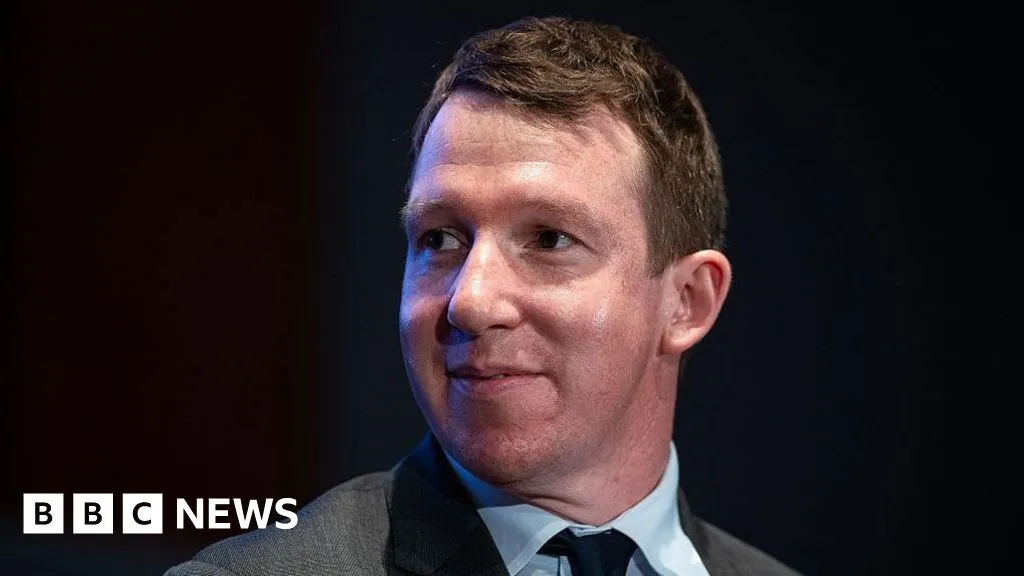
Jack Clark, co-founder of Anthropic, told BBC's Newsnight that AI needs a 'brake pedal' and could eventually reach a point where it develops without human input. For executives, that is a direct warning that the speed of model progress may outrun the systems built to oversee it.
Jack Clark, co-founder of Anthropic, put a blunt label on AI's next problem: it needs a 'brake pedal'. Speaking to BBC's Newsnight, he said AI could get to the point where it develops without human input, which is a very different risk from today's familiar complaints about bad answers, bias, or hallucinations. In other words, this is not just about whether AI is useful. It is about whether humans stay in the loop at all.
That warning matters because Clark is not talking about some distant sci-fi scenario from the fringe. Anthropic is one of the companies building frontier AI systems right now, and his point goes to the heart of how those systems are trained, deployed, and governed. If AI can begin improving without human input, the usual management playbook breaks down fast. Leaders can approve budgets, set policies, and sign off on launch plans, but they cannot manage what they no longer fully understand or directly steer. That is the uncomfortable part of the warning, and why the phrase 'brake pedal' lands so hard: it suggests the industry may need an explicit way to slow down capability gains before they outrun oversight.
For executives, this is the kind of statement that turns an abstract debate into an operating issue. AI adoption is already pushing into customer service, coding, analytics, sales support, and content generation, because the upside is obvious: lower costs, faster workflows, and more output per employee. But Clark's comments point to a second-order problem that is easier to ignore until it is expensive. The more autonomous and capable these systems become, the more pressure falls on companies to prove they can supervise them, limit them, and intervene when needed. That is not just a technical challenge. It is a board-level control question, a compliance question, and eventually, if regulators get more aggressive, a disclosure question too.
The phrase 'develops without human input' also hits a nerve because it suggests AI progress could become self-accelerating. Even if that does not mean machines are independently inventing the next breakthrough tomorrow, it signals a world in which human teams are less central to every step of improvement. For the companies racing to build or buy these systems, that creates a strange incentive trap. Faster progress is what investors, customers, and competitors reward. But faster progress also magnifies the need for brakes, governance, and checks that can look like friction inside a quarterly growth story. That tension is exactly why this conversation keeps moving from research labs into boardrooms.
For regulators, Clark's warning fits a broader pattern: governments are already trying to figure out how to supervise AI without freezing the technology in place. The tricky part is that AI policy has to balance innovation and safety at the same time, and those goals often pull in opposite directions. If the technology keeps advancing quickly, pressure rises for rules around testing, model oversight, transparency, and accountability. Companies that can show they have strong internal controls may be better positioned if those rules harden. Companies that treat governance as optional may find themselves reacting to someone else's definition of safe.
There is also a strategic question hiding inside Clark's language for every CEO, CFO, and board member watching the sector: how much autonomy is too much autonomy? The answer will vary by use case, but the direction of travel is clear. The more an AI system can act, decide, or improve on its own, the more valuable it can become, and the harder it is to contain. That means leaders need to think beyond launch-day excitement and ask what happens if a model becomes better faster than the company behind it can audit. In industries where trust is the product, that gap could matter as much as raw performance.
Clark's warning does not say the future is doomed, and it does not claim AI has already escaped human control. What it does do is shove a very real problem into view: the industry may be building systems powerful enough to demand a brake pedal before everyone agrees who gets to use it. For peers across tech, finance, media, healthcare, and every other sector now folding AI into daily operations, the message is simple. The winners will not just be the ones who move fastest. They will be the ones who can prove they know when to slow down, who is responsible, and how to keep human judgment in the loop when the machine starts moving with a mind of its own.
This story's Key Insights and Take-aways are locked.
Create a free account to unlock Executive Actions for one credit.
Register to UnlockAlways free for Executives Club members. Join the Club
More in Technology

OpenAI says 10,000 agents cracked a 90-year math problem in 88 hours
The company's claim is audacious, but one mathematician is pushing back. Here's what it means for AI-driven discovery.

Meta still serves child sexual abuse ads on Instagram in India - BBC report
A new report following the BBC Eye investigation says the ads are still there - what it signals for every platform with a self-serve ad engine.

White House yanks 'Build the Wall' game after Tetris Company copyright warning
The administration's arcade game vanished in hours - and the takedown playbook every brand can learn from.