
Anthropic taps Morgan Stanley, Goldman for IPO as October looms
The Claude maker’s bank lineup is taking shape fast, and the timing could reset the AI funding race for rivals still deciding whether to stay private or cash out.
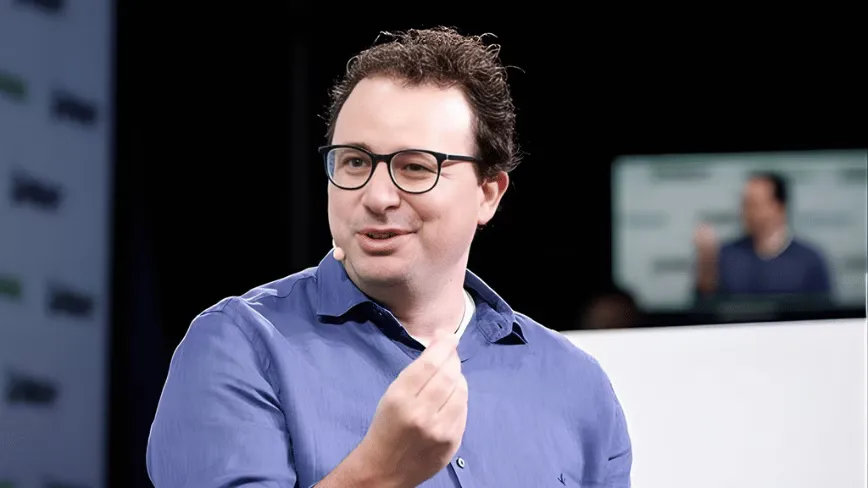
Anthropic has selected Morgan Stanley and Goldman Sachs to lead its initial public offering, with JPMorgan Chase also working on the deal, The move signals that one of AI’s most closely watched private companies is seriously preparing for public markets, which could pressure other frontier AI labs, investors, and boards to rethink timing, valuation, and control.
Anthropic has picked Morgan Stanley and Goldman Sachs to lead its initial public offering, and JPMorgan Chase is also working on the deal, according to Bloomberg. The company behind Claude is now weighing a public debut as soon as October, just one day after filing confidentially for a listing on Monday. In other words, this is not a vague someday plan. The bank roster is in motion, the paperwork is underway, and the market is being told, quietly but clearly, that one of the most closely watched AI companies is getting serious about the public markets.
That matters because an IPO is not just a fundraising event. For a company like Anthropic, it is a credibility test, a governance shift, and a new level of scrutiny all at once. Morgan Stanley and Goldman Sachs are two of the biggest names in dealmaking, and JPMorgan Chase is also on the job, which tells you the company is treating this like a major capital markets event rather than a symbolic filing. Bloomberg also reported that more banks could be added to the lineup. That kind of expanding bench is common when a company wants depth, distribution, and optionality for a process that can move quickly once the window opens.
Anthropic’s timing is what makes this especially interesting. We are talking about a company that filed confidentially for a listing on Monday and is already being discussed as a possible October debut. Confidential filings are designed to let a company prepare for an IPO without putting every detail in public immediately, which is useful when management wants flexibility while still advancing the process. For readers tracking AI from the outside, the signal is simple: the market is no longer asking whether Anthropic is big enough to matter. It is now asking when, and on what terms, it wants public-market capital and public-market pressure.
There is also a second layer here that sits in the fine print of the original headline: a SpaceX computing deal worth $1.25 billion per month. That detail underscores how the AI sector is being financed and built through huge, recurring commercial commitments, not just software demos and model launches. Even without more detail in the source, the size of that number is enough to show why these companies are attracting so much attention from banks, investors, and rivals. When infrastructure, compute, and model development can involve commitments at that scale, the path to an IPO becomes about more than a liquidity event. It becomes a way to support the capital needs of an industry that can burn cash fast and scale faster.
For decision-makers, the practical question is what this means for the rest of the AI market. A public Anthropic would give investors another reference point for how the market values frontier AI companies, and that could ripple into private rounds, secondary sales, and boardroom debates at competitors. If a company like Anthropic can move from confidential filing to a likely October window with Morgan Stanley, Goldman Sachs, and JPMorgan Chase in the mix, that raises the pressure on peers to show cleaner business models, clearer customer traction, and a more credible path to durable economics.
It also changes the tone inside the company. Once a firm starts building an IPO syndicate, every internal decision gets viewed through a different lens. Product launches, hiring, disclosure discipline, and capital allocation all matter more when public-market investors are going to read the story in quarterly increments instead of private-market optimism. That is especially true in AI, where the gap between technical ambition and financial discipline can get very wide, very fast. Anthropic does not need to prove that AI is important. It needs to show that it can turn importance into a public-company narrative that survives scrutiny.
The broader takeaway for founders, operators, and investors is that the AI funding cycle is still in motion, but the exit paths are becoming more concrete. A confidential filing on Monday, a potential October listing, Morgan Stanley and Goldman Sachs as lead banks, JPMorgan Chase also involved, and more banks possibly coming in later: that is a real IPO process, not rumor inflation. If you are running a company in the same orbit, or backing one, the message is hard to miss. The market is preparing to put a price on frontier AI, and once that happens, everyone else will be compared against it.
This story's Key Insights and Take-aways are locked.
Create a free account to unlock Executive Actions for one credit.
Register to UnlockAlways free for Executives Club members. Join the Club
More in Technology

OpenAI says 10,000 agents cracked a 90-year math problem in 88 hours
The company's claim is audacious, but one mathematician is pushing back. Here's what it means for AI-driven discovery.
Meta still serves child sexual abuse ads on Instagram in India - BBC report
A new report following the BBC Eye investigation says the ads are still there - what it signals for every platform with a self-serve ad engine.
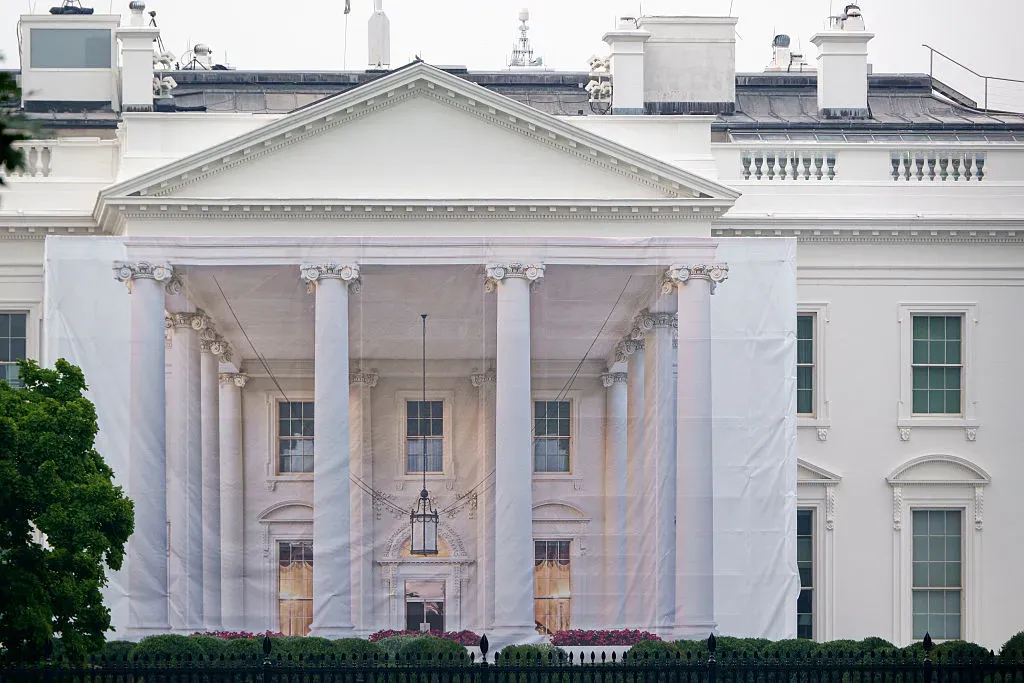
White House yanks 'Build the Wall' game after Tetris Company copyright warning
The administration's arcade game vanished in hours - and the takedown playbook every brand can learn from.