
Antonelli's Historic F1 Title Push: A Rookie Win That Would Rewrite Mercedes' Future
A Mercedes rookie is on the cusp of a record-breaking championship, and the team's bet on youth will be judged in the final stretch.
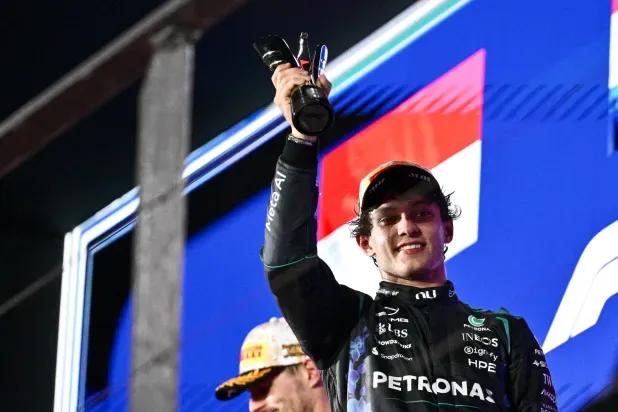
Andrea Kimi Antonelli, the 18-year-old Mercedes driver, is daring to dream of a historic Formula 1 title, with the championship now zooming into view. A rookie championship would validate Mercedes' bold youth-first strategy and reshape the team's driver market leverage for years.
Andrea Kimi Antonelli, the 18-year-old Mercedes driver, is daring to dream of a historic Formula 1 title, with the championship now 'zooming into view' according to a report from Asharq Al-Awsat. If he pulls it off, the rookie would become the youngest champion in the sport's history and the first Italian to win a drivers' title in decades - a feat that would instantly rewrite the record books and settle a fierce debate inside Mercedes about promoting youth over experience.
But the stakes extend far beyond personal glory. A championship for Antonelli would validate Mercedes' decision to hand a teenager a race seat ahead of proven veterans, a gamble that initially drew skepticism from rivals and fans. It would also position the team to dominate the next era of the sport, with a homegrown star locked into a long-term contract while other teams scramble to rebuild their rosters.
Antonelli's trajectory has been anything but conventional. He was fast-tracked through the junior categories, impressing Mercedes engineers with his raw speed and composure under pressure. The team promoted him to a full-time race seat with just a single season of Formula 2 under his belt, a move that raised eyebrows across the paddock. Historically, drivers of his age are placed in development roles, learning from seasoned teammates for years before being trusted with a championship-contending car. Mercedes, however, decided to tear up that playbook, betting that Antonelli's natural talent would outpace his inexperience. That bet now appears to be paying off, but the final races of the season will test whether a rookie can hold his nerve when the title is on the line.
The current championship battle has been defined by razor-thin margins, with multiple teams fielding cars capable of winning on any given weekend. In such an environment, consistency - not outright speed - often separates champions from contenders. Antonelli has shown both, but he has also made the kind of mistakes typical of a driver learning at the highest level. The question now is whether he can eliminate those errors in the closing rounds, where every point will matter. For context, rookie drivers in F1 typically need at least half a season to adapt to the sport's grueling travel, complex tire management, and the psychological weight of racing against legends. Antonelli has compressed that learning curve, but the hardest exam still lies ahead.
The broader implications for Formula 1 are significant. A young, charismatic Italian champion would energize a massive fan base and boost media rights value across southern Europe. Italy has not produced a world champion since 1953, and the country's passion for motorsport is unmatched. A title would also create a new marketing goldmine for Mercedes, whose sponsors are eager to attach themselves to the next global superstar. For the sport's commercial side, the emergence of a fresh rivalry between Antonelli and other young drivers could drive viewership for a decade, much like the legendary battles of previous eras.
For Mercedes, the strategic stakes are equally high. The team has invested heavily in its junior program, and a championship would prove that its pipeline can produce champions without relying on the open market. That leverage matters in contract negotiations, not just with Antonelli but with future prospects who will see Mercedes as the surest path to glory. Conversely, a late-season collapse could invite second-guessing about the team's development processes, and rivals could use any perceived weakness to poach both engineers and drivers. The boardroom implications are clear: a rookie title changes the power balance between teams, drivers, and sponsors, and it does so quickly.
Executives outside motorsport can draw a parallel. Promoting untested talent into senior roles is risky, but the potential upside - when the candidate is truly exceptional - can be transformative. The key is building the right support system around the new hire, just as Mercedes has surrounded Antonelli with veteran engineers and a mentor in his teammate. Leaders who take similar bets need to be prepared for moments of doubt, but they must also be ready to fully back their decision when the evidence starts to mount. The final races will not only crown a champion; they will serve as a case study in how bold talent decisions can reshape an entire organization's future.
This story's Key Insights and Take-aways are locked.
Create a free account to unlock Executive Actions for one credit.
Register to UnlockAlways free for Executives Club members. Join the Club
More in Business

Elon Musk unveils a flying car, and SpaceX helped build it
The Tesla CEO's showcase at a SpaceX facility signals a future where road and rocket engineering converge.

Apple's $2,000 iPhone Duo opens preorders, taking on Samsung and Google
Apple's first foldable hits the market at a premium price, reshaping a category Samsung and Google have led.

Pope Leo XIV, first American pope, diagnosed with lung cancer
The 71-year-old Chicago-born pontiff underwent successful surgery on his right lung, and his diagnosis raises new questions about his AI-focused papacy and the Vatican's future.