

Antonio Gracias’ 7.3% stake in SpaceX could be worth about $91.6B at IPO
SpaceX’s S-1 shows Valor-affiliated entities control ~7.3% of Class A stock, pointing to a roughly $91.6B paper fortune.
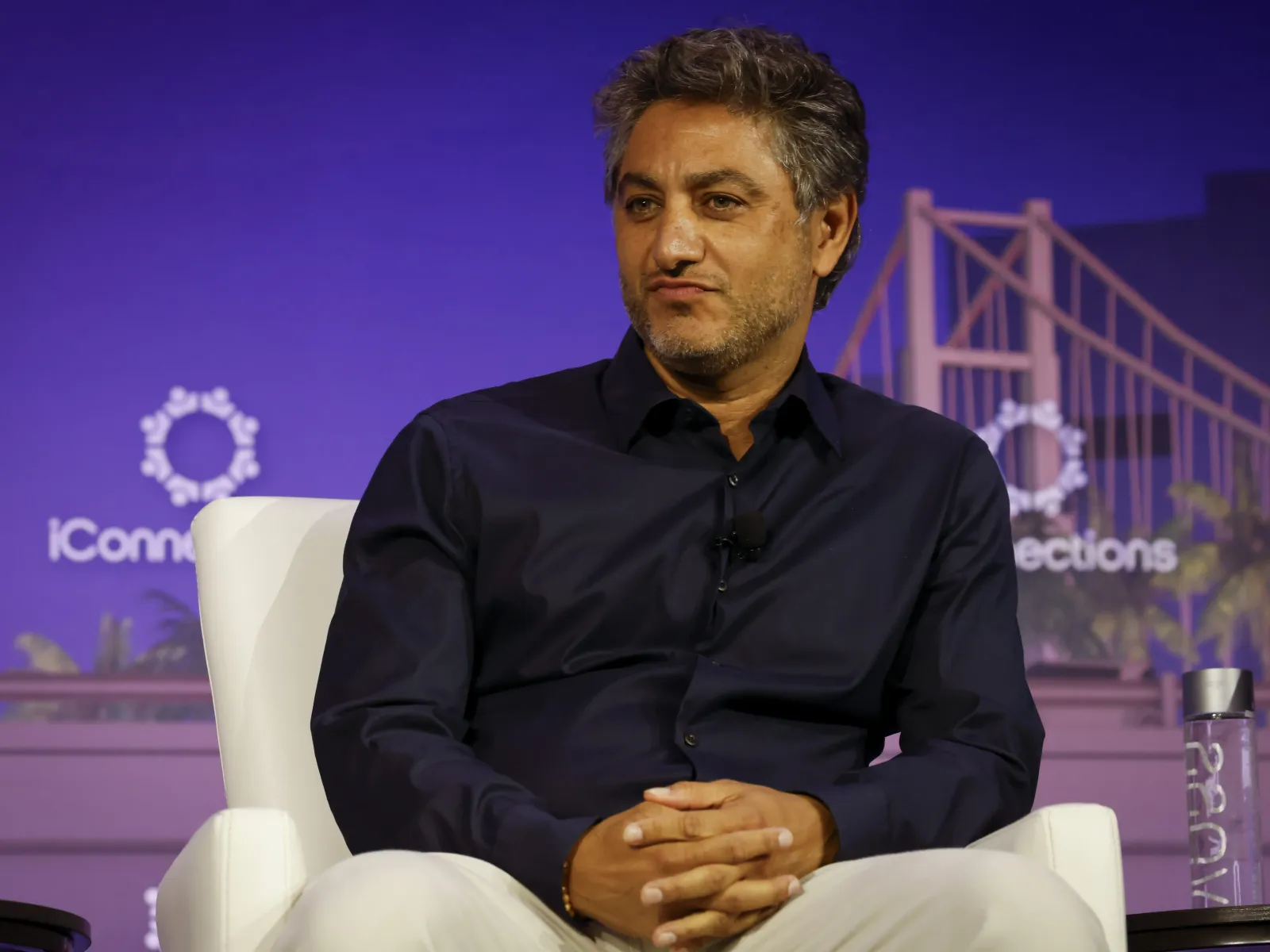
Antonio Gracias, a longtime SpaceX board member since 2010 and founder of Valor Equity Partners, has entities tied to his control owning about 7.3% of SpaceX Class A stock ahead of the IPO. At the $1.5 trillion valuation some investors expect, the stake could be worth about $91.6 billion, reshaping the wealth picture for a core Musk inner circle.
Antonio Gracias has served on SpaceX’s board since 2010, and SpaceX’s S-1 suggests he could personally benefit in a way that is almost cartoonishly large. The filing shows entities controlled by Gracias own roughly 7.3% of SpaceX’s Class A stock ahead of the IPO. If SpaceX hits the $1.5 trillion valuation that investors expect, that stake would be worth about $91.6 billion.
That number matters because it is not just “rich on paper.” It is a potential multibillion-dollar windfall from an IPO that Business Insider reports aims to raise $75 billion, with plans to offer 555,555,555 shares at $135 per share. In other words, this is the kind of liquidity event that can instantly reposition who sits at the center of venture power, who gets to fund the next moonshot, and who has leverage when new corporate partners, regulators, and contractors come calling.
So how does a board member end up with a stake that can translate into nearly $100 billion? The S-1 filing says Gracias owns more than 500 million shares of SpaceX stock through investment firms affiliated with Valor Equity Partners, the private equity firm he founded. The key is that these ownership structures are embedded inside the pre-IPO Class A cap table, and the filing lays out the percentage directly. Roughly 7.3% is concentrated enough to be meaningful, but spread across “entities controlled by” Gracias rather than just a simple individual share count.
This is also where the relationship dynamics start to look less like investing and more like infrastructure. The source traces Gracias’s relationship with Elon Musk back more than two decades. They met through Silicon Valley and PayPal circles in the early 2000s, shortly after Musk sold PayPal to eBay. Valor, which Gracias founded in 1995 and is Chicago-based, became one of the earliest major institutional investors in SpaceX. Importantly, the source says Valor steadily expanded its position while SpaceX stayed private for more than two decades. That “stay private for years” part is crucial. In startups, time can be a compounding machine, and in SpaceX, time was paired with Musk’s expansion into rockets, AI, satellites, and infrastructure.
The S-1 also shows the relationship extends beyond plain equity ownership. According to the filing, subsidiaries tied to xAI entered into nearly $20 billion in lease agreements with Valor-affiliated entities for AI infrastructure and computing equipment. The source adds that those contracts generated hundreds of millions of dollars in payments to these Valor-related entities during 2025 and early 2026. Translation: even before the IPO cashout potential, the Valor ecosystem appears to be plugged into the operational buildout of Musk-adjacent AI infrastructure.
Meanwhile, Gracias is not the only Musk ally with a stake that becomes enormous under an IPO valuation scenario. Luke Nosek, a fellow PayPal alum and early Musk associate, owns nearly 33 million SpaceX shares through direct holdings and Nosek Capital. At the current IPO valuation scenario described in the source, his stake would be worth roughly $6 billion. Luke Nosek is also a co-founder of Founders Fund.
Gwynne Shotwell, SpaceX’s president and chief operating officer, owns roughly 12.6 million shares, which the source values at about $2.3 billion at the estimated IPO valuation. She joined SpaceX in 2002 as employee No. 11 and, per the source, helped secure NASA contracts while overseeing the growth of Falcon launches and Starlink into businesses. Other directors also have material positions, though smaller by comparison: Ira Ehrenpreis owns about 1.37 million shares (roughly $250 million), Randy Glein owns about 278,000 shares (roughly $50 million), and the source points out how concentrated the ownership remains among Musk’s longtime allies.
Zoom out and the regulatory and market context starts to matter. An S-1 is where companies disclose the mechanics of ownership, transactions, and risk. It is also where investors look for how control, incentives, and cash flows are actually structured, not just how the pitch sounds. With SpaceX aiming to raise $75 billion and offering 555,555,555 shares at $135 per share, this IPO could be over twice the prior record for the largest IPO, set by Aramco when it raised $29 billion in its 2019 debut. For executives and boards at other late-stage startups, the second-order message is simple: the equity and related-party arrangements that were once “background noise” can become headline risk, headline reward, and headline scrutiny the moment liquidity arrives.
And for decision-makers watching from the sidelines, the stake here is not merely wealth. It is board influence, capital strategy, and the way long-time allies can be positioned for both IPO upside and recurring revenue streams through affiliated contracts. When a venture ecosystem is that concentrated and that intertwined, the IPO is not just a fundraising event. It is a stress test of who benefits, who controls, and what the disclosed structure implies for the future relationship between investors, operators, and the operating company itself.
This story's Key Insights and Take-aways are locked.
Create a free account to unlock Executive Actions for one credit.
Register to UnlockAlways free for Executives Club members. Join the Club
More in Business

Anthropic’s Levant Alpöge cracks the Jacobian conjecture after 87 years
A Harvard valedictorian used Claude to hit a 1939 breakthrough, but the missing “why” is the real problem.

Uber buys Delivery Hero for nearly $15B, vaulting to top food delivery outside China
The deal doubles Uber's dual-services footprint and pushes a ride-and-eats bundling play into 50 more markets.

Epic and Google drop settlement bid, forcing rival Android app stores by July 22
Google told the court it is ready to carry third-party app stores starting Wednesday, July 22.