

Apes hug before stress to build trust, study suggests
A new study points to “kiss and cuddle” as a built-in social tool for avoiding conflict during tense moments.
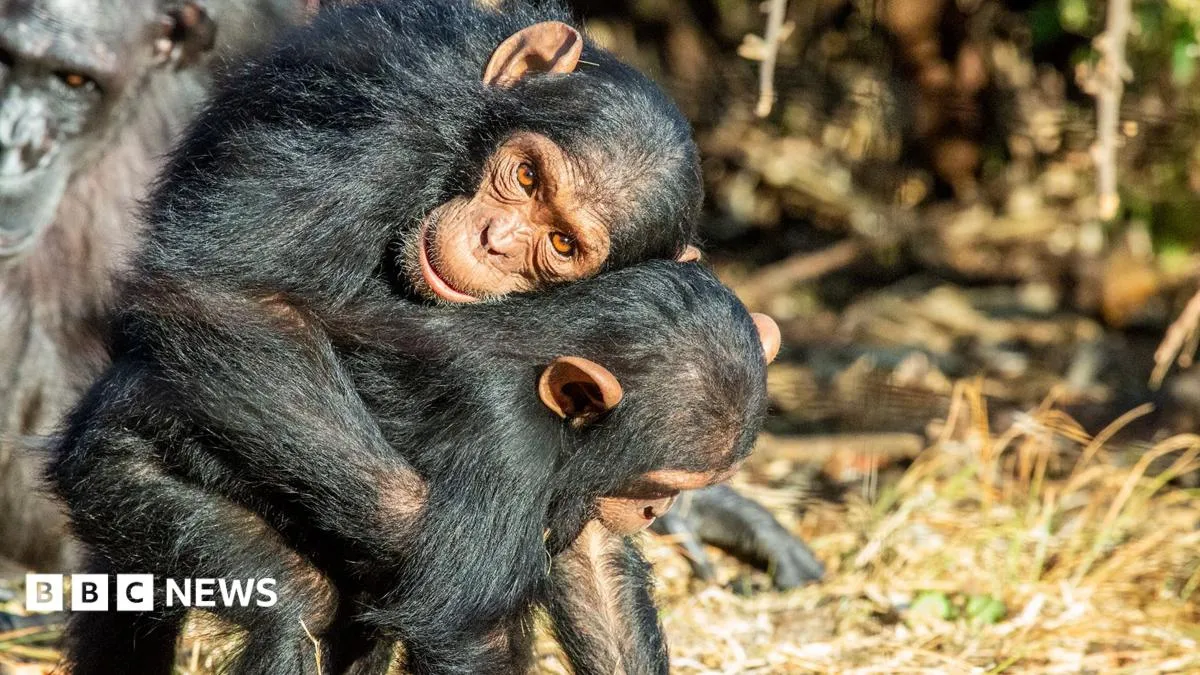
Scientists studying great apes say hugging before stressful events may help build trust. For decision-makers, the findings add evidence that social “pre-emptive” signals can de-escalate risk before it turns into costly conflict.
Great apes kiss and cuddle before stressful moments to keep the peace, according to a study reported by BBC News. The headline takeaway is simple but surprisingly strategic: rather than waiting for tension to spike, apes appear to use affiliative contact as an early move. In human terms, it is the difference between a preventative check-in and an emergency mediation.
The study’s central claim is that hugging before stressful events may be an ancient way of building trust. That matters because trust is not just a “nice to have” feature of social life. It is the lubricant that reduces how often groups slide into escalation when pressure rises. If the mechanism is real, it suggests that some forms of conflict management are not invented on the spot, but could be rooted in older evolutionary playbooks.
Why should executives care about how great apes manage stress, beyond the fact that it is adorable? Because organizations are basically apes with spreadsheets. Under pressure, teams often default to short-term threat responses: blame, defensiveness, and quick escalation. Those reactions can look rational in the moment, but they tend to compound the risk, raising friction, lowering cooperation, and turning normal disagreements into sustained conflict. The study’s implication is not that humans should start licking each other’s faces before a quarterly review. It is that there may be a consistent behavioral pattern across social animals: when stress is coming, affiliative signaling can create a safer lane for everyone to operate in.
If hugging is an “ancient way” of building trust, the second-order effect is on how leaders interpret pre-crisis behavior. Boards and executives often focus on what happens after the breakdown: the investigation, the post-mortem, the corrective actions, the policy updates. But if trust-building has a timing component, then the most valuable moments might be earlier than the people usually measure. In governance, that means culture and communication are not side quests. They can be part of a risk process, especially in high-stakes periods like restructuring, major product launches, regulatory scrutiny, or leadership transitions.
There is also a governance angle in how organizations respond to uncertainty. Stressful events, by definition, compress attention and increase ambiguity. When people do not know what will happen next, they fill in gaps with fear. In animal groups, that fear may trigger counterproductive behaviors, unless an established “peacekeeping” signal resets the social temperature. Translating that idea to companies, executives can think of pre-crisis rituals as tools that reduce uncertainty. Not rituals for optics, but behaviors that cue safety and predictability. When those cues are credible, they can reduce how aggressively people interpret each other’s actions.
Now zoom out to why this research is likely to spread beyond the biology sandbox. Studies like this typically feed into a larger conversation about social bonding, de-escalation, and cooperation. Even without changing any formal rule, evidence that affiliative contact reliably correlates with reduced conflict can influence how researchers frame human behavior, and how organizations design interventions. Importantly, the article is careful in its wording: “may be an ancient way.” That qualifier matters. The claim is suggestive, not definitive proof of a single universal mechanism. Still, the direction is clear enough to inform how decision-makers think about trust during stress.
For executives, the actionable stakes are not emotional. They are operational. When teams trust each other, they coordinate faster, share information more freely, and reduce the time spent trying to “win” rather than solve. When trust collapses, the cost shows up as delays, rework, customer churn, reputational damage, and internal churn. So the strategic question is: where can a leader create the conditions for trust to form before stress forces everyone into survival mode?
That is the real payoff of the study reported by BBC News: hugging before stressful events could be a built-in de-escalation strategy in great apes. It provides a vivid, testable reminder that peace is often negotiated earlier than people assume. And if that timing principle holds, boards and leaders in high-pressure environments should treat early trust-building signals as part of risk management, not just workplace culture theater.
This story's Key Insights and Take-aways are locked.
Create a free account to unlock Executive Actions for one credit.
Register to UnlockAlways free for Executives Club members. Join the Club
More in Science

Juno sees Io’s subsurface heat surge: 40+°F rising just feet down
Two close flybys let NASA measure below Io’s surface, proving tidal heating and reshaping how scientists read volcanoes.

Sperm whales off Dominica shift clicks near boats, researchers can predict ship proximity
A four-year study finds a boat-related “vowel” pattern in sperm whale clicks, enabling near-real-time detection of marine traffic.

Galaxy Watch Ultra 2 adds 800mAh battery, costing $699.99
Samsung lifts battery specs and preventive health focus, including a 35% jump on Ultra 2’s 47mm model.