
Appeals Court Calls Prediction Markets Gambling, Splitting Rulings
A federal appeals court just classified prediction markets as gambling, contradicting an earlier ruling and pushing the fight to the Supreme Court - here's what it means for the industry.

A federal appeals court ruled that prediction markets constitute gambling, reversing an earlier appellate decision and prompting federal regulators to call for Supreme Court review. The split creates uncertainty for platforms and investors betting on event contracts.
A federal appeals court has ruled that prediction markets are gambling, a decision that directly contradicts an earlier appellate ruling and has federal regulators asking the Supreme Court to resolve the conflict. The split means the legality of platforms that let users bet on everything from election outcomes to Fed rate decisions now hangs in the balance, with the future of a fast-growing industry at stake. For executives and investors watching this space, the ruling is not just a legal footnote - it is a signal that the regulatory ground beneath prediction markets is shifting, and the final word may come from the highest court in the land.
Prediction markets, for the uninitiated, are platforms where participants buy and sell contracts whose payouts depend on the outcome of future events - think "Will the Fed cut rates in September?" or "Who will win the 2024 election?" These markets have exploded in popularity over the past few years, drawing in retail traders, hedge funds, and even political operatives looking for real-time signals. The appeal is obvious: they aggregate information efficiently, often outperforming polls and expert forecasts. But that appeal has also put them in the crosshairs of regulators, who have long debated whether these contracts are legitimate financial instruments or simply a form of gambling dressed up in trading jargon.
The ruling in question comes from a federal appeals court, though the source does not specify which circuit. What is clear is that this decision directly contradicts an earlier appeals court ruling - a classic circuit split that the Supreme Court is often eager to resolve. Federal regulators, likely the Commodity Futures Trading Commission (CFTC), have explicitly said that the conflicting rulings call for Supreme Court intervention. That is a significant escalation. When regulators themselves ask the high court to step in, they are signaling that the issue is too important to leave unresolved, and that the current patchwork of appellate decisions is untenable for market participants.
For context, the CFTC has been wrestling with prediction markets for years. The agency has generally taken the position that certain event contracts - especially those tied to political outcomes - are contrary to the public interest and should be banned. In 2022, the CFTC proposed rules to prohibit political betting, but the process has been slow and contested. Meanwhile, platforms like Kalshi and Polymarket have pushed forward, arguing that their products are not gambling but rather financial derivatives that provide valuable hedging and forecasting tools. The appeals court ruling now throws a wrench into that argument, at least in the circuit where it was decided.
The practical impact of the ruling is immediate for platforms operating in that jurisdiction. They may be forced to halt certain offerings or face enforcement actions. But the broader effect is psychological: it creates uncertainty for investors who have poured capital into these startups, and it emboldens state regulators who have long viewed prediction markets as unlicensed gambling. For executives in the fintech and crypto spaces, this is a reminder that regulatory risk is not a theoretical concern - it can materialize overnight and reshape an entire business model.
The Supreme Court's potential involvement adds another layer of intrigue. If the Court takes the case, it could set a national standard for how prediction markets are classified. A ruling that they are gambling would likely crush the industry, forcing platforms to either shut down or pivot to jurisdictions with friendlier laws. A ruling that they are legitimate financial instruments would open the floodgates, potentially bringing these markets into the mainstream and attracting institutional capital. Either way, the decision will have ripple effects far beyond the platforms themselves - it will influence how regulators approach other novel financial products, from crypto derivatives to sports betting.
For boards and executives in adjacent industries, the takeaway is clear: regulatory clarity is a competitive advantage. Companies that proactively engage with regulators, build compliance frameworks, and anticipate legal challenges are better positioned to survive a shifting landscape. The prediction market saga is a case study in what happens when innovation outpaces regulation - and why the resolution often comes down to the courts, not the market. As the Supreme Court weighs whether to take the case, every player in the space should be watching closely, because the next ruling could redefine the rules of the game.
This story's Key Insights and Take-aways are locked.
Create a free account to unlock Executive Actions for one credit.
Register to UnlockAlways free for Executives Club members. Join the Club
More in Business
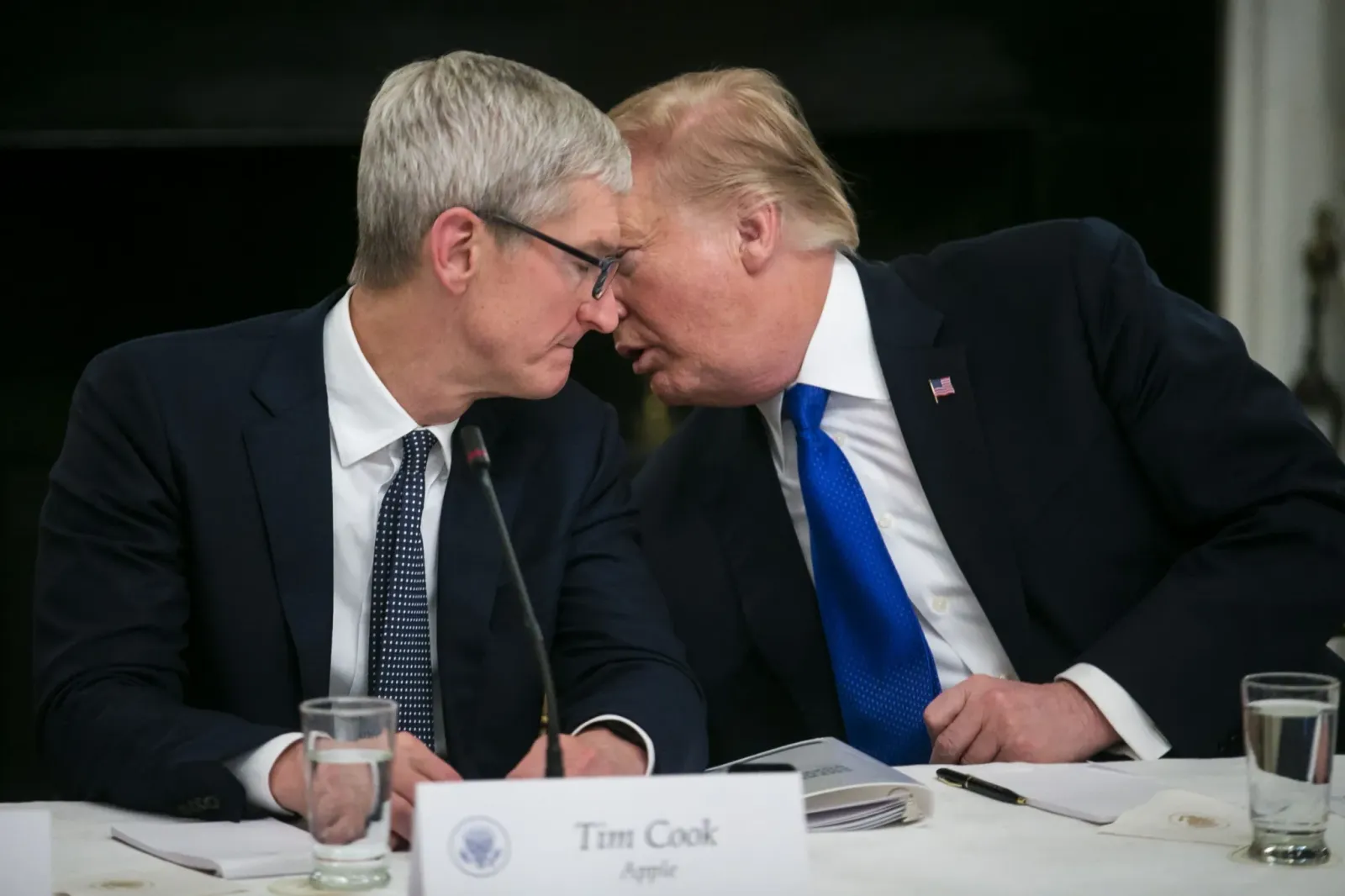
Tim Cook steps down as Apple CEO, stays on as chair with $45M equity
The 'Trump whisperer' keeps his White House and Beijing access as Apple navigates tariffs and a $4.6 trillion market cap.

Snowflake shares surge as AI data demand crushes estimates, lifting full-year forecast
Stocks jumped on stronger-than-expected guidance, signaling enterprise AI workloads are accelerating faster than Wall Street priced in.

Tim Cook's 15-year Apple CEO run ends: 3 lessons for any successor
After 15 years, Tim Cook hands Apple to John Ternus - here's how he turned a $350B company into a $4.6T juggernaut.