

Apple's $1B Athenry plan lit the fuse for AI data center fights
From a 2015 fight in Ireland to protests everywhere, executives need to prepare for grid, permitting, and public backlash.
Apple’s 2015 announcement to build a roughly $1 billion data center in Athenry, Ireland, seeded the kind of local resistance now appearing across communities as AI expands. Decision-makers should treat data center buildout as a political and infrastructure issue, not just a real estate or capacity project.
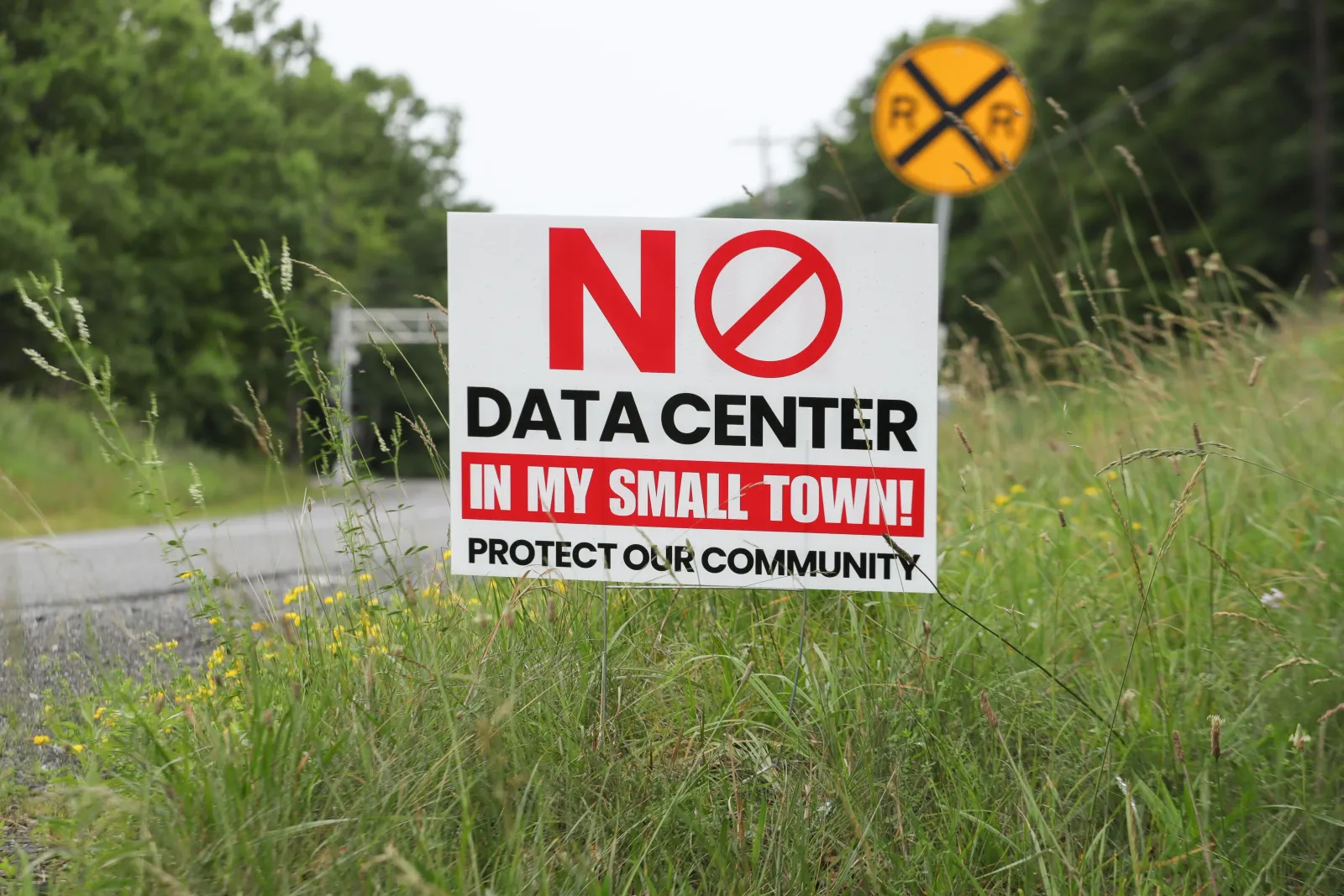
A yard sign opposing a planned data center is displayed along Route 54 in Mount Carmel Township, Northumberland County. That image is a hint of how the next phase of the AI buildout will feel on the ground: less like an invisible supply chain upgrade, more like a public fight over power, land, and trust.
Long before the AI boom made data centers a mainstream talking point, a small group of protesters set the stage for the battles cropping up today. In 2015, Apple announced plans to build a roughly $1 billion data center in Athenry, Ireland, on a 500-acre site. The point of the facility was to power Apple’s services in Europe, including iTunes, iMessage, and Siri. In other words, this was not a vague “someday” project. It was a specific, capital-intensive move into a specific place, and it created a local conflict that did not stay local.
This is the basic lesson executives should borrow, even if their company has never placed a single megawatt on a permitting docket. Data centers look technical on paper, but they behave like infrastructure. Power capacity has to show up reliably. Construction has to fit local timelines and local tolerance. And public acceptance can change quickly once neighbors realize the buildout is not theoretical. The Stepback frames this escalation plainly: years before the AI surge threatened local power grids, protesters had already started the playbook. That playbook is now finding new audiences.
So why does this matter now? Because the AI data center buildout is happening at the exact time when “local power grids” are under the microscope. When more computing demand moves from clouds and offices into massive facilities, it stresses the same constrained assets communities care about: electricity supply, grid planning, and the knock-on effects of new construction. Even if a company’s intent is to deliver digital services, the infrastructure reality can turn neighbors into opponents.
The Apple example matters for board-level reasoning too. A 2015 Apple plan, with a 500-acre footprint intended to run Europe-facing services, shows how early big tech can lock in a multi-year, multi-stakeholder process. Facilities like this are not quick pivots. They require planning, permitting, and long lead times. That means the “cost” of delays is not only financial. It is reputational and political. If opposition forms early, the timeline can expand, and the risk shifts from execution to survival. And as The Stepback suggests, those survival instincts are now being tested more broadly.
There is also a second-order implication for decision-makers: public conflict tends to travel faster than technical upgrades. Once a community learns how the approval process works, what public messaging moves the needle, and which political channels matter, that knowledge can spread. The fact that protests started before the AI boom, according to the newsletter, indicates these are not random reactions. They are part of a recurring cycle that becomes easier to trigger as the stakes rise.
For executives, the takeaway is not “avoid data centers.” It is to recognize the category shift. The conversation is evolving from capacity planning to civic negotiation. Boards and CFOs should expect that buildouts will be evaluated through multiple lenses at once: energy demand, land use, timelines, and local impacts. And when those lenses produce conflict, it can reshape everything from site selection to project phasing.
The Stepback sets up what comes next: the fight against AI data centers is just beginning, and it is building on earlier battles like Apple’s Athenry push. If you are leading a company that depends on compute, this is your reminder that power and politics will be linked. Your competitors may be racing for capacity, but the real bottleneck may end up being whether communities and regulators agree that the move is worth the cost.
This story's Key Insights and Take-aways are locked.
Create a free account to unlock Executive Actions for one credit.
Register to UnlockAlways free for Executives Club members. Join the Club
More in Technology

Google quietly links your phone number to every Android account on your SIM
Adding a SIM now ties your phone number to all Google accounts - and future accounts inherit it. Here's the security and privacy stakes.

Hijacker AI 'Skynet mode' runs 100,000 attack steps against exposed models
Symantec caught a criminal AI agent that borrows other models, steals data, and mines crypto; the only relief is no confirmed victims yet.

Nvidia's AI-financier shift faces its first big test as neoclouds stumble
A rout in neocloud stocks is forcing investors to weigh Nvidia's hidden exposure as both supplier and lender to the AI buildout.