
Apple’s iOS 27 hides a Siri extension switch for ChatGPT, Claude, and Gemini
The WWDC keynote never mentioned it, but a developer beta suggests Siri could swap third-party models inside chat.

Apple’s iOS 27 developer beta includes underlying support for an Extensions framework for Siri, reportedly allowing iPhone users to switch between ChatGPT, Anthropic’s Claude, and Google’s Gemini. Mark Gurman at Bloomberg has reported the system would include a settings panel, even though Apple did not show the feature at its June 8 WWDC keynote.
Apple quietly built a third-party AI switching layer for Siri inside its iOS 27 developer beta, according to reporting that points to an Extensions framework Apple never mentioned at WWDC. Instead of Siri being locked to one AI experience, the underlying system would let iPhone users swap between ChatGPT, Anthropic’s Claude, and Google’s Gemini directly inside Siri.
This is where the stakes snap into focus. Bloomberg’s Mark Gurman has reported that the system includes a settings panel, meaning the “swap” is not just a background integration. It is designed to be user-controlled, with a visible place in iOS settings where people can select which model Siri routes their requests to. Apple, meanwhile, did not publicly demonstrate this during its June 8 WWDC keynote.
To understand why this matters, zoom out to what Siri has been for the last several years: a front door to Apple services. When Apple changes what sits behind that door, it changes how users experience everything from productivity to shopping to developer workflows. And in an AI world, the backend is the product. If Siri can dynamically route across multiple major model providers, Apple is not just “adding AI.” It is building distribution plumbing that could determine which AI brands win in the real world, not just in demos.
The “Extensions framework” framing is also important. Extensions, in Apple terms, are how the platform allows modular add-ons to integrate into the OS and apps. Apple did not describe the feature at WWDC, but if the developer beta includes an Extensions-style system for Siri, it suggests Apple wants third-party AI services to plug in in a standardized way. That is a very different posture than a one-off integration, because it implies scalability: more providers could be added, fewer limitations could apply, and the user experience could remain consistent even as the models evolve.
There is also a competitive and regulatory context lurking behind the scenes. Regulators and policymakers have increasingly pushed for clearer choice and reduced lock-in in digital ecosystems, especially when platform owners bundle or privilege specific partners. Even though the source here does not cite regulatory action, the structure described by Gurman, including a settings panel to swap models, plays directly into the broader theme regulators care about: whether users can exercise meaningful control. If users can select ChatGPT, Claude, or Gemini inside Siri, that is choice at the point of interaction, not a behind-the-scenes preference buried in an obscure menu.
For decision-makers watching from adjacent companies, the second-order implication is distribution power. Right now, AI models compete on quality, but they also compete on where people start. Siri is one of those starting points. If Apple enables a Siri settings panel that routes across ChatGPT, Claude, and Gemini, the iPhone becomes a multi-model command center. That means every AI provider has a new strategic variable: not just “Can we build a strong model?” but also “Can we land the right integration, terms, and user path inside Apple’s routing layer?”
There is another layer for executives to consider: platform neutrality versus partner leverage. Apple’s move suggests it is building a framework that could, in theory, reduce dependence on any single AI vendor. Yet the presence of multiple major providers already named in the reporting implies Apple is selecting and supporting at least some of the biggest players. In practice, that can still concentrate leverage with the platform owner because routing logic, UX, and OS-level placement sit with Apple. A user can switch models, but Apple controls the interface for switching.
The biggest takeaway is that Apple appears to be preparing for an AI future where “the assistant” is an orchestrator, not a single-vendor chat window. Even though Apple did not show this at WWDC, the reported iOS 27 developer beta support points to a product direction: Siri as a hub that can connect to multiple third-party AI systems, with a user-facing settings panel and an Extensions-based architecture. For founders, investors, and operators across AI and mobile ecosystems, that is a platform shift worth tracking closely, because it can change who captures attention, how partnerships are structured, and how quickly model competition turns into distribution competition.
This story's Key Insights and Take-aways are locked.
Create a free account to unlock Executive Actions for one credit.
Register to UnlockAlways free for Executives Club members. Join the Club
More in Technology

Nvidia's $89B data center quarter: the 9 companies cashing in
The AI buildout is minting fortunes beyond GPUs, and memory, cloud, and cooling suppliers are riding the same wave.
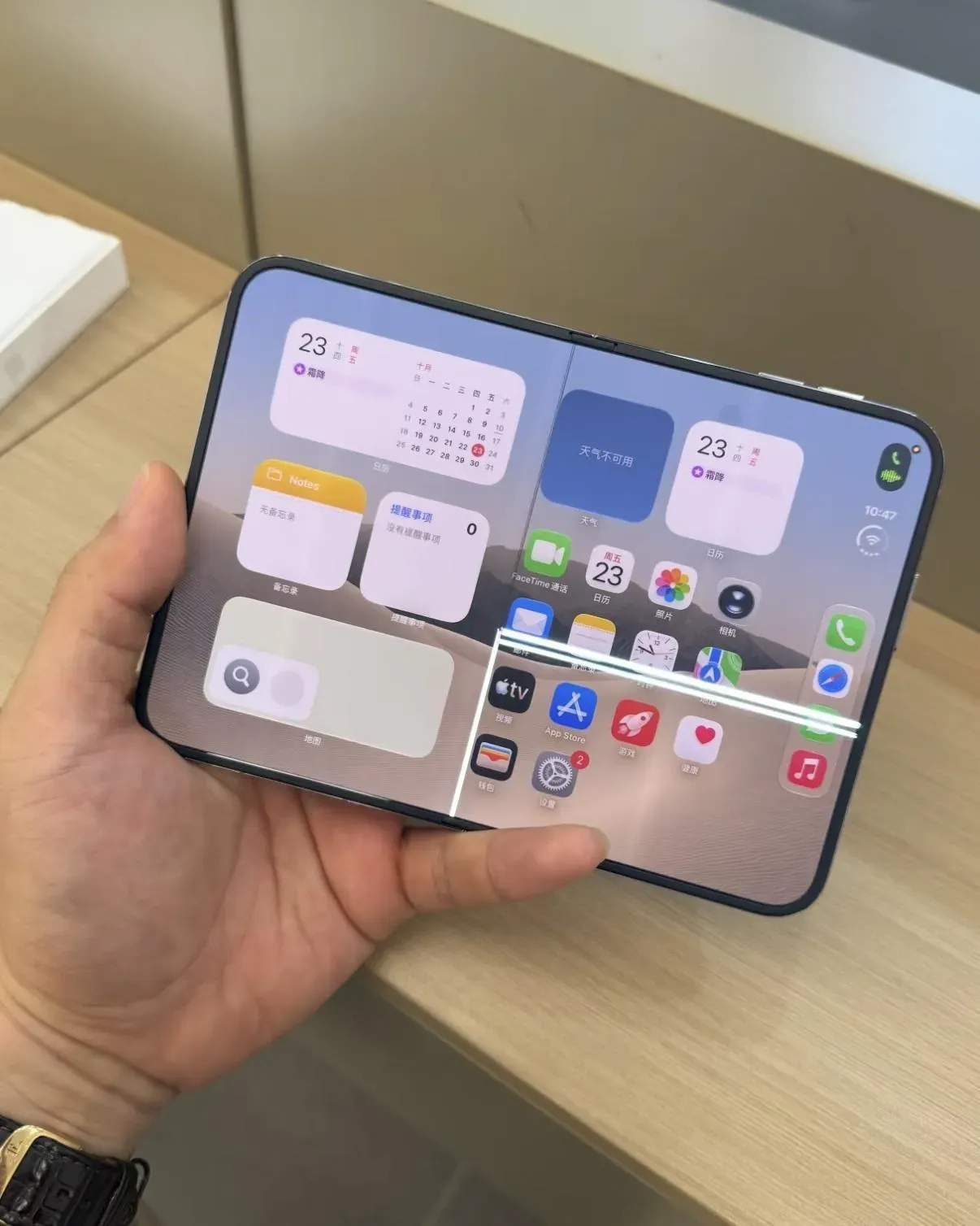
A YouTuber dissected the iPhone Duo and thinks he found crackgate's cause
CuriousHagi's teardown of Apple's foldable reveals a gear-like hinge that may explain why screens crack in the same spot within hours.

Google quietly links your phone number to every Android account on your SIM
Adding a SIM now ties your phone number to all Google accounts - and future accounts inherit it. Here's the security and privacy stakes.