
Apple Store reopens with higher prices after RAMpocalypse cost squeeze, Tim Cook warns
Macs and iPads get steep bumps while iPhones are spared for now, as memory shortages stretch into 2030.
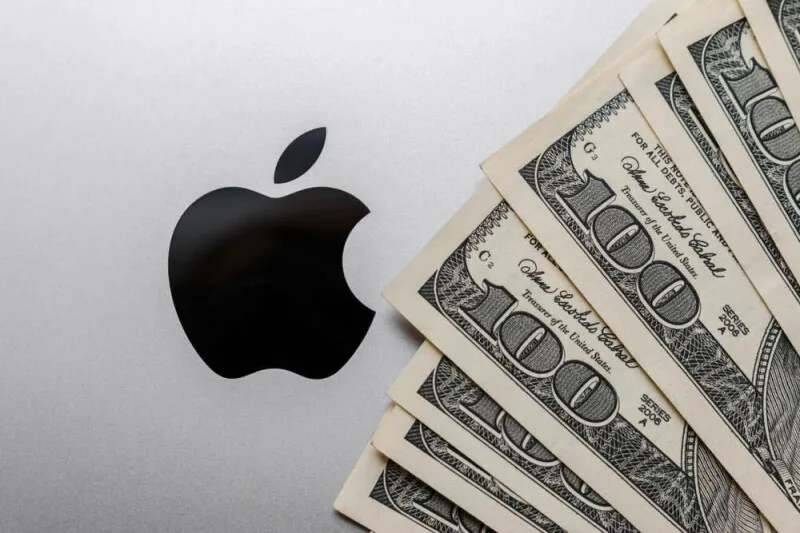
Apple’s online store reopened after Thursday offline downtime, showing higher prices across entry-level Macs and iPads. CEO Tim Cook told the Wall Street Journal that upcoming price hikes are “unavoidable,” as memory shortages driven by AI and datacenter demand worsen.
Apple’s online store went offline Thursday morning. Then it came back online with almost nothing new except one clear message: RAMpocalypse costs are heading straight to customers.
The price changes were immediate and, for certain models, eye-catching. The budget-priced MacBook Neo saw its entry-level price climb from $599 to $699. Alongside it, entry-level MacBook Air prices rose by $200, and base MacBook Pro models increased by $300. That puts the lowest-spec machines in the lines at $1,299 and $1,999, respectively. iPads also joined the shuffle upward, with the base-model iPad Air (11” with 128GB storage) jumping from $599 to $749, and the basic iPad Pro (11” with 256GB storage) now priced at $1,199, up from $999. iPhones were spared from the price increase “for now,” but the source is blunt that this could be temporary.
So what’s actually driving the markup? The underlying culprit is memory pricing. The piece connects the current hardware price pressure to memory prices skyrocketing, driven by the AI and datacenter boom. That means shortages, longer lead times, and the need to increase prices on everything that contains even the minimum amount of RAM. For Apple specifically, the entry-level MacBooks now start at a minimum of 16GB of integrated memory, which lines up with the claim that pricing is increasing alongside the minimum memory spec.
This is not just an Apple story. The same memory crunch pressure has hit other consumer hardware players, and the source points to Microsoft as one example. Microsoft “quietly rolled out a 12” Surface Pro and 13” Surface Laptop this week” with just 8GB of memory. The implication is that those machines are “devoid of the AI marketing suffusing everything else” Microsoft now sells, because with only half the minimum RAM spec needed to run Copilot+, they do not match the AI pitch. In other words, the memory shortage is not only raising costs, it is also shaping which devices get to play in the AI spotlight.
Apple, for its part, has already signaled this day would come. Terminal Apple CEO Tim Cook warned in an interview with the Wall Street Journal last week that price hikes were coming and described them as “unavoidable.” In the same interview, Cook told the WSJ, “We’re doing our best to mitigate the huge increases that are being passed to us, and we’ve been trying to shield our customers from the increases, but the situation has become unsustainable.” He did not provide details on what or when the increases would land, but the store’s Thursday reopening with higher prices effectively supplies the “what” in concrete terms.
If you are an executive or board member reading this, the bigger issue is not whether prices are rising. It is the likely duration and the bargaining position behind the scenes. The source ties the timeline to Apple’s suppliers. It specifically cites Micron, one of Apple’s RAM suppliers, and notes that Micron said in its Q3 earnings call it had signed agreements with 16 commercial customers to lock in historically high memory prices through 2030. Micron CEO, president, and chairman Sanjay Mehrotra said during that earnings call: “Our customers are recognizing that supply shortages in memory and storage will take considerable time to improve,” and also added, “Even as we expect industry supply to improve gradually in 2028, we currently do not have line of sight as to when memory supply will be able to catch up with increasing demand.”
Those two statements matter because they change how you should think about “temporary” supply pain. If customers are locking in high prices through 2030 and there is no line of sight to when supply will catch demand, then pricing pressure can become a multi-year feature, not a short-term shock. For Apple, that helps explain why iPhones might be spared “for now,” but the source warns not to assume they stay that way if the hardware pricing trend continues.
There is also a second-order effect for strategy: when memory is expensive, product positioning becomes a game of minimum viable specs. Microsoft’s 8GB Surface Pro and Surface Laptop, for example, appear to be a tradeoff between cost and AI feature readiness. Apple is doing something parallel in the opposite direction by moving entry-level Mac configurations up to at least 16GB, which may protect the product narrative but forces price increases. In boardrooms, this is the moment where questions shift from “Can we sell this?” to “How do we keep margin and demand when the bill of materials is unstable?”
For peers watching Apple, the takeaway is not that Apple is increasing prices, full stop. It is that RAM supply constraints are now being translated into retail price tags across entry-level tiers, with supplier pricing agreements reaching through 2030 and no clear end date for when supply catches up. That means pricing, product spec strategy, and inventory planning will likely remain intertwined with memory markets for longer than most budgets assume.
This story's Key Insights and Take-aways are locked.
Create a free account to unlock Executive Actions for one credit.
Register to UnlockAlways free for Executives Club members. Join the Club
More in Business

Bungie cuts most Destiny 2 staff as Sony says Marathon still matters
Herman Hulst confirms layoffs affecting most Destiny and some Marathon teams after Bungie admits Destiny fell short.

SK Hynix jumps 11% after seeking up to $29.4B in Nasdaq listing
The chip giant filed for a Nasdaq listing plan that could raise $29.4 billion, instantly reshaping investor expectations.

Micron revenue hits nearly $42B as AI memory lifts gross margins above 81%
Fiscal Q3 results crush estimates, prove AI memory is rewriting Micron's margins, and change the momentum math for the whole chip stack.