
Ariana Grande drops 'Petal' July 31, and the wider pop market scrambles to match
Her eighth album lands with 12 tracks after 'Eternal Sunshine,' while Cardi B, Selena Gomez, and others flood streaming.

Ariana Grande released her highly anticipated eighth album, 'Petal,' on Friday, July 31, with 12 tracks including Billboard Hot 100-topping single 'Hate That Made You Love Me.' The release hits during a packed global rollout week, shaping how decision-makers think about attention allocation and competitive timing.
Ariana Grande’s eighth album, 'Petal,' dropped Friday, July 31, and it came with a clear signal: this era is built to dominate the algorithm, not just the charts. Billboard describes 'Petal' as arriving with 12 tracks, including the Billboard Hot 100-topping single “Hate That Made You Love Me,” as Grande explores themes of fame, public criticism, and herself. It is not a random release window either. Billboard notes the album arrives two years after her 2024 three-week Billboard 200-topping full-length, 'Eternal Sunshine,' and midway through the star’s 'Eternal Sunshine Tour,' during which she debuted a couple of the new tracks in the days ahead of their release.
That is the kind of sequencing media and music executives watch because it is engineered. Grande does not just drop an album and hope people find it. She seeds the new material inside the live tour cycle, then lands the final product on a specific date: July 31. In a week where multiple major artists are also pushing new work, that timing matters. The rest of the market is not sitting politely in the background. Billboard’s New Music Friday guide frames this final week of July 2026 as a “busy” rollout moment, with Cardi B staking her claim and others stacking releases across pop, hip-hop, Latin pop, country, and Afrobeats.
Cardi B’s move is the most obvious competitive pressure in the headline lineup: Billboard says she asserted her dominance with the new single “Ah Ha,” described as her first single of 2026. The piece ties that single to her earlier momentum, noting she unleashed sophomore album 'Am I the Drama?' last year. In other words, the market is seeing a pattern executives tend to value: sustained visibility. When a star has an earlier album that already earned traction, executives often try to extend attention with singles that keep the brand conversation active. “Ah Ha” plays that role, reinforcing that Grande’s album drop is not happening in a vacuum.
Meanwhile, Billboard points to a Latin pop counterweight. Selena Gomez, Benny Blanco, and Becky G have teamed up on the summery Latin pop anthem “Te Olvido (La La),” ahead of Blanco’s 'Hermaso' LP. This matters beyond the taste-level excitement. Cross-artist collaborations can widen the audience funnel, pulling listeners who might follow one artist’s fanbase but not another’s. For decision-makers, it is a reminder that release weeks are not only battles between solo fan communities. They are also contests over playlist placement, search behavior, and how fans metabolize multiple narratives at once. When Gomez and Blanco are paired with Becky G, that collaboration creates a multi-audience moment that competes directly with any major mainstream pop campaign.
The rest of Billboard’s roundup underlines that “release week” is now a portfolio problem. Slayyyter returns with new song “Brand New Chanel$.” Remi Wolf unveils “Twiggy.” Shaboozey and Davido finally release their highly anticipated albums: 'The Outlaw Cherie Lee & Other Western Tales' and 'Oriadé,' respectively. Those are not just artist milestones. They are structural signals to the ecosystem. Albums and singles are arriving simultaneously, which increases the odds that listeners fragment across platforms and formats, making it harder for any single release to capture undivided attention. For executives, that fragmentation changes the math around rollout intensity, promotional cadence, and how long a title needs to stay “in the conversation” to convert discovery into sustained streams.
There is also an industry rhythm embedded in the way Billboard is presenting the news. The article positions Ariana Grande within the context of the 'Eternal Sunshine Tour' and references Billboard chart benchmarks like Billboard Hot 100 and Billboard 200. That is not filler. It tells you what the market rewards: measurable chart performance and narrative continuity. Grande’s “Petal” arrives two years after 'Eternal Sunshine,' and Billboard emphasizes that 'Eternal Sunshine' previously topped the Billboard 200 for three weeks. In practical terms, that kind of track record raises expectations, and expectations influence how industry stakeholders evaluate risk. When an artist with proven chart dominance drops again mid-tour, labels and media planners often see it as a high-certainty event that can reset the competitive baseline for the week.
Finally, Billboard makes the competitive stakes explicit in a way executives can translate into strategy. After laying out the list of major releases, it asks readers which one is their favorite and invites them to vote in the poll. That is a direct engagement mechanic, but it also reflects what decision-makers care about right now: attention, preference signals, and audience participation. In a week this stacked, the “favorite” is not just a sentiment. It is a proxy for what audiences will keep replaying, recommending, and sharing. For peers navigating release calendars, the lesson from this July 31 drop is straightforward: if you are planning a rollout, you are not just launching content. You are stepping onto a crowded stage where live performance timing, prior chart history, collaboration reach, and release simultaneity all interact.
In this kind of environment, Grande’s 'Petal' is more than another album release. It is a stress test for the entire week’s marketing and playlist ecosystem. When multiple heavyweights are releasing across pop, hip-hop, Latin pop, country, and Afrobeats, the winners are often the ones who arrive with the tightest narrative, the clearest pre-release momentum, and the most deliberate date positioning. The rest of the market will feel it in how quickly audiences move from “new release” to “favorite,” and how long it takes before the next big title becomes the default choice.
This story's Key Insights and Take-aways are locked.
Create a free account to unlock Executive Actions for one credit.
Register to UnlockAlways free for Executives Club members. Join the Club
More in Entertainment

'It's a Magic Trick': Ballet Experts Say Rosalía's SNL Pose Is Impossible
Three ballet experts tell Rolling Stone Rosalía's gravity-defying SNL stillness shouldn't be possible - and why the debate is now part of the show.

Activision CMO: GTA 6 Will Boost Call of Duty, Not Bury It
Activision's top marketer says Rockstar's blockbuster will drive players back to consoles and into Modern Warfare 4, even as the company admits its recent strategy failed.
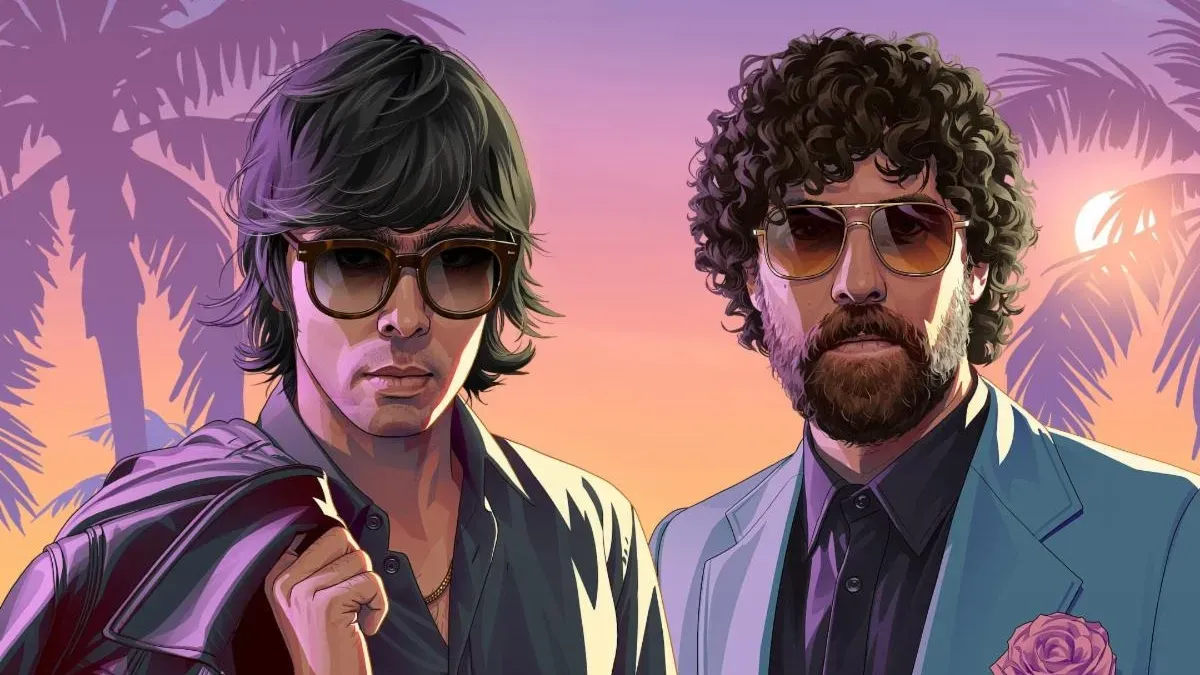
Justice to Score GTA 6, Share New Song with Tame Impala, SZA, King Gizzard
Rockstar taps the French duo for the GTA VI score, and the first taste is a genre-melting collab with Tame Impala, SZA, and King Gizzard & The Lizard Wizard.