
Arkane co-director defends Dishonored’s loading screens, says “soft spot” and details cut Daud hand
A Dishonored team stream turns “loading screens are bad” into “world-building is the point,” then reveals a nearly-used Daud hand plan.
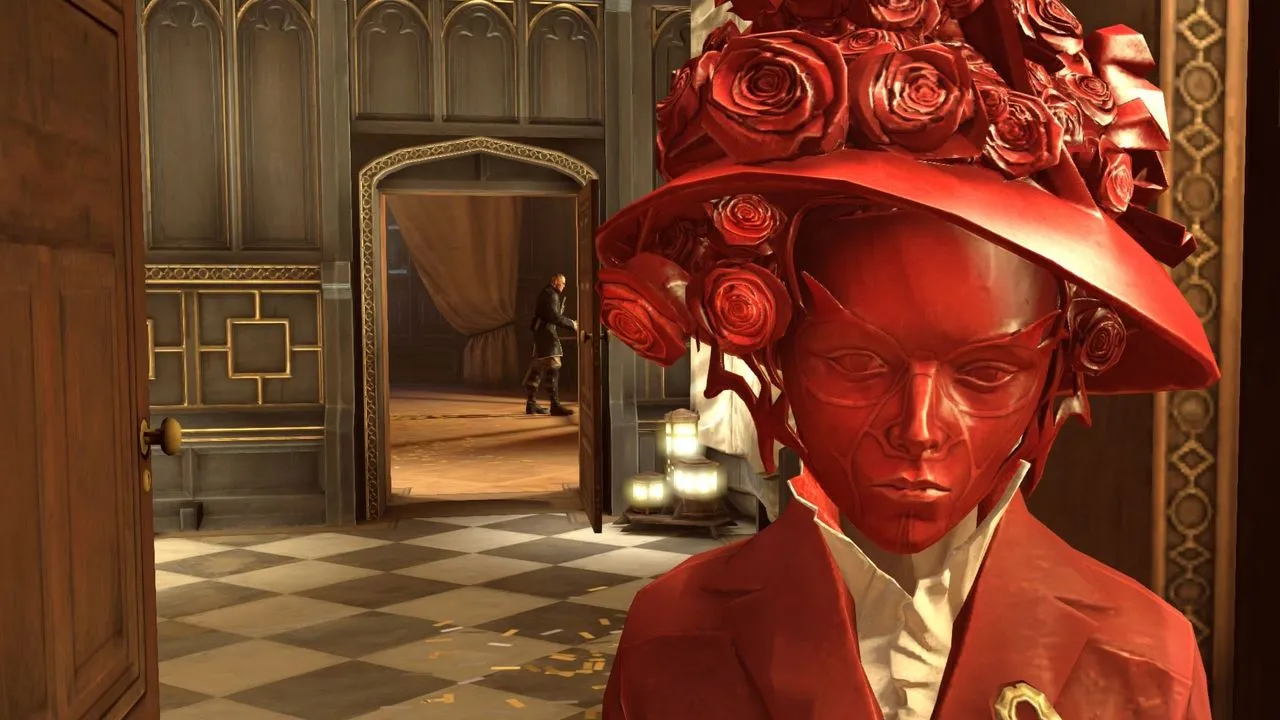
Raphaël Colantonio, co-creative director of Dishonored, streamed a replay with Arkane colleagues including Harvey Smith, Stevan Hird, and Anthony Huso. The team argues loading screens can deepen world-building, while also uncovering a cut idea about Daud severing Corvo’s hand and re-securing it later.
Raphaël Colantonio, co-creative director of Dishonored, is doing what a lot of game veterans probably never get to do anymore: he is replaying a 14-year-old game in public, live, with the exact Arkane teammates who made the level he is currently seeing. In the most recent segment, Colantonio played Lady Boyle's Last Party with co-creative director Harvey Smith, lead gameplay programmer Stevan Hird, and level designer Anthony Huso. And when they got to the parts where the game splits space with frequent transitions, the conversation flipped in a surprisingly practical direction: Smith defended the loading screens, tips, and “between-area” breaks as a feature, not a flaw.
Smith’s core point was blunt. “People think it's an improvement that we got rid of loading screens,” Smith said, “but honestly I think a break between one area and the next where you feel like, 'OK, that is behind me, I'm in a new pristine area,' and also being able to do the tips as part of the world-building, the art and the little in-fiction notes? I actually have a soft spot for all that.” Colantonio backed him up immediately, saying, “There's something about it, yeah. It's true.” In other words, the team was not just saying “we left some doors open,” they were arguing those doors serve purpose: pacing, player psychology, and lightweight narrative and art delivery, right when the player is already expecting a reset.
That defense matters beyond nostalgia because it lands in a real modern design fight. In many industries, “friction removal” becomes a default assumption: less waiting feels like progress, and “loading screens are bad” becomes a cultural reflex. Arkane’s argument is that the waiting moment can be repurposed, if the game uses it intentionally. In Lady Boyle's Last Party, Smith noted the transitions between the streets outside the mansion, the mansion's outdoor area, and then the foyer, framing the break as a clean psychological line: one chunk of the world ends, a new pristine area begins. The subtext is important for anyone building products with natural handoffs, whether those are levels, modules, steps, or any workflow transition.
The replay also shows how design decisions get revisited when a team talks through what they built, instead of how they shipped. Colantonio, while trying not to play “super sloppy,” repeatedly apologized for mistakes during the series of streams. That is a small detail, but it highlights the reality: when you replay something after years, your memory of intent is different from your execution. And execution is where systems meet human behavior. Arkane’s loading-screen defense is not “we had no choice.” It’s “we chose to make the break work for the player.” Even the act of replaying “with high chaos and a lot of hot exits” underlines that the designers are not pretending games are static; they are dynamic experiences with consequences.
Then the stream goes from product philosophy to lore economics. The team unearthed another tidbit: a plan at one point for Daud to cut off Corvo's hand, the one that gives him his Blink power, which Daud would then have to retrieve. Or vice versa. Smith described the appeal of the idea: “I love the idea that your creepy marked-by-the-Outsider hand, your undead hand, either you have to play through as it for a while to get it back to Corvo or you had to go find it.” That is not just an interesting plot alternate. It implies an alternate set of mechanics, traversal, and mission structure, where a powered item becomes a narrative and gameplay object. In exec terms, it is the difference between “we made a cutscene” and “we designed a loop around pursuit and recovery.”
And here is the payoff that keeps this from being trivia. Smith points out that the idea ended up being re-used in a sense in Dishonored 2, where a character gains powers using a mummified hand with the Outsider's mark on it. “Nothing is wasted,” Smith says. That “waste-not” mindset is strategically relevant for teams that keep evolving an IP: prototype ideas and mechanics are not necessarily dead just because they do not ship in their original form. They can be translated, themed, and relocated into a later product where they fit better. This is how design capital compounds.
So where does this leave Arkane now, and what should decision-makers take from it? For this stream, they finished the party and now have four more levels to play. The team is also considering going through the Knife of Dunwall and Brigmore Witches expansions, which the source notes are the favorite part of the entire Dishonored series for whoever is writing this coverage. The forward-looking nudge is clear, even if it is not a commitment: maybe after that, the crew can get back together for a playthrough of Prey. The fingers on this mummified hand are crossed, because for players and operators alike, “best ideas” often show up later than you expect. The strategic stake is simple: if you design transitions, systems, and narrative beats as reusable assets, you can turn “a cut” into future leverage. And if you treat “load time” as a design surface, you may stop thinking of friction as a failure and start using it as a pacing tool.
This story's Key Insights and Take-aways are locked.
Create a free account to unlock Executive Actions for one credit.
Register to UnlockAlways free for Executives Club members. Join the Club
More in Entertainment

Russell Brand's accuser 'bewildered and confused' as he denies 7 sex charges
The criminal case against the comedian is a live test of how media companies manage talent risk when serious allegations go public.

'It's a Magic Trick': Ballet Experts Say Rosalía's SNL Pose Is Impossible
Three ballet experts tell Rolling Stone Rosalía's gravity-defying SNL stillness shouldn't be possible - and why the debate is now part of the show.

Activision CMO: GTA 6 Will Boost Call of Duty, Not Bury It
Activision's top marketer says Rockstar's blockbuster will drive players back to consoles and into Modern Warfare 4, even as the company admits its recent strategy failed.