

Arkansas private school founder Mary “Tracy” Morrison used video punishment, then avoided trial
A ProPublica investigation shows how limited oversight left footage hidden until jail, FOIA requests, and chargers caught up.
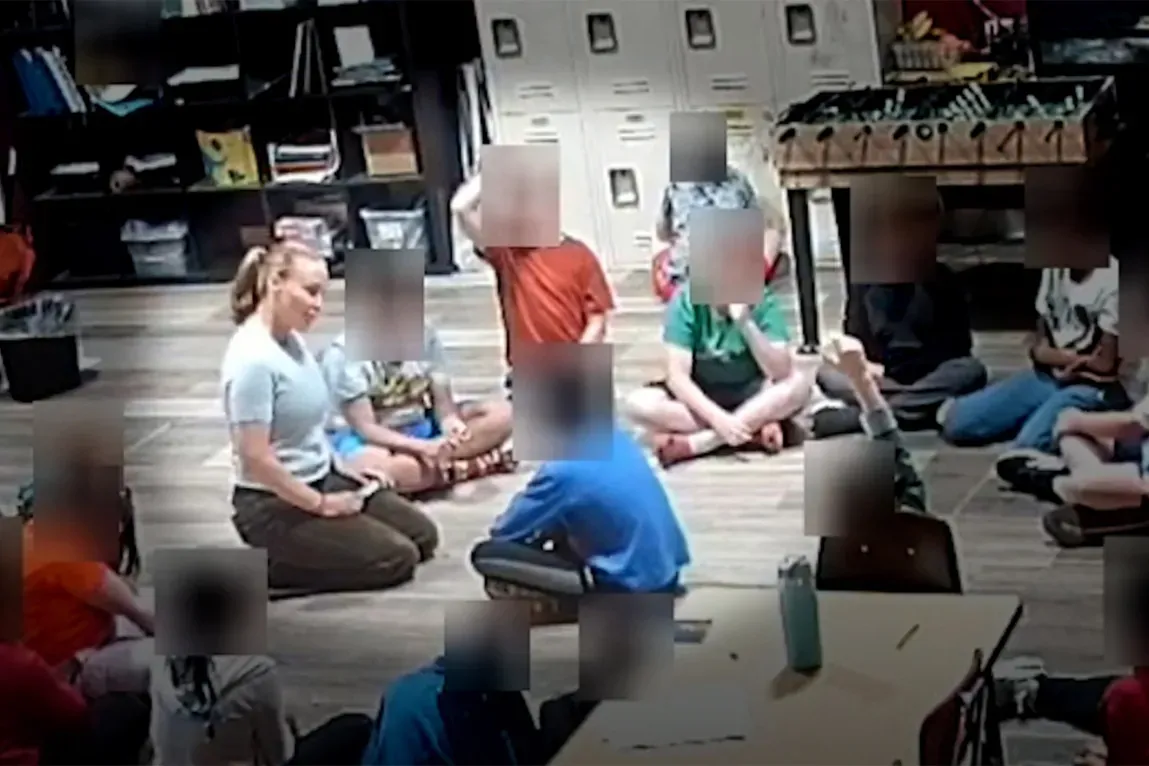
Mary “Tracy” Morrison, founder of The Delta Institute for the Developing Brain, was charged after videos showed students being punished and assaulted. Her plea deal let her avoid trial where the video evidence would have been played in open court.
Mary “Tracy” Morrison founded The Delta Institute for the Developing Brain in 2024, and video obtained by ProPublica shows the school’s owner using punishment on students as part of what she called a “restorative” group discussion. Morrison later faced criminal charges and jail time, but a plea deal meant the video was never played in open court.
Two separate videos became the spine of the investigation. In the first, a 10-year-old boy with autism is shown being kept after school while three boys scrub floors and walls; Morrison’s shouting and the boys’ startled reactions signal punishment. In the second, a roughly 40-minute classroom clip retrieved by a detective in April 2025 shows Morrison directing a 13-year-old boy to sit in the middle of a circle, telling students to put their hands on him however they wanted, and encouraging other students to hit, punch, pinch, and even choke the boy, with Morrison striking him with a footlong plastic cylinder. A detective went to the school with a warrant and obtained that clip, and ProPublica obtained it through a Freedom of Information Act request.
Here is the part that should make every operator and board member uncomfortable, even if they never plan to run a school that lives off private oversight. ProPublica reports that the school was set back off a country road in a white colonial house, easy to miss, and in Arkansas it was also easy to start. Unlike public schools, which are regulated down to things like test scores, lunches, and staff credentials, private schools in most states ProPublica studied operate with little oversight. In Arkansas specifically, the state requires that private schools conduct regular fire drills, keep immunization records, and have an American flag and flagpole, but it does not review curriculum or the backgrounds and capabilities of school operators. There are also no records showing the Arkansas Department of Education investigated the Delta Institute or visited the school, even after police arrested its founder.
When ProPublica asked whether the department had gone to the school, officials did not answer directly, but said that when the department is made aware of issues, it “often results in a site visit.” That “often” matters because it explains the basic failure mode of low-regulation systems. If oversight is reactive, it depends on someone noticing something, documenting it, and getting it into the right hands. In this case, the only clear reason the world knew something awful had happened was law enforcement involvement. ProPublica writes that it took weeks of reporting to pursue video evidence once the criminal case was closed.
The videos did not just document mistreatment. They also show a stark information problem: you cannot fix what you cannot see. ProPublica reports that when it came to getting footage, it initially lacked access to public-record tools that might exist for public schools, like incident reports, emails, and video. To close that gap, ProPublica and Arkansas Times reporter Milo Strain submitted FOIA requests for video footage to the Craighead County Sheriff’s Office and to the prosecutor who brought the charges on behalf of the state.
That matters because legal timing decided what the public would see. Morrison was an occupational therapist who had never run a school before, and ProPublica reports she sold herself to parents as an expert on autism and neurodivergence. She declined to speak to the detective who investigated the case or to the prosecutor, and she did not respond to ProPublica’s requests for interviews and comments. The only real insight into her perspective, ProPublica says, came from other videos the outlet obtained: recordings of calls with her family, friends, and school employees made while she was in jail. And then there is the crucial procedural detail. Morrison was charged with 11 felony counts of permitting child abuse and other related crimes, but she took a deal pleading guilty to one count of permitting child abuse and four counts of contributing to the delinquency of a juvenile. The deal allowed her to avoid a trial, which means the video was never played in open court, even though it became central evidence.
If you are an executive building governance, a board member setting risk tolerance, or an investor scanning the private education landscape for operational credibility, the strategic lesson is not “FOIA saves the day.” It is that governance gaps become evidence gaps. Morrison’s case shows how limited regulatory requirements can create space for harmful practices to persist before a criminal case forces discovery of what is happening inside classrooms. In systems where routine monitoring is weak, the wrong people can move fast, and the right people learn too late, after the damage is already recorded.
ProPublica’s reporting ties the investigation to a larger theme: more public money does not necessarily translate to more transparency. ProPublica went to Northeast Arkansas, just outside of Jonesboro, to report on private schools opening in response to state legislatures increasingly setting aside public money for parents to spend on private education. That shift raises a question every decision-maker should be asking: when funding flows to private providers, what guarantees that oversight scales with the stakes? Morrison’s videos show what happens when the answer is too often, “not enough until someone files a report.”
This story's Key Insights and Take-aways are locked.
Create a free account to unlock Executive Actions for one credit.
Register to UnlockAlways free for Executives Club members. Join the Club
More in Business

Anthropic’s Levant Alpöge cracks the Jacobian conjecture after 87 years
A Harvard valedictorian used Claude to hit a 1939 breakthrough, but the missing “why” is the real problem.

Uber buys Delivery Hero for nearly $15B, vaulting to top food delivery outside China
The deal doubles Uber's dual-services footprint and pushes a ride-and-eats bundling play into 50 more markets.

Epic and Google drop settlement bid, forcing rival Android app stores by July 22
Google told the court it is ready to carry third-party app stores starting Wednesday, July 22.