
ASML profit smashes expectations as customers eye 2030 orders
The Dutch chip-equipment giant's forward order interest signals AI-driven demand for advanced lithography is built to last well past this cycle.
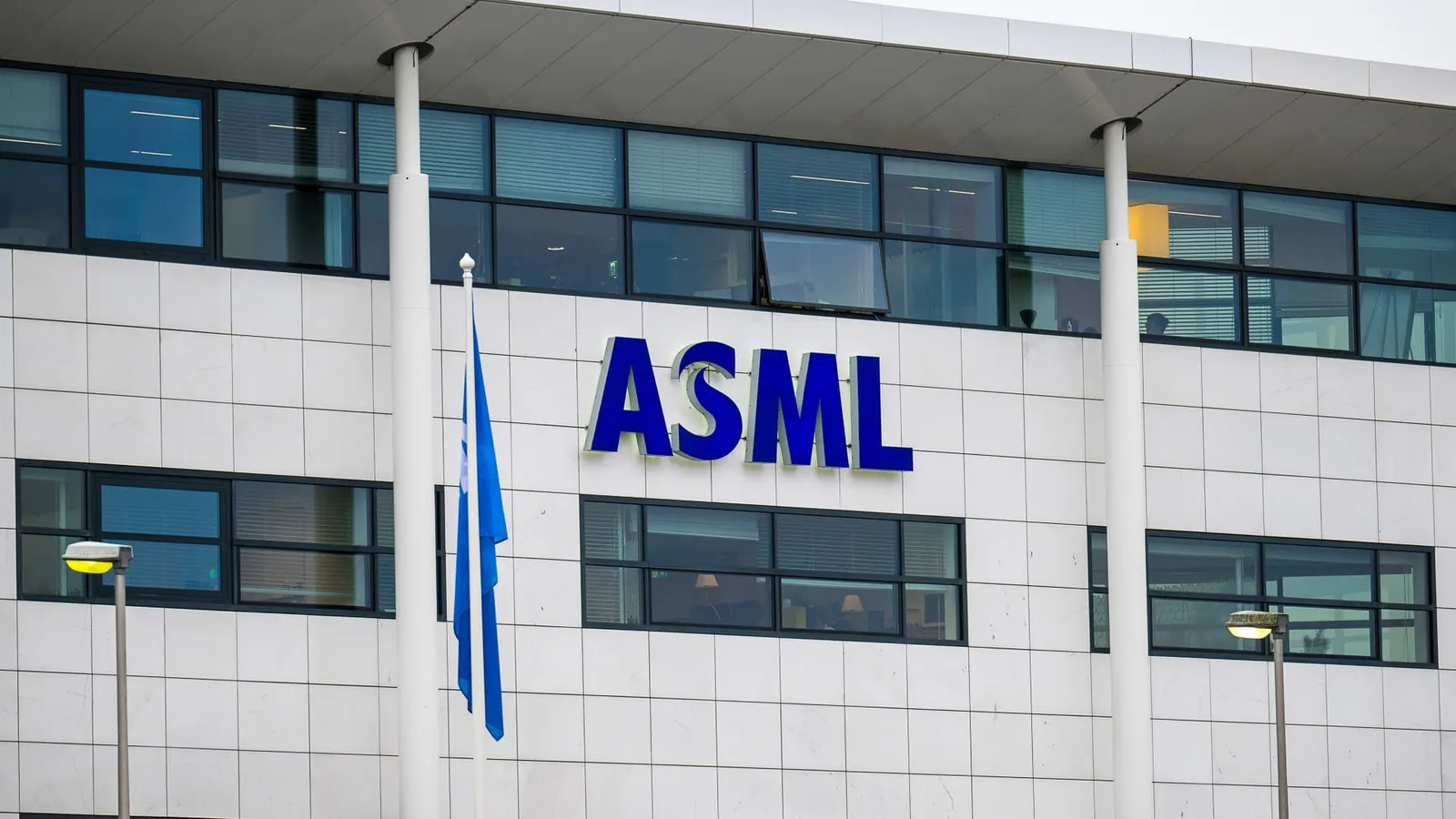
ASML, the Dutch company that dominates advanced chipmaking equipment, said some customers are "expressing an interest" in placing orders for 2029 and 2030, while profit smashed expectations. For decision-makers, the signal is that the AI-driven buildout of advanced chip capacity has a visible runway into the next decade, which should inform long-term capex and supply-chain planning.
ASML, the Dutch company that effectively owns the market for the extreme ultraviolet (EUV) lithography machines used to make the world's most advanced chips, said some customers are "expressing an interest" in placing orders for 2029 and 2030. The disclosure landed alongside a profit figure that smashed expectations, giving investors a rare look at how far out the semiconductor boom's demand runway actually extends.
That is the headline number that matters: a five-to-six-year forward view of order interest. In an industry where revenue visibility is typically measured in quarters, not half-decades, ASML's customers are effectively signaling that the AI-driven buildout of advanced chip capacity is not a short-cycle spike but a durable, multi-year wave. For anyone making capital allocation decisions in tech, this is as close to a leading indicator as the sector offers.
For context, ASML holds a near-monopoly position in EUV lithography. Its machines, priced in the hundreds of millions of dollars each, are essential for etching the most advanced circuitry into silicon, and they are built to order with long lead times. The company's customers, the world's largest chipmakers including TSMC, Samsung, and Intel, must commit to capacity years in advance because the equipment cannot be bought off the shelf. ASML's dominance did not happen overnight; it is the product of decades of research and development, and it is protected by the sheer difficulty of replicating EUV technology. That is why an early signal of 2029-2030 interest matters: it tells the entire supply chain, from component suppliers to fab construction firms, that demand is expected to persist.
The profit beat matters for a different reason. It confirms that the current cycle is not just a story about future promises; the present is strong too. The current surge in demand is largely attributed to artificial intelligence, as hyperscale data centers race to secure the advanced chips needed to train and run large language models. With AI accelerators, data centers, and advanced smartphones all competing for the same leading-edge manufacturing capacity, chipmakers have been expanding aggressively, and ASML is the bottleneck supplier they all must pass through. When the bottleneck supplier beats profit expectations, it is a signal that downstream demand is real and paying.
The 2029-2030 order interest also de-risks ASML's own long-term planning. Because EUV systems require a complex supply chain and years of manufacturing lead time, the company needs early visibility to lock in component supply, secure cleanroom capacity, and manage its own capital expenditures. That long-dated visibility is rare even for a company with ASML's backlog, and it gives management a planning advantage that most industrial firms lack. For investors, the disclosure effectively extends the company's revenue visibility into the next decade, which supports a longer-duration valuation thesis.
The second-order implications ripple outward. For chipmakers, it means capital expenditure commitments are stretching further into the future, with planning horizons that now touch 2030. For governments, it reinforces the strategic importance of lithography as a chokepoint technology, which is why export controls and national chip subsidies have become central policy tools. For the broader tech economy, it suggests the AI infrastructure buildout has legs: if the companies making the machines that make the chips are already seeing interest half a decade out, the cycle may extend well beyond what many skeptics assume. For investors, the combination of a profit beat today and order interest half a decade out is a rare pairing: it validates both the current earnings power and the future revenue trajectory.
The strategic stakes for peers are clear. ASML's order book is a leading indicator for the entire semiconductor supply chain, and its profit beat is a confirmation that pricing power remains intact at the most critical link in the chain. Companies that supply ASML's components, the chipmakers that buy its machines, and the hyperscalers that consume the resulting chips all have a stake in the same signal: demand is expected to hold into the next decade.
The takeaway for executives and boards: treat ASML's forward order interest as a durable-demand signal, not a one-quarter artifact. The companies that plan their own capacity, hiring, and supply contracts around a multi-year AI buildout will be better positioned than those that treat the current boom as a temporary spike. ASML's customers are already thinking about 2030; the rest of the market should be too.
This story's Key Insights and Take-aways are locked.
Create a free account to unlock Executive Actions for one credit.
Register to UnlockAlways free for Executives Club members. Join the Club
More in Business

Elon Musk unveils a flying car, and SpaceX helped build it
The Tesla CEO's showcase at a SpaceX facility signals a future where road and rocket engineering converge.

Apple's $2,000 iPhone Duo opens preorders, taking on Samsung and Google
Apple's first foldable hits the market at a premium price, reshaping a category Samsung and Google have led.

Pope Leo XIV, first American pope, diagnosed with lung cancer
The 71-year-old Chicago-born pontiff underwent successful surgery on his right lung, and his diagnosis raises new questions about his AI-focused papacy and the Vatican's future.