
ASML’s High-NA EUV and Twinscan XT:260 help Europe lead the AI chip race
Fortune’s Europe’s Most Innovative Companies ranks 300 firms across 18 countries, with ASML topping the list.
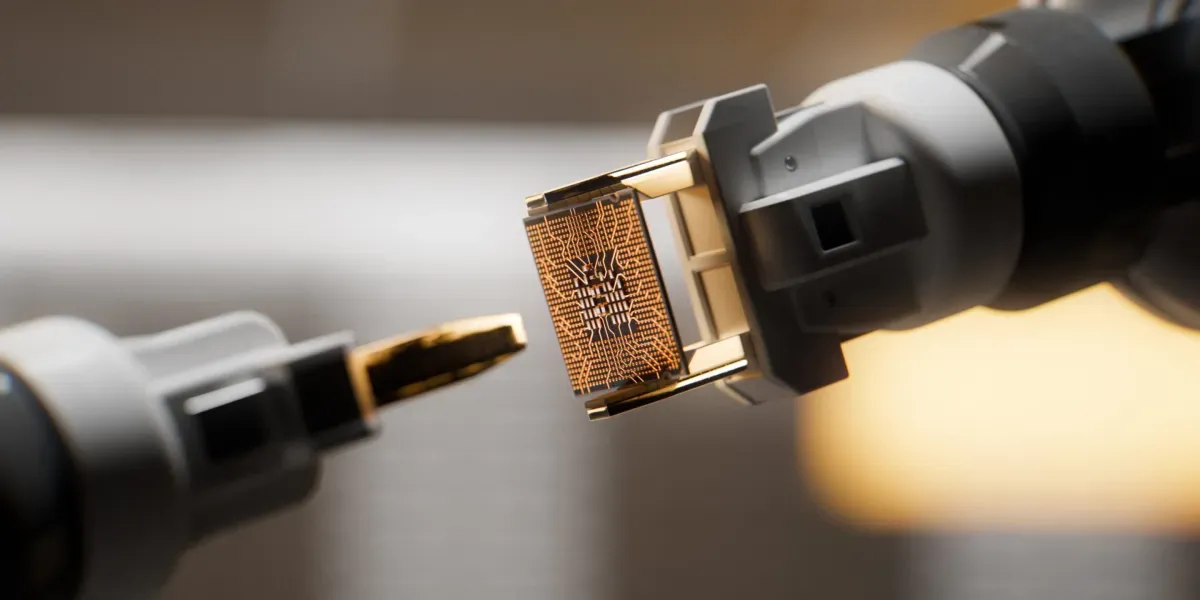
ASML tops Fortune’s Europe’s Most Innovative Companies ranking, citing innovations including the Twinscan XT:260 for advanced chip packaging and High-NA EUV systems. The ranking underscores how decision-makers should read Europe’s advantage: fewer broad chip bets, more precision infrastructure.
Europe’s tech story can sound like a consolation prize: lower R&D intensity than the U.S. or Japan, less than China, and plenty of people waiting for the continent to “catch up.” But Fortune’s Europe’s Most Innovative Companies 2026, produced with Statista, turns that narrative inside out by showing where Europe is actually winning.
Start with the top name: ASML. The Dutch semiconductor equipment maker comes in at #1, and its “how chips get built” breakthroughs are the reason it stands out. Fortune points to two specific innovations. First is the Twinscan XT:260, described as a specialized tool built for advanced chip packaging. Second is ASML’s High-NA EUV systems, which Fortune frames as ultra-fine laser tools that print microscopic chip features so tech giants can pack record-breaking processing power onto a single silicon wafer.
That matters because Europe’s overall research intensity tells only part of the picture. Fortune notes that Europe spends less of its GDP on research and development than the U.S., Japan, or China. Its R&D intensity has held at roughly 2.1% for years, compared with 3.45% in the U.S. and Japan and 2.6% in China. Yet Europe still generates world-class ideas, including a record number of patent applications logged by the European Patent Office last year. The tension here is the strategic one: you do not need to outspend everyone everywhere to create dominance. You need to out-innovate in the places that compound.
Fortune’s ranking is built to identify those compounding points. The list spans 300 companies across 18 countries and 21 industries. It evaluates innovation across three dimensions: product, process, and culture. And while the companies range from healthcare and manufacturing to telecommunications, retail, and financial services, one theme keeps resurfacing: Europe’s innovation is deeply industrial and often infrastructure-heavy, not just software-fluent.
Semiconductors are the clearest example. Fortune says Europe may lag behind the U.S. and China across much of the tech landscape, but it has assembled a formidable semiconductor ecosystem. Rather than trying to match the U.S. or China in large-scale chip manufacturing, Europe is “doubling down” on areas where it already has a competitive edge, with ASML’s near-monopoly on advanced lithography equipment called out explicitly. That strategy is not just a corporate choice. It is shaping EU industrial policy. Under the proposed Chips Act 2.0, Brussels aims to strengthen Europe’s semiconductor ecosystem as part of a broader push to boost investment in chips, AI, cloud computing, and digital infrastructure.
For executives, this is a board-level lesson disguised as a country-level story. When your market position is anchored in enabling technology, the risk is not innovation scarcity, it is dependency. The upside of ASML’s role in lithography is that it sits close to the chokepoints of how the AI chip boom gets built. The risk is that disruption, export controls, or shifting procurement decisions can become existential. The ranking implicitly spotlights why leaders across the supply chain are treating semiconductor capability and manufacturing equipment as national strategy, not ordinary CapEx.
The other defining characteristic Fortune highlights is longevity. Many of Europe’s most innovative companies are among its oldest, and that longevity is not portrayed as nostalgia. It’s portrayed as reinvention capacity. Fortune runs examples like Saint-Gobain, a French glassmaker commissioned in 1665 by Louis XIV to produce mirrors for the French crown, including those in the Hall of Mirrors at Versailles. Saint-Gobain now ranks 35th and is described as a leader in sustainable construction materials. Michelin, new to the list this year, was founded in 1832 and reincorporated as Michelin and a tire company in 1889, with Fortune tying its historical removable pneumatic tire to today’s materials expertise, including airless Moon boots for the next Lunar Rover.
This reinvention theme extends into how companies move through technological waves. Nokia ranks 22nd; Fortune notes it started in 1865 as a paper mill, transitioned into rubber product manufacturing, cables, and mobile phones, and now builds 5G networks underpinning the digital economy. The logic offered is practical: longevity is less about clinging to one business model and more about knowing when to abandon one. In that context, Germany is painted as Europe’s industrial engine room, with the most companies on the list (56), spanning technology, automotive, engineering, and pharmaceuticals.
Germany’s innovation streak is illustrated through company specifics, which is where the “so what” becomes real for operators and investors. Stuttgart-headquartered Bosch has been reinventing itself since it was founded in 1886, moving from automotive roots into artificial intelligence and hydrogen technology. Fortune adds that its fuel-cell power module for heavy-duty transport recently won Germany’s Future Prize for Technology and Innovation. Siemens, ranked 11th, is described as a pioneer of smart manufacturing, integrating AI, automation, and digital technologies into factory operations, and it recently launched its Digital Twin Composer, a tool to build photorealistic virtual replicas of physical environments so engineers can test designs before leaving the screen.
Even the “culture” slice of the ranking matters. Fortune says 28 companies, including Adidas, Ingka Group (Ikea), Heineken, Lufthansa, Richemont, Celonis, Babbel, and Kirkbi (Lego), made the list for building innovative cultures. Adidas encourages designers and engineers to work together through cross-functional hackathons, and Fortune says this year it introduced the Adizero Adios Pro Evo 3 running shoe. Ingka Group is training roughly 30,000 employees and 500 leaders in AI literacy, aiming to ensure AI augments rather than replaces the workforce.
If semiconductors are Europe’s technological backbone, this year’s list argues the continent’s competitive edge is not just what it builds, but how it builds and how long it can keep adapting. For decision-makers, the stakes are straightforward: if your strategy assumes Europe will only “catch up” later, you will misprice risk and miss partnership opportunities today. ASML’s ranking top spot, powered by Twinscan XT:260 and High-NA EUV systems, is a reminder that the AI race can be won at the level of precision tooling and industrial capability, not just at the level of flashy consumer products.
This story's Key Insights and Take-aways are locked.
Create a free account to unlock Executive Actions for one credit.
Register to UnlockAlways free for Executives Club members. Join the Club
More in Technology

Nvidia's $89B data center quarter: the 9 companies cashing in
The AI buildout is minting fortunes beyond GPUs, and memory, cloud, and cooling suppliers are riding the same wave.
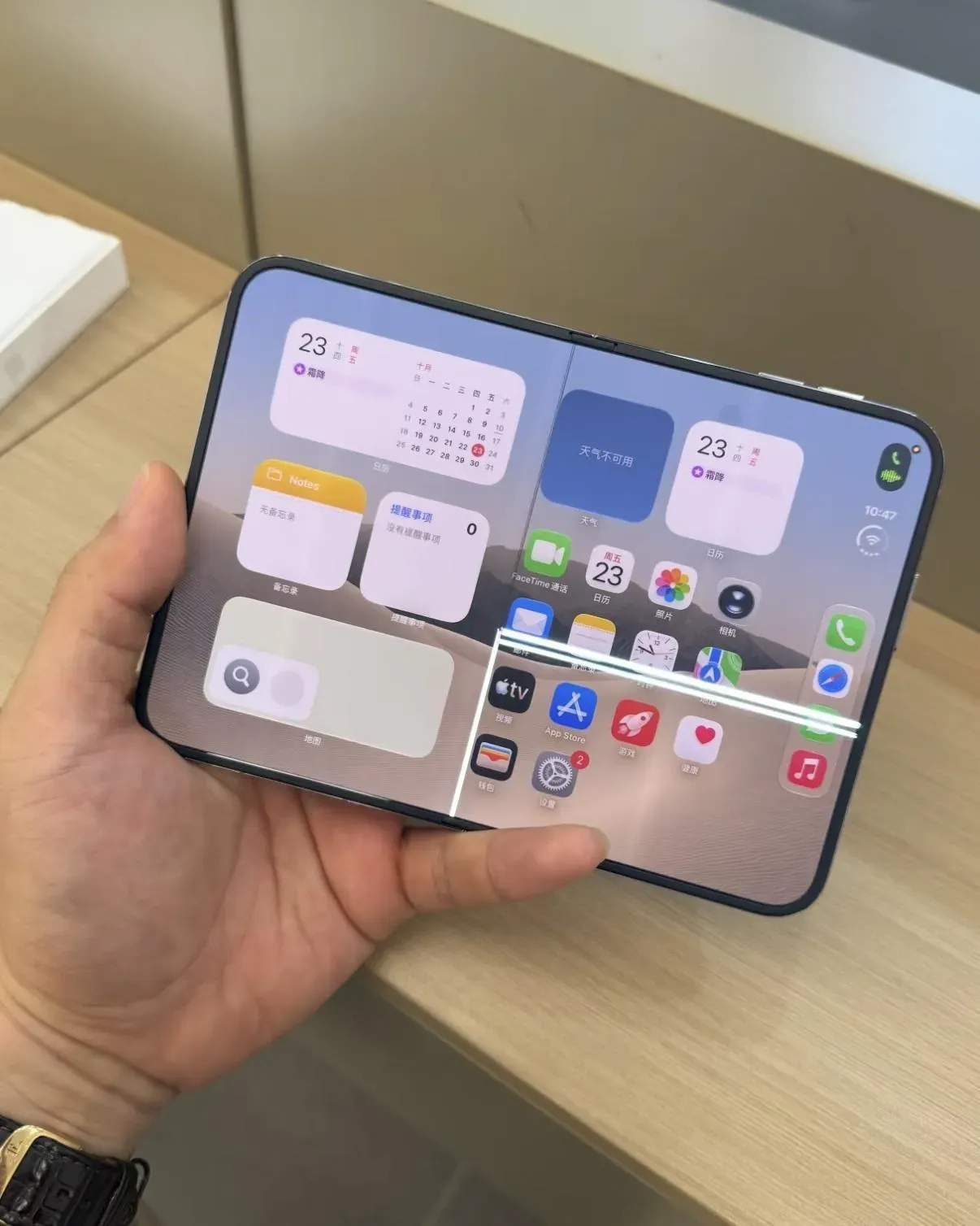
A YouTuber dissected the iPhone Duo and thinks he found crackgate's cause
CuriousHagi's teardown of Apple's foldable reveals a gear-like hinge that may explain why screens crack in the same spot within hours.

Google quietly links your phone number to every Android account on your SIM
Adding a SIM now ties your phone number to all Google accounts - and future accounts inherit it. Here's the security and privacy stakes.