
ASML’s High-NA EUV and Twinscan XT:260 push Europe’s AI chip lead despite lower R&D spend
Europe spends about 2.1% of GDP on R&D, but ASML and other industrial incumbents are still scaling the infrastructure behind AI.
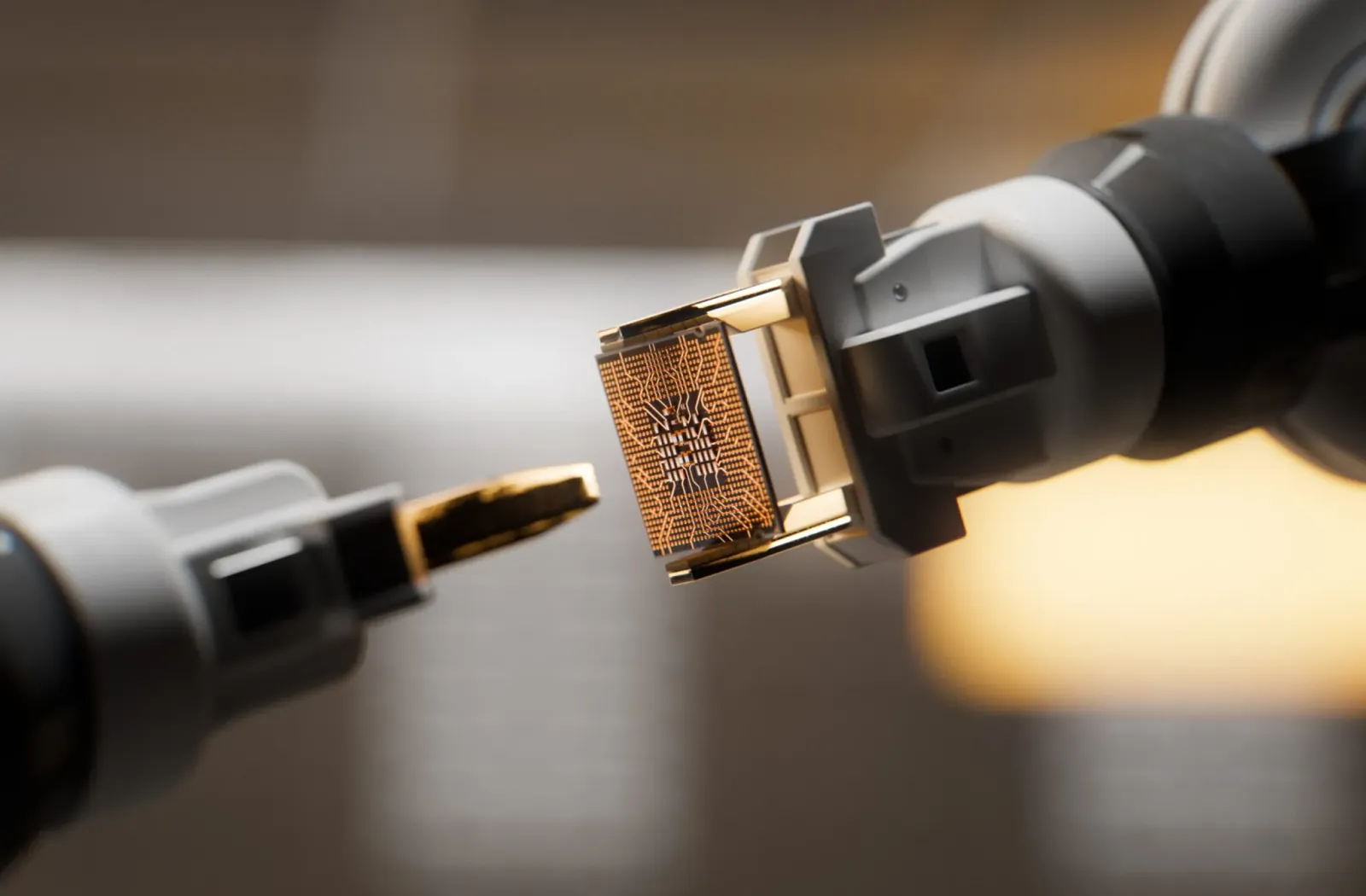
Fortune's Europe’s Most Innovative Companies ranking spotlights ASML as the top company, citing its Twinscan XT:260 and High-NA EUV systems. For decision-makers, the message is clear: Europe’s innovation model is less about chasing every frontier and more about defending the ones where it already has physics, process, and industrial muscle.
Europe may “lag behind” the U.S. and China across much of the tech landscape, but it’s not sitting still. Fortune’s Europe’s Most Innovative Companies ranking, now in its second year and produced in partnership with Statista, makes that contradiction impossible to ignore. It names 300 companies across 18 countries and 21 industries, evaluated across three dimensions of innovation: product, process, and culture. And in a ranking where ASML takes the top spot, the core story is brutally specific: Europe is powering the AI boom through the machines that build advanced chips.
The proof, straight from the ranking’s focus, is what ASML is shipping inside its Dutch cleanrooms. ASML is pushing the AI race forward with two breakthrough innovations: the Twinscan XT:260, a specialized tool built for advanced chip packaging, and its High-NA EUV systems. High-NA EUV is described as acting like ultra-fine laser pencils, printing microscopic chip features that let tech giants pack record-breaking processing power onto a single silicon wafer. That’s not “innovation” as a vibe. It’s innovation as manufacturing throughput at the scale the AI industry needs.
Now layer on the part investors and executives usually want to wave away. Europe spends less of its GDP on research and development than the U.S., Japan, or China. Its R&D intensity has held at roughly 2.1% for years, compared with 3.45% in the U.S. and Japan and 2.6% in China. Yet the continent keeps generating world-class ideas and breakthroughs, and the European Patent Office logged a record number of patent applications last year. Translation: Europe’s advantage is not simply “more R&D spending.” It’s what that spending produces, where it shows up, and which industrial chokepoints Europe controls.
ASML is a centerpiece of that logic because Europe, according to the ranking, is “doubling down on the areas where it already holds a competitive edge,” with near-monopoly power in advanced lithography equipment. The source frames this as shaping the EU’s industrial policy. Under the proposed Chips Act 2.0, Brussels aims to strengthen Europe’s semiconductor ecosystem as part of a broader push to boost investment in chips, AI, cloud computing, and digital infrastructure. That matters for decision-makers because it signals how governments plan to treat semiconductor capability: not as a single-company story, but as a stack of assets spanning equipment, packaging tools, manufacturing capacity, and the digital supply chain.
If the semiconductor theme is about the near future, the ranking’s most “wait, what” thread is longevity. Many of Europe’s most innovative companies are among its oldest. Saint-Gobain, for example, dates back to 1665, when a French glassmaker was commissioned by Louis XIV to produce mirrors for the French crown, including those in the Hall of Mirrors at Versailles. Today, Saint-Gobain remade itself as a leader in sustainable construction materials and ranks 35th on the list. The source also notes other companies founded in the last century, and a handful earlier, including Siemens (founded in 1847) and Rolls-Royce (founded in 1904). There is a pointed comparison to U.S. businesses founded since 1994, where only one-third survived a full decade, according to the Bureau of Labor Statistics.
This is where strategy starts looking less like “startup speed” and more like corporate survival as a skill. Michelin, new to the list this year, is founded in 1832 but reincorporated as Michelin and a tire company in 1889. Its breakthrough removable pneumatic tire carried Charles Terront to victory in the world’s first long-distance cycle race in 1891. Today, Michelin is applying materials expertise to developing airless Moon boots for the next Lunar Rover. Nokia’s reinvention story is similar in structure: it started in 1865 as a paper mill before transitioning into rubber product manufacturing, cables and mobile phones, and today builds the 5G networks underpinning the digital economy. Ranking 22nd on the list, Nokia’s 160-year run is used to argue that the secret to longevity is not clinging to a successful business model, but knowing when to abandon one.
Germany, in this ranking, is where the industrial engine room is most visible. The country has more companies on the list than any other, with a total of 56. The leaders span technology, automotive, engineering, and pharmaceuticals. Stuttgart-headquartered Bosch, founded in 1886, has been reinventing itself since expanding from automotive roots into AI and hydrogen technology. Its fuel-cell power module for heavy-duty transport, essentially an engine for zero-emission hydrogen trucks, recently won Germany’s Future Prize for Technology and Innovation. Siemens, ranked 11th, is described as a pioneer of smart manufacturing, integrating AI, automation, and digital technologies into its factory operations. The group recently launched its Digital Twin Composer, a tool that builds photorealistic virtual replicas of physical environments, letting engineers test designs before they ever leave the screen and cut down on the physical prototyping that German manufacturers can least afford right now.
Finally, the ranking doesn’t treat culture as decoration. It includes 28 companies, including Adidas, Ingka Group, Heineken, Lufthansa, Richemont, Celonis, Babbel, and Kirkbi (Lego), for building innovative cultures. Adidas encourages designers and engineers to work together through cross-functional hackathons, which the source says has paid off. This year, it introduced the Adizero Adios Pro Evo 3 running shoe, described as lighter, grippier, and more cushioned to help athletes run faster, with two runners completing sub-two-hour marathons while wearing them. Ingka Group, behind Ikea’s global retail business, is training roughly 30,000 employees and 500 leaders in AI literacy so AI augments rather than replaces the workforce.
If you’re a board member or operator trying to translate this into action, the strategic stake is simple: Europe is not trying to win every front of the tech race. It’s building and defending the chokepoints that matter, from advanced lithography and packaging tools to manufacturing simulation and AI-enabled workforce change. The second-order implication is that Europe’s competitive edge may look slower in headlines, but it can be faster in execution when it sits on real infrastructure and a culture that knows how to reinvent without breaking.
This story's Key Insights and Take-aways are locked.
Create a free account to unlock Executive Actions for one credit.
Register to UnlockAlways free for Executives Club members. Join the Club
More in Technology

Nvidia's $89B data center quarter: the 9 companies cashing in
The AI buildout is minting fortunes beyond GPUs, and memory, cloud, and cooling suppliers are riding the same wave.
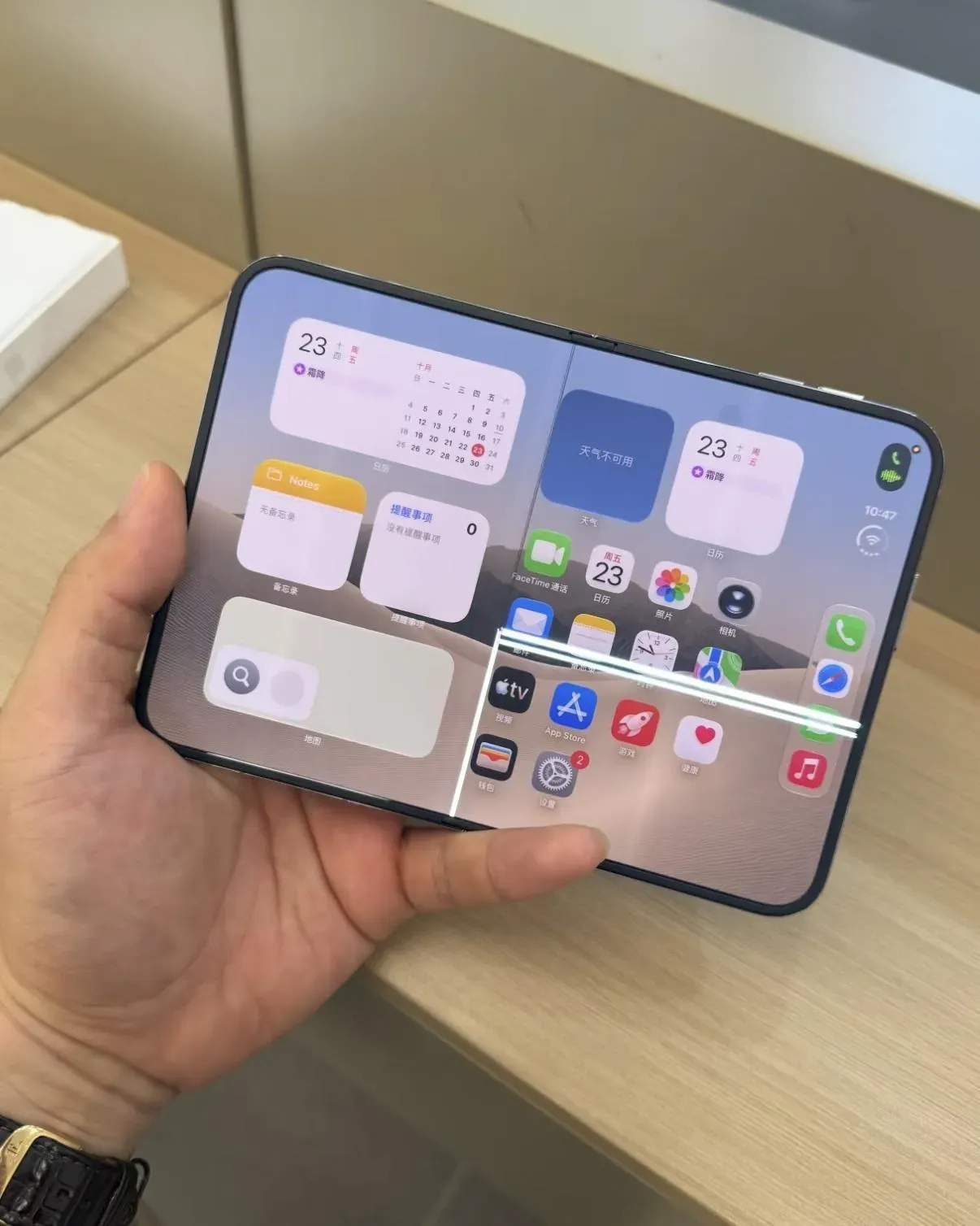
A YouTuber dissected the iPhone Duo and thinks he found crackgate's cause
CuriousHagi's teardown of Apple's foldable reveals a gear-like hinge that may explain why screens crack in the same spot within hours.

Google quietly links your phone number to every Android account on your SIM
Adding a SIM now ties your phone number to all Google accounts - and future accounts inherit it. Here's the security and privacy stakes.