
Aug. 12, 2026 flips skywatching: total eclipse Greenland/Iceland/Spain, deep UK partials
A single date delivers a solar eclipse, Venus at dichotomy, and the Perseids peak, with timing by region.
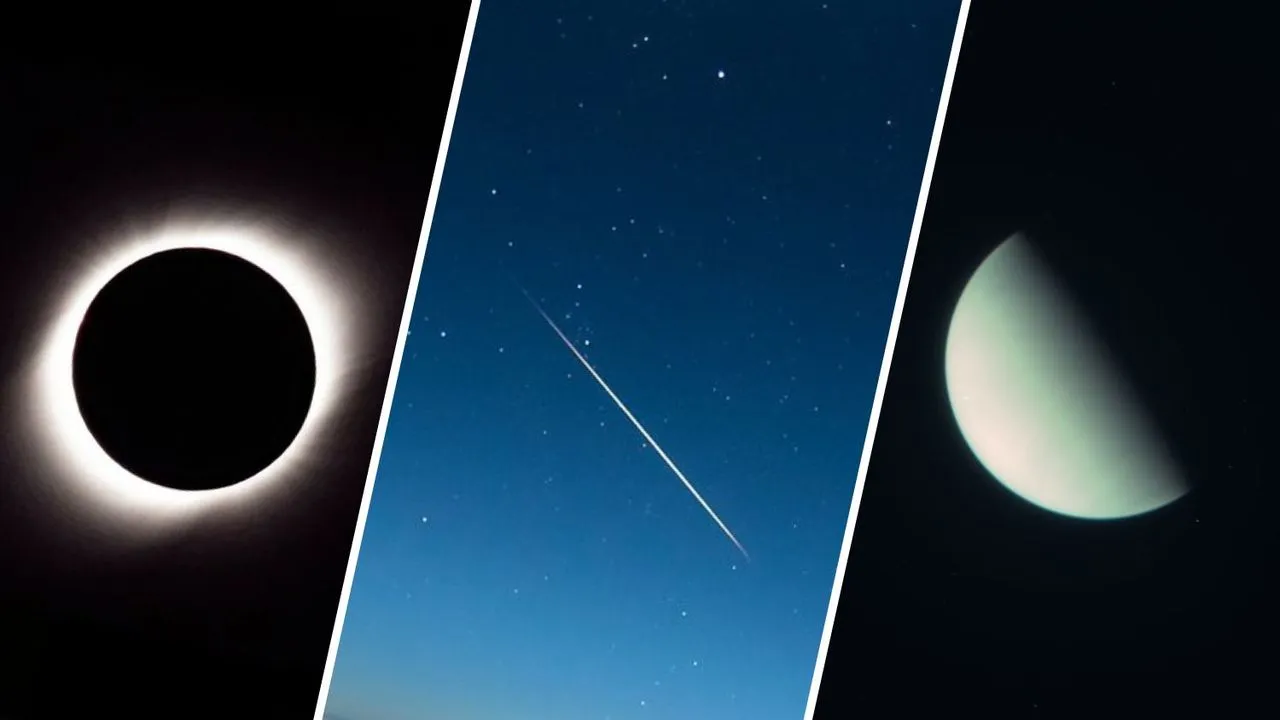
On Wednesday, Aug. 12, 2026, a total solar eclipse, Venus’s half-lit phase and the annual Perseid meteor shower peak nearly simultaneously. The consequence for decision-makers is simple: coordinate schedules and viewing logistics by location because what you see depends entirely on where you are on Earth.
Sometimes weeks go by with nothing worth blocking time for. Then Aug. 12, 2026 arrives and stacks three headline-grade events almost at once: a total solar eclipse in a narrow corridor, Venus hitting its “dichotomy” look, and the annual Perseid meteor shower reaching peak.
Here is the anchor that makes this day different. Exactly what you’ll see depends on where you stand on Earth, because the eclipse geometry is brutally location-specific. From within a narrow 180-mile-wide path of totality across eastern Greenland, western Iceland and northern Spain, the sky briefly turns day into night. Across the U.K., millions will see a partial eclipse ranging from 90% to 95%. And across Europe and northwest Africa, the eclipse peaks at sunset in many places, creating a strange, dark-sun-at-the-horizon moment.
Now layer in the “bonus” that turns this from a one-event spectacle into an all-night astronomy festival. Under a dark sky for the Perseids, the Milky Way’s bright central regions will stretch across the southern sky by around midnight. Then Venus shows up right on cue. Minutes after the eclipse action, Venus reaches dichotomy, appearing exactly half-lit in telescopes, while to the naked eye it blazes at magnitude -4.4 in the western twilight.
And if that sounds like a scheduling nightmare, that is the point. Timing windows are narrow, twilight can steal contrast, and the best targets shift after the eclipse ends. The Perseids then peak a few hours later, with the shower reaching its peak during the early hours of Aug. 13. In practice, viewers are not just picking a “place to go.” They are building a mini itinerary that has to survive local sunset times, civil twilight, cloud risk, and (in some locations) the realistic odds of catching additional phenomena.
Consider Iceland or Greenland first, because the eclipse outcome there is the most extreme. If you’re in western Iceland, or booked on an expedition cruise ship on Aug. 12, you’re positioned for a rare shot at totality. The point of maximum eclipse is 2 minutes 18 seconds off the coast of Iceland, accessible by ship, though likely not by many. It is possible that expedition ships in the lower reaches of Scoresby Sund, Greenland, experience the most totality, with 2 minutes 17 seconds possible at 4:36 p.m. WGST, with the eclipse 25 degrees above the west-southwest. Here the sun will set at 10:15 p.m., with the darkest time about 12:50 a.m., and crucially there is no truly dark night, just all-night civil twilight. That matters because it makes Perseids and aurora unlikely even if they’re present, and ditto for Venus after sunset since Greenland is too far north.
In Iceland, totality begins between 5:43 and 5:50 p.m. GMT, depending on location, and it lasts longest in regions farthest west: 2 minutes 13 seconds at Látrabjarg (5:44 p.m.) and 2 minutes 10 seconds at the westernmost coast of Snæfellsnes Peninsula (5:45 p.m.). The eclipse will be 25.5 degrees above the west-southwest. The sun sets at 9:53 p.m. in Reykjavík, with the darkest window from 11:00 p.m. to 4:00 a.m. and the darkest time at 1:30 a.m. Perseids and aurora are possible, but summer twilight often limits visibility. Venus, meanwhile, will not be visible after sunset. So the day’s “stack” is real, but the order and visibility of each ingredient changes by latitude.
Spain is where the scheduling gets deliciously productive for mainland viewers. For anyone within Spain’s path of totality, Aug. 12 promises one of the greatest skywatching days. Totality begins between 8:26 and 8:33 p.m. CEST, depending on exact location. Maximum duration lasts longest in the far northwest, with 1 minute 50 seconds at Playa de la Escaladina in Galicia (8:26 p.m.), where the eclipse is 11 degrees above the west-northwest. The shortest totality in Spain is 1 minute 36 seconds at Bellavista, Mallorca (8:31 p.m.). The sun will set at 9:16 p.m. in Madrid, with a dark night from around midnight through 4:40 a.m. CEST, and the darkest part around 02:00 a.m. CEST, when the radiant point Perseus will be high above the horizon.
After that, the decision is clear: unless there is a solar storm (unlikely), concentrate on the Perseid meteor shower rather than hoping for aurora. Light pollution is irrelevant for a total solar eclipse, and if you’ve cross-referenced a viewing spot with a Light Pollution Map, you could be in Bortle 4 skies in rural Spain. Under those skies, observers could see 30 to 50 meteors per hour, with occasional bursts producing even more. The practical implication for anyone coordinating a group outing is simple: have the afternoon nap. The eclipse means it’s new moon by definition, and then you are likely committing to a long, exciting night if skies stay clear.
The U.K. and Western Europe shift the story from totality to drama at the edges. In the U.K., the path of totality misses Britain entirely, but Aug. 12 is still remarkable. Across most of the U.K., more than 90% of the sun will be covered, with maximum eclipse shortly after 7 p.m. BST. The sun hangs low above the west-northwest horizon as a narrowing crescent, so best locations are coastal viewpoints, hilltops and open landscapes with clear western horizons. Coverage examples: London, Manchester and Glasgow at about 91%, Cardiff at 93%. The deepest eclipse is in the far southwest, with 96% coverage in the Isles of Scilly and almost 96% at Land’s End in Cornwall. You may notice subtle drop in temperature and a strange dimming of the landscape, with softened shadows and muted colors.
Once the eclipse ends, Venus becomes the next target. Look west after sunset for Evening Star. Venus is near its greatest elongation and near its best evening appearance of 2026, making it hard to miss. Even a small telescope reveals its half-lit phase. The Perseids then peak during the early hours of Aug. 13.
Western Europe adds another twist: eclipsed sunset. For many locations across Western Europe, many will witness a deeply eclipsed sun setting below the horizon instead of late-afternoon totality or partial eclipse. An eclipsed sunset is surprisingly rare, and particularly one this deep. In some places, more than 90% of the sun will be obscured as it approaches the horizon, creating a dramatic crescent-shaped sunset. Places like Corsica, the Ligurian coast, Venice, the Alps and parts of central Europe offer photographers a chance at one of the most dramatic sunset eclipses visible anywhere this decade. With Venus visible after sunset across Europe, plus the Milky Way and the Perseids peak, Aug. 12 becomes an all-night festival.
North America gets its own slice of the global event. A partial solar eclipse will be visible from Alaska to New England, touching 26 U.S. states and every Canadian province. While the eclipse is modest compared with North America’s recent total eclipses, millions can still join in the global moment. The key takeaway for leaders organizing group experiences, travel, or broadcast-like attention is the same everywhere: this is not one “start time.” It is an interlocked chain where the eclipse window is just the opening act, and Venus plus the Perseids do the heavy lifting afterward.
This story's Key Insights and Take-aways are locked.
Create a free account to unlock Executive Actions for one credit.
Register to UnlockAlways free for Executives Club members. Join the Club
More in Science
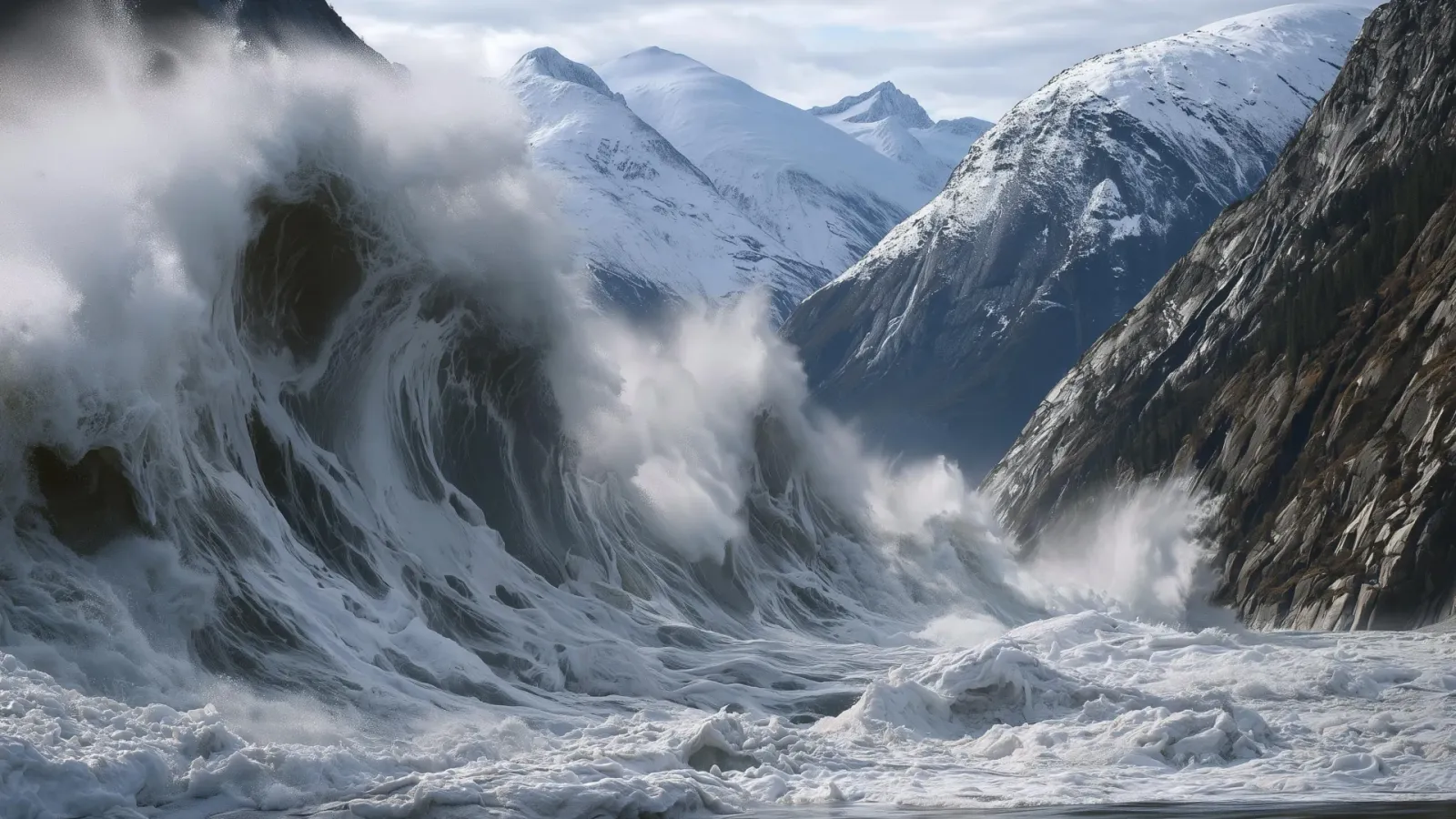
Alaska's 1,580-foot tsunami had warning signs. Scientists just found them.
Rapid glacier retreat, heavy rainfall, and thousands of tiny tremors preceded Alaska's 1,580-foot tsunami, a warning for every coastal community in a warming world.
The rare mutation that lets high-risk brains dodge Alzheimer's
Scientists found a natural defense against protein buildup, opening a new path to preventive treatments.

3,000 steps a day may halve Alzheimer's decline, study finds
New research links a modest daily walk to less tau buildup and nearly half the cognitive and functional decline, even for those with early signs.